Blog
10 Hairless Dog Breeds – Complete Guide for Dog Lovers

- 10 hairless dog breeds can be found across the globe. This comprehensive guide that includes 10 hairless dog breeds explains to you in full detail the Chinese Crested, the Xoloitzcuintli, the American Hairless Terrier, the Peruvian Inca Orchid and many more hairless dog breeds.
- The hairlessness in dogs is caused by a natural genetic mutation of the FOXI3 gene. It has been selected and bred by human hands for thousands of years.
- As they have no fur, they can get sunburned. So, they will need sunscreen and occasional moisturizing. They will need an occasional bath and be protected from rain and wet weather.
- Most of the hairless dog breeds are low-shedding. This makes them ideal for families with lots of allergies as they do not create as much dog hair and as many allergens as other typical breeds. Many people with severe allergies have found that the hairless dogs are perfect for their families.
- The Guide to Hairless Dogs has sections on the 10 hairless breeds of dogs, looking after Hairless Dogs, problems Hairless Dogs can have, eating Hairless Dogs, are Hairless Dogs for Indians, costs of Hairless Dogs and more than 30 other Hairless Dog FAQs
Hairless dog breeds are an unique group of dog breeds. They are born without fur or very little of it. All of the unusual furry less creatures have originated thousands of years ago in the ancient civilizations of Mexico, China and Peru. This is the most complete guide to all the 10 recognized hairless dog breeds that exist today. Their complete care, all known health problems, special feeding requirements, suitability for homes in India and more questions that potential buyers of hairless dogs would like to know before they actually buy or adopt a hairless dog are being answered. We have answered over 30 questions for all you dog lovers out there.
Key Takeaways
- Hairless dog breeds have a natural genetic mutation that affects their hair growth, this is caused by a mutation in the FOXI3 gene.
- The article details 10 hairless dog breeds. The smallest breed covered is the Hairless Chihuahua who weighs a mere 1.5 kg whereas the largest covered medium sized breed, the Xoloitzcuintli Standard, can weigh around 25 kg.
- As they do not have hair to brush, their skin requires a lot of care. In most cases, covering their skin with sunscreen in summer and keeping them warm in winter with clothes to protect them from cold winds and from freezing in car is required. They require.
- While Hairless dogs may create fewer allergens than regular fur bearing dogs, unfortunately there is no 100% hypoallergenic dog breed.
- Hairless dogs make ideal pets for apartment living in India. In the summer they need to be protected from the sun; in winter from cold. They need to be provided with air con in very hot weather.
- All the Hairless dog breeds available in India are priced from Rs. 25,000 /- for the Hairless Chihuahua to Rs. 1,50,000 /- for the Xoloitzcuintli / Peruvian Inca Orchid.
What Is a Hairless Dog Breed?
Many hairless dog breeds have a gene that allows them to be mostly hairless. This is due to a natural mutation in the FOXI3 gene. This gene controls hair follicle and tooth growth in mammals and has been a gene that many different civilizations selectively bred for thousands of years.
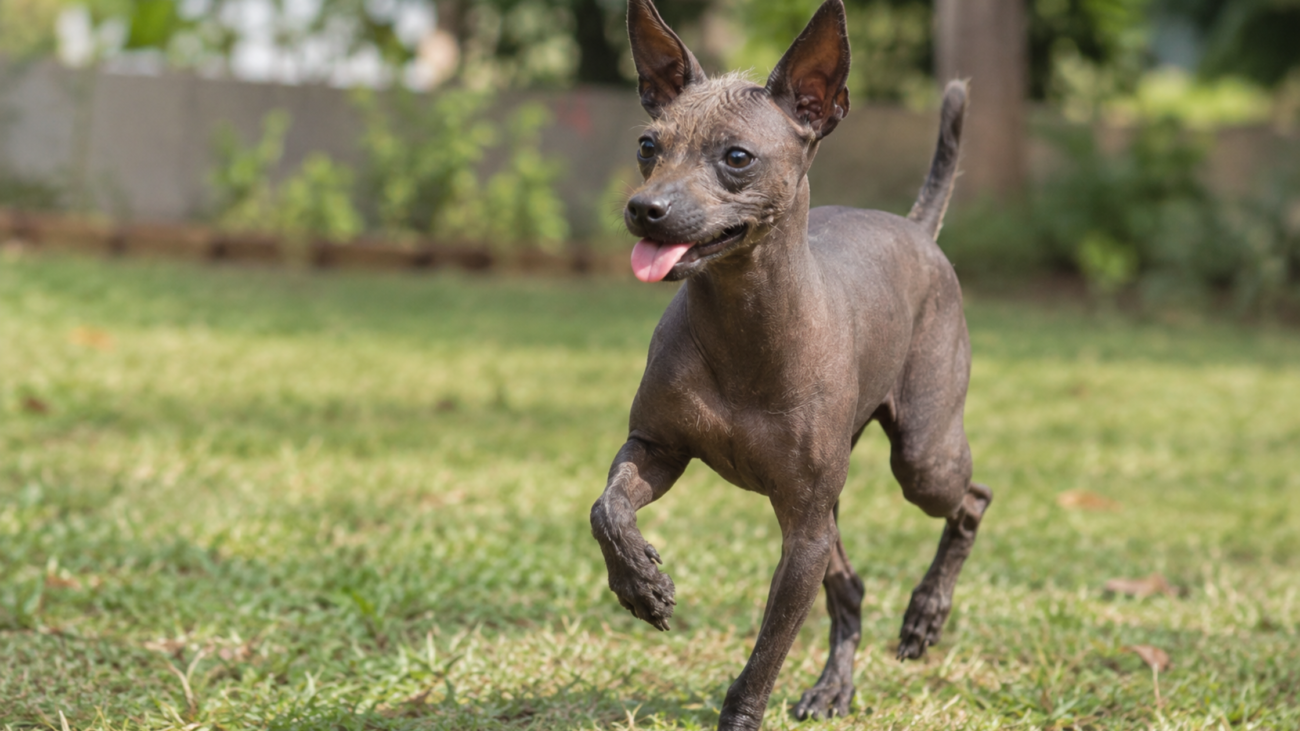
However, there are exceptions to the rule. While hairless dog breeds are often commonly referred to as ‘bald and hairless’ dogs, this is not entirely accurate. Many of the hairless breeds of dogs have hair on certain parts of their body. This is typically hair found on their heads, their paws and the ends of their tails. The Chinese Crested is an example of a hairless dog, except for the Crest of hair on their heads and the softhair ‘socks’ on their feet. In addition, the Chinese Crested also has a long hair plume on their tail. The American Hairless Terrier is a little different from the other hairless breeds. They are hairless due to a recessive gene, but this does not mean that they are completely hairless. In fact, they are completely hairless all over, including their heads, their paws and their tails.
Hairless dogs have warm, smooth skin (hairless hairless dogs’ skin) and can be any number of colors including pale pink to gray to black and even spotted or have patches of color. Hairless dogs’ skin is their body’s main environmental interface or surface or barrier and as such it requires much more care and protection than the skin of other dogs with hair. This includes the use of sunscreen as well as a variety of moisturizers to hydrate the skin and keep it healthy, and regular baths to keep the skin clean. Needless to say, all of this skin care replaces brushing and removing shed hair from hairy dogs.
Hairless dogs are found on every continent, in almost every country and have been developed by many cultures. The Mexican Xoloitzcuintli, the Chinese Crested, the Peruvian Inca Orchid, the Argentine Pila Dog, the Bolivian Hairless Dog, the Ecuadorian Hairless Dog, the African Abyssinian Sand Terrier and the American Hairless Terrier are all examples of naturally hairless dog breeds. They are a product of natural mutation and NOT developed by cross breeding other breeds of dogs.
Some hairless breeds of dogs can have hairless and coated dogs in the same litter. Chinese Crested dogs have a variety called “Powderpuff” that are fully coated, as well as hairless dogs. The Xoloitzcuintli can also have hairless and coated offspring. In these cases the coated offspring are carrying the hairless gene in a recessive form, which means they do not display the hairless trait themselves, but can pass it on to their offspring. This is very important for the long term health of hairless dog breeds as it helps to increase the gene pool of hairless dogs and reduce the chance of genetic defects within the breed.
Quick FAQs: What Is a Hairless Dog Breed?
What exactly is a hairless dog breed?
A hairless dog is a dog of a certain breed which is affected by a genetic mutation causing hair loss. This mutation affects the hair follicle on the dog’s skin. In some breeds of dogs, most of the hair on their body will be lost resulting in exposed skin. There may be some hair on their head, paws and tail.
Are hairless dogs born without fur or do they lose it?
Hairless dogs are born without hair. Whether or not a dog is hairless is determined by the parents of the dog at the time of conception. The hairless dog is born with bare skin, and hairlessness does not develop as the dog gets older.
Is hairlessness in dogs natural or a result of breeding?
Hairlessness in dogs is a natural genetic mutation. The hairless trait in dogs has occurred independently all over the world on every continent. The trait was not introduced into the canine genome by humans and has been preserved by selective breeding by humans.
Are all hairless dogs from the same origin?
Hairless dogs evolved in China, Mexico, Peru, Argentina, Bolivia, Ecuador, Africa, India and the United States independently of each other. The hairless mutation occurred in each of these separate populations at different times.
Do hairless dogs feel cold to the touch or warm?
One of the reasons why hairless dogs feel warm to the touch is that their skin is generally warmer than a coated dog’s. Because of the hairless dog’s unique quality of radiating heat without the interference of fur, they made great pets in ancient times. In some cases, hairless dogs were even used as living hot water bottles.
Why Do Some Dogs Have No Fur?
Dogs don’t have fur because of a dominant mutation in the FOXI3 gene. That same gene also regulates the hair follicle (as well as tooth development). This dominant mutation stops the hair follicle growth on most of a dog’s body and thus they are hairless. This FOXI3 mutation is autosomal dominant in most hairless dog breeds, meaning that a single copy of the mutated gene is sufficient to render a dog hairless.
Hairlessness genetics can be problematic in that the homozygous version of the hairlessness gene is currently lethal, resulting in puppies that die prior to birth. Heterozygous hairless dogs are the only hairless dogs alive today and they are hairless due to one parent having contributed a hairless gene and the other parent having contributed a gene for a coated coat. Thus, hairless-to-hairless breeding will consist of a mix of hairless and coated puppies within litters.
The American Hairless Terrier is a unique dog in the hairless world of breeds. The AHT carries a recessive hairless gene, not the dominant FOXI3 mutation. This means that AHT puppies are born with a light coat that falls out within weeks, leaving the dog completely bare. The AHT gene is recessive, therefore two copies must be present for the hairless trait to be expressed. The homozygous recessive form of the FOXI3 mutation is lethal, but that is not the case with the homozygous recessive form of the AHT gene.
For millions of years humans have roamed the Earth as nearly hairless animals. It is an un-engineered trait. While being hairless increased the chances of being infested with parasites in cold climates, in tropical and subtropical environments it offered many advantages: it reduced the number of parasites on the body; it improved heat regulation; and it reduced the chances of picking up ticks and the diseases they can bring. People living in Mexico, Peru and China have long made hairless dogs into great pets and humans have been selectively breeding hairless dogs for thousands of years.
The oldest confirmed hairless dog breed is the Xoloitzcuintli (also known as the Mexican Hairless Dog and pristinely Xolo for short). Fossils of Xolos have been found throughout the region that is now Mesoamerica and date back more than 3,500 years. In ancient civilizations, such as those in Mexico, Peru and China, people valued hairless dogs for a variety of reasons and selectively bred them for thousands of years. In the Aztecs’ sacred views of animals, the hairless dogs were guides for the souls of the dead on their long journey through the underworld.
Quick FAQs: Why Do Some Dogs Have No Fur?
What gene causes hairlessness in dogs?
Most hairless breeds carry a FOXI3 gene mutation which results in their being hairless. There are a few breeds which carry different gene mutations resulting in hairlessness. The American Hairless Terrier carries a recessive mutation in the SGK3 gene.
Can two hairless dogs produce a coated puppy?
Two hairless dogs, each with one hairless gene, will produce approximately 25% coated puppies, 50% hairless puppies and 25% non-viable embryos (homozygous hairless). The coated puppies in hairless litters are normal.
Is hairlessness harmful to the dog’s health?
Not having hair in itself is not a problem for hairless dog breeds. However, they have no protection of their skin from the sun and are therefore prone to sunburn. They are also more susceptible to skin infections, can develop dental problems and feel the temperature more than other breeds. This can all be avoided with proper care of a hairless dog.
Did humans breed dogs to be hairless on purpose?
The hairless gene was a natural occurrence. It is true that the humans chose to continue the line of hairless dogs, but for different reasons. For example, hairless dogs were warm to hold, had fewer parasites, and the hairless dogs had a special place in the spiritual lives of the humans in the civilization where they were found.
Which is the oldest known hairless dog breed?
The Xoloitzcuintli (Mexican Hairless Dog) is believed to be the oldest confirmed hairless dog breed. This ancient breed has been confirmed to exist over 3,500 years in the pre-Columbian Mesoamerica.
10 Hairless Dog Breeds – Complete List
Ten recognised hairless dog breeds exist worldwide. Each breed carries distinct physical traits, temperaments, and care needs. The following profiles cover every breed with origin, size, weight, lifespan, temperament, and suitability for Indian homes.
1. Chinese Crested
| Feature | Detail |
| Origin | China |
| Size | Small |
| Weight | 2.5–5.5 kg |
| Lifespan | 13–15 years |
| Temperament | Playful, affectionate, gentle, alert |
| Coat | Hairless (with crests) or Powderpuff |
| Good for India | Yes — but needs skin care in harsh sun |
Chinese Crested are the world’s most popular hairless dog breed. Chinese Crested dogs can come in two different varieties, Hairless with hair on the head, paws and tail and Powderpuff fully hairy, and they can even occur in the same litter.
Chinese Crested dogs can weigh anywhere from 2.5 to 5.5 kgs and can reach a height of 23 to 33 cms. The breed is playful and extremely affectionate. They form extremely close bonds with their primary owner and are therefore perfect for being companion dogs. They can thrive in apartments as well as homes with small yards, perfect for the Indian flat-living scenario.
As Chinese Crested are hairless they have bare bodies and therefore require special care for their skin. Chinese Crested skin can get sunburned, get pimples and can become very dry. As a result of this it is very important to apply a dog-safe sunscreen before taking your hairless outside in the sun and to moisturize their skin on a regular basis.
2. Xoloitzcuintli (Mexican Hairless Dog)
| Feature | Detail |
| Origin | Mexico |
| Size | Toy, Miniature, Standard |
| Weight | 4–25 kg (varies by size) |
| Lifespan | 13–18 years |
| Temperament | Calm, loyal, alert, intelligent |
| Coat | Hairless or Coated |
| Good for India | Yes — heat-tolerant, minimal grooming |
The Xoloitzcuintli (show-low-eats-KWEEN-tlee) is the oldest of the hairless dog breeds and perhaps the most historically significant. In Aztec times, the Xolo (pronounced show-low) was believed to lead the spirits of the dead to the afterlife and therefore was revered by the Aztecs. This rare dog comes in three sizes: Toy (4-8 lbs.), Miniature (7-14 lbs.), and Standard (14-25 lbs.).
The Xoloitzcuintli has a smooth, tough skin and is comfortable in both heat and cool weather. The calm and watchful Xolo makes an excellent watchdog. The Xoloitzcuintli forms very strong bonds to his family but can be reserved and even suspicious with people that he does not know.
For families with backyards, the Standard Xoloitzcuintli would be a good choice. The Toy and Miniature Xolos are better suited for apartment dwelling. The Xolo’s heat tolerance is far superior to that of most hairless breeds making it perfect for homes in India during the long hot summers.
3. American Hairless Terrier
| Feature | Detail |
| Origin | United States |
| Size | Small to Medium |
| Weight | 5.5–11 kg |
| Lifespan | 14–16 years |
| Temperament | Energetic, curious, friendly, smart |
| Coat | Completely hairless (no tufts) |
| Good for India | Yes — but needs sun protection |
The American Hairless Terrier (AHT) is the only hairless dog breed developed in the United States. This breed carries the recessive hairless gene. The American Hairless Terrier is different from many of the other hairless breeds such as the Chinese Crested, Skinny Dip, etc. in that they are completely hairless. This means no hair on the face, ears, body, paws or tail. AHT puppies are born with a light fuzz that falls out when they are about 8-10 weeks old.
They do have the classic terrier nature of being extremely curious & very playful, even athletically inclined for dog sports such as agility & interactive games. American Hairless Terriers are also very friendly with kids & with other dogs. Because of this they are perfect for families with children & with other pets.
An AHT’s skin is completely exposed and can very easily get severely sunburned or even burnt in the strong Indian sun. It is therefore imperative to apply a dog-safe SPF 30+ sunscreen to all outside excursions during the day.
4. Peruvian Inca Orchid
| Feature | Detail |
| Origin | Peru |
| Size | Small, Medium, Large |
| Weight | 4–25 kg (varies by size) |
| Lifespan | 12–14 years |
| Temperament | Affectionate, agile, protective, sensitive |
| Coat | Hairless (some tufts) or Coated |
| Good for India | Moderate — sensitive skin needs extra care |
The Peruvian Inca Orchid (Perro Sin Pelo del Perú) is Peru’s national dog and at the same time one of the hairless dog breeds in the world, which is as rare as it is fascinating. There are three different sizes of this breed: small (4–8 kg), medium (8–12 kg) and large (12–25 kg). The hairless body and skin, which is covered by occasional hair, is the most striking feature of this breed. In addition to that the body of this dog is elegant and slender, similar to that of a sighthound, perfectly built for speed and agility.
This is a very rare and sensitive breed and it is very faithful to its family. The dog is wary of strangers and doesn’t take to being left alone for long periods of time. The Peruvian Inca Orchid has very delicate skin similar to the Xoloitzcuintli and therefore requires constant moisturizing and needs to be protected from the sun at all times.
As with any hairless dog, the Peruvian Inca Orchid requires a home with air conditioning. He will live mostly indoors and in extreme weather, will require full protection for all excursions outside in peak sun hours.
5. Argentine Pila Dog
| Feature | Detail |
| Origin | Argentina |
| Size | Small to Medium |
| Weight | 4–14 kg |
| Lifespan | 12–15 years |
| Temperament | Affectionate, playful, sociable |
| Coat | Hairless (minimal tufts possible) |
| Good for India | Moderate — limited availability |
The Pila Dog (in Spanish: Perro Hairless Argentine) or Argentine Hairless Dog is a very rare hairless dog from South America. This dog is very similar to the Peruvian Inca Orchid. The breed comes in three sizes, small, medium and large. The smooth-haired Argentine Pila has skin that is usually covered with smooth skin of warm color and can be a light to a dark shade of pink or gray.
Pilas are very social, extremely affectionate dogs. They are not meant to be left for long and will thrive in an apartment as long as they receive the moderate amount of exercise required. Because the breed is extremely rare outside of South America it is virtually impossible to find an Argentine Pila Dog in India. Therefore importing an Argentine Pila Dog through international breeders would be the only option.
6. Bolivian Hairless Dog (Hairless Khala)
| Feature | Detail |
| Origin | Bolivia |
| Size | Medium |
| Weight | 6–14 kg |
| Lifespan | 12–14 years |
| Temperament | Calm, gentle, reserved |
| Coat | Hairless (minimal tufts on head) |
| Good for India | Limited — extremely rare breed |
Bolivian Hairless Dogs come in two varieties: the Hairless Khala Medio (short-legged) and the Hairless Khala Grande (long-legged). This rare Bolivian Hairless Dog is native to the Bolivian Andes where for generations hairless dogs have been kept by the indigenous population as companions and for physical and spiritual protection.
Bolivian Hairless Dogs are very calm and gentle animals. They are very loving animals and love to be with their family members. They are very reserved to strangers but this does not mean they are aggressive, quite the opposite. This breed of dog is of low energy, so for families that have lots of love to give but do not have lots of time for exercise, this would be an ideal pet. Unfortunately as the breed is not recognized by any of the major kennel clubs this is a rare breed and rarely found in pet shops, mostly in Bolivia.
7. Ecuadorian Hairless Dog
| Feature | Detail |
| Origin | Ecuador |
| Size | Small to Medium |
| Weight | 8–12 kg |
| Lifespan | 12–14 years |
| Temperament | Loyal, energetic, alert |
| Coat | Hairless (small tuft on head possible) |
| Good for India | Not available — critically rare |
The Ecuadorian Hairless Dog (Perro Calvo Dorado Ecuatoriano) is the rarest hairless dog in the world. The number of living Ecuadorian Hairless Dogs is estimated to be between 200–300. The Ecuadorian Hairless Dog has golden-brown bare skin and a tiny tuft of hair on the top of his head.
The Ecuadorian Hairless Dog is extremely loyal, very alert and loving to its owner. Therefore it makes an excellent watchdog because it is always on the alert. There is a conservation project going on in Ecuador where this rare breed originated. However, the Ecuadorian Hairless Dog is not available anywhere in the world, including India.
8. Abyssinian Sand Terrier
| Feature | Detail |
| Origin | Africa (Ethiopia region) |
| Size | Medium |
| Weight | 9–12 kg |
| Lifespan | 12–15 years |
| Temperament | Quiet, independent, gentle |
| Coat | Hairless or very short sparse coat |
| Good for India | Limited — rare, limited documentation |
The Abyssinian Sand Terrier is a rare and very little known dog breed from the Horn of Africa. The Abyssinian Sand Terrier is a so called “Native Breed of Unknown Origin” and therefore not recognized by any of the major kennel clubs of this world.
Most websites on this rare breed describe them as quiet dogs, extremely independent but with a gentle soul. They make ideal companions for warm climates but unfortunately this rare breed is not available to most potential owners due to the lack of active breeding programs and lack of correct documentation for the breed.
9. Hairless Chihuahua
| Feature | Detail |
| Origin | Mexico |
| Size | Toy |
| Weight | 1.5–3 kg |
| Lifespan | 14–18 years |
| Temperament | Bold, loyal, alert, spirited |
| Coat | Hairless (sparse tufts possible) |
| Good for India | Yes — suited for apartments and indoor living |
The term Hairless Chihuahua is a generic term that is not used to refer to a separate breed of dog. The term Hairless Chihuahua is used to describe a Chihuahua that is a carrier of the hairless gene. These animals have skin and are warm to the touch and are very sensitive. The personality of the Hairless Chihuahua is very similar to that of the coated Chihuahua. They are a bold, very spirited, loyal to their owners and their families. They make great pets for people who are looking for a companion to take with them to and from work in their homes.
Hairless Chihuahuas are the smallest of all hairless dogs. They can weigh as little as 1.5 kg. This tiny dog is perfect for a small apartment in an Indian city. The Hairless Chihuahua is a very small dog with a very small body and short length, therefore it loses a lot of heat and will need to wear clothes in extremely air-conditioned rooms as well as in winter months.
The Hairless Chihuahua makes a perfect pet for people wanting a tiny little dog that can be taken around everywhere! This little Hairless Chihuahua makes a great pet because they are very low maintenance but tons of fun! With the life span of a Hairless Chihuahua ranging from 14-18 years, you will have plenty of time to bond with your little Hairless Chihuahua companion!
10. Jonangi
| Feature | Detail |
| Origin | India (Andhra Pradesh, Tamil Nadu) |
| Size | Medium |
| Weight | 12–22 kg |
| Lifespan | 10–14 years |
| Temperament | Loyal, active, vocal, independent |
| Coat | Very short, near-hairless single coat |
| Good for India | Excellent — native breed, heat-adapted |
The Jonangi is the only near hairless native breed from India. It is found in the coastal regions of Andhra Pradesh and Tamil Nadu. The Jonangi has an extremely short, fine single coat which makes it look almost hairless. Although it has hair on its body which sheds very little, it does not provide any insulation thus it is functionally hairless.
Native to coastal areas of Andhra Pradesh and Tamil Nadu in India, the Jonangi has been utilized by fishermen as well as for herding of ducks. This breed of dog is extremely loyal, and extremely active and loud. The sound of a Jonangi’s bark is a yodel type sound which is totally different from the barking of other breeds of dogs.
For the Indian citizen, the Jonangi is a natural choice since it is a native breed from the coastal regions of Andhra Pradesh and Tamil Nadu. The Jonangi is a near hairless breed and is functionally hairless. It has an extremely short fine single fine coat that sheds very little and requires no insulation. Thus it is ideal for the hot humid coastal climate of India. It is well adapted to survive in the Indian sun and can thrive on an Indian diet. The breed is rare and can be adopted from various coastal shelters in Andhra Pradesh and Tamil Nadu.
Physical Appearance of Hairless Dog Breeds
When looking at hairless dog breeds it is often noted that all of them have exposed skin. However, there are many physical differences in the body, skin, color, hair and more within the hairless breeds. Knowing these differences will help you finding the right owner for your hairless dog.
One key thing to notice about hairless dog breeds is that they all have very different textures of skin. For example, the Xoloitzcuintli has very thick, tough skin similar to leather. His skin has minor scratches from time to time but he has moderate tolerance to sun on his skin. On the other hand, the Peruvian Inca Orchid has very thin and fragile skin. He must be careful to avoid scratching or bruising his delicate skin. The Chinese Crested has very smooth skin and it is soft to the touch. While his skin is fragile, it is not as fragile as the skin of the Peruvian Inca Orchid.
The skin color and pigmentation in Hairless dogs can vary from pale pink to totally black and in some breeds even more colorful. They can have spots or a mottled pattern on their skin. For example the Chinese Crested has blue-grey, pink skin with even spots on it. The Xoloitzcuintli’s skin gets darker with age just like a human skin. The skin of the Jonangi has earthy colors, it can be brown or fawn.
Hair or lack of it and hair patterns also define a breed. There is no hair on a Chinese Crested except for a silky tuft on their head that they love to lick and keep healthy, hair on their legs in the form of feathered socks down to their paws and a long plume on their back end that they cannot hide with their hairless bottom. Other hairless breeds are the Peruvian Inca Orchid and the Xoloitzcuintli. They may have hair on the crown of their head or the tip of their tail but generally they are hairless. The American Hairless Terrier is 100% hairless with no residual hair.
Breeds have been developed for many purposes. Thus, the body structure of breeds can vary greatly. For example, the Sighthound breeds such as the Peruvian Inca Orchid and the Xoloitzcuintli (Mexican Hairless Dog, in two sizes: Standard and Toy) are very lean and athletic dogs, in order to be able to run fast. Companion dogs, such as the Chinese Crested and the Hairless Chihuahua are fine-boned but delicate in structure. There are also the Terriers, which are short, muscular, little dogs, such as the American Hairless Terrier.
There are several breeds of hairless dogs, and in many of them they have skin folds on the face, and some even on the forehead. These can develop wrinkles as the dog gets older, and some breeds have more wrinkles than others. The Xoloitzcuintli and Chinese Crested have moderate wrinkling, while the Hairless Chihuahua has deep and prominent wrinkles on the forehead. The skin in these folds must be cleaned regularly in order to prevent bacterial infections.
Size & Weight Comparison Chart — All 10 Breeds
| Breed | Size Category | Weight (kg) | Height (cm) |
| Hairless Chihuahua | Toy | 1.5–3 | 15–23 |
| Chinese Crested | Small | 2.5–5.5 | 23–33 |
| Argentine Pila Dog | Small–Medium | 4–14 | 25–45 |
| American Hairless Terrier | Small–Medium | 5.5–11 | 30–41 |
| Bolivian Hairless Dog | Medium | 6–14 | 36–51 |
| Ecuadorian Hairless Dog | Small–Medium | 8–12 | 30–40 |
| Abyssinian Sand Terrier | Medium | 9–12 | 38–51 |
| Jonangi | Medium | 12–22 | 43–55 |
| Peruvian Inca Orchid | Small–Large | 4–25 | 25–65 |
| Xoloitzcuintli | Toy–Standard | 4–25 | 25–60 |
Quick FAQs – Physical Appearance
What does a hairless dog look like up close?
Hairless dogs have little to no hair, but can have hair in some places. They typically have bare skin on their bodies which can be smooth, warm, hairless skin that is very pigmented. It can be mostly white with dark spots or mottled with many colors, often showing individual skin pores. Their skin can also have fine fuzz on it. The hairless skin typically feels like human skin and is smooth and soft to touch. It can have a slightly oily feel, is sensitive and can be affected by the environment.
Do hairless dogs have wrinkles? Most hairless breeds have moderate to deep facial wrinkles with creases that are particularly deep on the forehead and around the muzzle. Some of the hairless breeds such as the Xoloitzcuintli and Hairless Chihuahua have more pronounced facial wrinkles than others and must have their skin folds cleaned on a regular basis to prevent moisture from building up and causing bacterial or yeast infections in the folds.
Are all hairless dogs the same skin colour?
The skin of hairless dogs can be many different colors including very pale pink to almost black, including gray, brown, and even have spots and mottling. The skin can even change color as a dog matures, is exposed to the sun, and with the seasons. Generally darker skinned dogs are better protected from the sun than their light skinned counterparts.
Why do some hairless dogs have hair on their head and paws?
The FOXI3 dominant hairless gene does not remove all hair from all hair follicles. Generally extremities (head, paws and tail) will have some hair remaining in the form of a tuft or crest of hair. This is different from the American Hairless Terriers which are hairless due to a different gene and do not have any hair on their body.
Do hairless dogs feel warm or cold when you touch them?
As the name suggests, hairless dogs feel very warm to touch. Generally they are about 2-3 degrees above other coated breeds. As there is no fur to act as insulation to stop heat from being lost through the skin in the past Hairless breeds have been used as bed warmers by ancient civilizations.
Do hairless dogs sweat through their skin?
Hairless dogs do not sweat through their skin. While all dogs, hairless and coated alike, sweat through their paw pads, hairless dogs only are able to lose heat faster than other dogs through their skin by radiation. That is a passive heat loss as opposed to sweating.
Personality & Temperament of Hairless Dogs
As all hairless dog breeds have been human’s best friend for thousands of years, there are many characteristics typical for them.
There are many hairless dog breeds that have very unique affectionate, loyal, people loving and also sensitive personalities. The hairlessness of these breeds has created a relationship with humans for thousands of years, as the skin of hairless breeds required protection and their warmth, therefore hairless breeds are better off as human companions than other coated breeds.
The dominant personality traits of hairless dog breeds include affection and bonding intensity. The Chinese Crested, Peruvian Inca Orchid and Hairless Chihuahua are extremely affectionate but attach more to one person than others. They can become very ‘velcro’-like and follow you from room to room. The Xoloitzcuintli is very affectionate to its family, however it is very protective of them and can be very watchful to strangers. The American Hairless Terrier is very affectionate but distributes his affection evenly amongst his family.
There are so many breeds of dogs- some much more active than others. The Terrier types are generally high energy. This would include dogs such as the American Hairless Terrier who need around 30-45 minutes of exercise per day. Some Sighthounds are active for short periods but then rest for long periods of time- perfect for watching TV. Other breeds are active but not much- needing short periods of gentle exercise- 15-20 minutes per day. These breeds are called Companion breeds and include Chinese Crested dogs and Hairless Chihuahua.
Breed for breed! The American Hairless Terrier and the Xoloitzcuintli Standard are two of the hairless breeds that are most considered to be trainable. The Chinese Crested can also learn very fast and in no time at all he will learn to perform tricks and to do all sorts of things for you. The American Hairless Terrier can be a bit of a handful but as long as you take the time to train him and to give him all of the attention that he needs then he can be a wonderful companion. The Chinese Crested can be a bit stubborn at times and can be very demanding of attention, but if you are able to show him love and to give him all of the attention that he needs then he can be a wonderful pet. The Peruvian Inca Orchid is also very sensitive to harsh corrections, so this dog must be trained gently and with a great deal of patience. The Jonangi, a near hairless dog from India, is a very independent dog with a mind of his own and as such he is best trained by someone with lots of experience.
Some of the hairless dog breeds can suffer from separation anxiety. All of the hairless dog breeds can bond very closely with their owners. The Chinese Crested, Hairless Chihuahua and Peruvian Inca Orchid are examples of dog breeds that can become very distressed if they are left alone for long periods. This type of stress can cause them to develop symptoms of separation anxiety such as destructive behavior like chewing, excessive barking and/or screaming and self-mutilation. In order to try and prevent this type of stress in your dog, if you have a long daily absence from home, then it is worth considering a crate for your dog, filling his toys with food to do puzzle toys or even getting another companion pet for him.
There are quite a few differences with regards to the barking of these 4 hairless breeds. The Hairless Chihuahua is an alert type of barker – it will watch for things such as noise, strangers approaching, change, etc. The Xoloitzcuintli is a very selective barker and will mostly bark if it feels that it needs to be a good watchdog for its owner. The Chinese Crested barks occasionally. The Jonangi however does not bark at all. This Indian hairless breed makes instead a yodelling sound. It is a very special sounding dog.
Most of the hairless dog breeds listed above get along great with kids. However, this depends on the child’s ability to gently play with the dogs. American Hairless Terriers and Xoloitzcuintlis are best suited for children who can play nice with the dogs. Hairless Chihuahuas and Chinese Crested are okay for families with older children (7+ years) but might not be the best fit for families with toddlers, since they are fragile and can easily get hurt. Remember that hairless breeds have exposed skin, which will bruise and scratch a lot easier than skin that has fur on it. Therefore, it is wise to monitor these breeds when they play with kids.
Quick FAQs — Personality & Temperament
Are hairless dogs friendly and affectionate?
Some dog breeds are really loving, and a lot of them happen to be hairless. You’ve got the Chinese Crested, the Hairless Chihuahua, and the Peruvian Inca Orchid – these dogs are super close to their owners. Then there are the Xoloitzcuintli and the American Hairless Terrier, they love everyone in the family, not just one person. They’re all very affectionate, which is pretty cool.
Do hairless dogs bond more strongly with one person?
Several hairless breeds — particularly the Chinese Crested and Hairless Chihuahua — bond intensely with one primary caretaker. The Xoloitzcuintli and American Hairless Terrier distribute bonding more evenly across family members.
Are hairless dogs good with children?
Hairless breeds can make great pets for the gentle and sensitive child, provided always supervised by children. The larger hairless dog breeds of the Xoloitzcuintli/AHT variety can make great family pets for children of younger school age while the smaller hairless breeds such as the Chinese Crested and Hairless Chihuahua are suited for children of 7 years of age and upwards.
Are hairless dogs aggressive or protective?
Generally Hairless breeds are not aggressive. Xoloitzcuintli has moderate protective instincts and makes a great watchdog. Most Hairless breeds are loving and gentle companions and in general they do not have any kind of aggression.
Do hairless dogs bark a lot?
Hairless breeds vary greatly when it comes to barking. The Hairless Chihuahua for example is known to bark quite frequently. The Chinese Crested will on occasion bark but mostly is quiet. The Xoloitzcuintli will on rare occasions bark. There is also a rare version of this breed known as the Jonangi. Instead of barking the Jonangi yodels.
Are hairless dogs easy to train?
The American Hairless Terrier, Xoloitzcuintli, Chinese Crested and Peruvian Inca Orchid are all highly trainable using positive reward based training methods. The Jonangi however is not recommended for the first time dog owner due to the strong willed independent nature of this breed and an experienced owner is required.
Do hairless dogs get anxious when left alone?
Many hairless dog breeds can suffer with separation anxiety when left to their own for long periods of time. Some hairless dog breeds are worse than others for suffering with this type of anxiety. Chinese Cresteds are some of the worst followed closely by the Hairless Chihuahua. Crate training, taking your dog to work with you or even just having another dog for your hairless dog to play with while you are out can help your dog cope with any form of separation anxiety. Gradually taking your dog for longer periods of time without returning to them also helps to alleviate any symptoms of separation anxiety in your dog.
Hairless Dog Care Guide
As the hair on a hairless dog’s skin is non existent, it is best to treat the skin as if it were human skin. It is exposed to the elements such as sunlight, pollution in air, allergens etc. and to extreme hot and cold. Here is a complete hairless dog care guide including bathing, dressing, grooming (if any hair), trimming and looking after the hairless dog’s nails and teeth. Also there is information on looking after the hairless dog’s eyes and ears. This guide is for all seasons that occur in India.
The basic care of a hairless dog is to treat their skin as you would your own sensitive skin. It is important to wash a hairless dog regularly and also to moisturize their skin to keep it from becoming to dry. A hairless dog must also be protected from the sun and kept at the correct temperature to prevent problems such as spots, sunburn, dry skin and skin infections.
Bathing Tips
Bathing hairless dogs every 7 to 10 days is recommended as they get dirty, oily and harbor a lot of dead skin faster than dogs with hair. Because hairless dogs do not have hair for natural oils to distribute across the skin, it can become extremely oily and cause pores to clog leading to acne.
A hairless dog can be washed with a very gentle shampoo, odorless and pH balanced for dogs. The mildest shampoo for dogs is one that is made with oatmeal and is very gentle. It is best to avoid human shampoo even baby shampoo, as this is too harsh for a dog and can change the skin’s pH causing severe irritation. And remember even the best shampoo for dogs can cause irritation if not be properly rinsed off skin. This is especially true for bare skin as residue can cause contact dermatitis quickly. The best shampoo for hairless dogs is a mild oatmeal shampoo.
After washing, apply a light non-comedogenic dog moisturizer or skin lotion to all hairless skin surfaces on your dog’s body. Thicker moisturizers with greasy textures have the potential to clog pores. Pat dry your dog’s bare skin gently with a soft towel after washing. Avoid rubbing as this can cause micro-abrasions on the bare skin. Use a moisturizer that your veterinarian recommends.
Clothing & Warmth
There are 3 times when hairless dogs need to wear clothes: Cold weather, Air-conditioned places & Sun exposure. For Indian winters (esp. in North India) hairless dogs may need to wear an insulated dog sweater / jacket at temperatures as high as 15°C while a simple cotton t-shirt would do in air-conditioned homes or offices to prevent the dog from losing body heat.
Hairless dogs need protective clothing to prevent sunburn when they are outside in the sun. The best clothing for hairless dogs is made of light colored, light weight, very breathable fabrics that REFLECT the sun rather than ABSORB the suns rays. Remove all of your hairless dogs clothing when you bring them inside for the night. They need their skin to breathe and they can get too hot in their clothing when they are inside at night.
Having a few good quality clothes that fit your hairless dog well, such as 3-5 items would be ideal. For indoor AC environments, consider a cotton t-shirt, for winter a warm fleece type jacket, and for outdoor sun exposure a good quality UV protecting shirt or rash guard. Breathable, light colored clothes that reflect heat rather than absorb it are perfect for hairless dogs.
Nail & Dental Care
Hairless dogs need their nails trimmed more frequently than hairy dogs, because their nails are very fast growing and hard. For hairless breeds (such as Skinhees, Chinese Crested, Hairless Mutt, etc) we recommend trimming every 2-3 weeks using either a guillotine style nail clipper or a scissor style nail clipper to prevent an abnormal gait which can put a lot of stress on their joints.
Hairless dog breeds require extra attention to their dental care. This is because the FOXI3 gene mutation that causes hairlessness in these canines can also affect the teeth. Hairless breeds of dogs can have missing teeth, overcrowded teeth and even have teeth with weakened enamel. Brushing the hairless dog’s teeth with dog toothpaste and a soft-bristle dog toothbrush is a very important part of their care. Hairless dogs need an annual professional dental cleaning in addition to the regular brushing. Dental chews and raw bones of the correct size can also be used to supplement the regular brushing of the hairless dog’s teeth.
Ear & Eye Cleaning
Clean hairless areas on your dog on a weekly basis with a veterinary recommended ear cleaner and cotton pads. Hair in the ear of a normal dog acts to trap hair, but also to prevent debris from entering the ear canal. On hairless dogs, debris can enter the ear canal more freely than normal, but will also leave the ear more freely with washing and wiping with cotton pads. Cotton swabs should never be inserted into your dog’s ear canal.
Gently wipe around the eyes with a damp, lint-free cloth daily. Chinese Cresteds, and Hairless Chihuahuas are prone to tear staining. However, this can be prevented by wiping the area with a damp cloth on a daily basis to wipe away any discharge before it can leave a staining mark.
Seasonal Care Tips for India
Indian seasons demand adjusted care routines for hairless dogs.
Summer (March–June): Apply a dog-safe SPF 30+ or higher rated sunscreen on your dog 20 minutes prior to their walk. Take early morning (before 8 am) and late evening (after 6 pm) walks. Fresh water at all times and cool floor mats or even wet towels for your dog to lie down on when extreme heat occurs.
Monsoon (July–September): During the monsoon season the high humidity will bring an increase in fungal and bacterial skin infections. Make sure to dry your dog’s skin and fur thoroughly after a wet walk. Daily checks of skin folds and wrinkles should be made for signs of moisture. Anti-fungal wipes can be used as a preventative measure on these moist areas.
Winter (October–February): Dress your dog in layers to keep him or her warm when the weather is below 15°C. North will need to take a jacket for the dog and some indoor heaters out with you for walks whereas South can add a cotton layer for the cooler milder winter weather.
Quick FAQs – Hairless Dog Care
How often should I bathe a hairless dog?
Bathing Hairless Dogs: Hairless dogs need to be bathed every 7–10 days using a hairless dog shampoo that is pH balanced for their hairless skin. If they get bathed too frequently their hairless skin can become very dry. Also, if they are not bathed frequently enough, their hairless skin can break out in acne and clog pores.
Do hairless dogs need sunscreen?
Yes! Hairless dogs have the same sensitivity to the sun’s rays as humans. Use a broad spectrum dog sunscreen (at least SPF 30) on all skin surfaces that will be exposed to the sun. Most human sunscreens contain zinc oxide and/or other toxic ingredients to dogs. Use only recommended by vets products.
What moisturiser is safe to use on a hairless dog’s skin?
When it comes to skin moisturizing, a non-comedogenic fragrance free moisturiser for dog skin or a lotion that your vet recommends is best. Many people with hairless dogs use Coconut oil as a very light moisturiser and it works for some people. However, for people with very acne prone skin it can block pores and be undesirable. Petroleum products are not recommended as they do not penetrate the skin. They can sit on the surface of the skin and cause more problems.
Do hairless dogs need to wear clothes?
Hairless dogs can be dressed in cold weather (below 15°C), in air-conditioned buildings and for sun protection. However, in warmer weather it is recommended to remove the clothes when indoors to allow the skin to return to breathing air.
How do I prevent skin acne in my hairless dog?
Prevent acne by bathing regularly, using non-comedogenic moisturisers, washing clothing and bedding weekly, and avoiding pore-clogging products. If acne develops, a vet may prescribe benzoyl peroxide washes or topical antibiotics.
How do I care for a hairless dog during Indian summers?
If you have a hairless dog it’s a good idea to apply sunscreen before taking them for a walk during the Indian summer. Try to avoid taking them out for a walk in the peak sun hours of 10am-4pm. Keep your house cool by using lots of fans or even air conditioners. Make sure your dog has plenty of fresh water at all times and use cool mats for them to lounge on. It’s also a good idea to dress your hairless dog up in light, cool UV-protective shirts when you do take them for a walk.
Can I use coconut oil on my hairless dog’s skin?
For hairless dogs using a light amount of Coconut oil after washing could work well as a moisturizer for their skin. Note however that in some dogs with Acne prone skin this can clog pores and lead to spots, so you need to watch for spots and if they do occur then its best to cease use and speak with your vet for an alternative to use on your dog.
Health Problems in Hairless Dogs
Hairless dog breeds can suffer from various health problems, all of them caused by the same gene mutation that causes hairlessness. The gene FOXI3 not only decides if a dog is hairy or hairless, it also decides the form of a dog’s teeth, the thickness and firmness of a dog’s skin and the strength of a dog’s immune system. That’s why it’s very important to know the potential health problems of a hairless dog breed and try to prevent them. .
The dental problems with teeth are the most common health problems in hairless breeds of cats and dogs. The FOXI3 mutation causes problems with tooth development in hairless animals. In many cases some of the teeth are missing, others are crooked, the enamel is too thin, and sometimes they fall out early. Hairless dogs usually have fewer teeth than other dogs of the same breed, normally 42 teeth, but it can vary greatly from dog to dog. Some hairless dogs only have 10 to 15 teeth. In order to keep the teeth of hairless dogs healthy it is necessary to pay a lot of attention to the dental hygiene of the animals on a daily basis. In addition regular scale and polish in a veterinary surgery is required. The American Hairless Terrier is an exception to this rule as they have a different gene for hairlessness (SGK3), this breed has normal complete dentition.
Skin problems are the second most common health issue in hairless dogs. Due to the lack of hair on their skin, hairless dogs are prone to acne (blackheads), sunburn, contact dermatitis and many other bacterial and fungal infections. The majority of skin problems can be prevented by regular washing with non-comedogenic products. Specifically, hairless dogs can suffer from acne on the back, chin and belly areas.
The skin of hairless breeds becomes lightly skinned and can suffer from severe sunburn and peeling within a short period of time. Even more serious is the potential for chronic sun exposure to cause skin cancers including squamous cell carcinoma. By using sunscreen and/or protective clothing the hairless breeds can be protected from these severe health problems.
Hairless dogs are extremely temperature sensitive. These dogs lack fur insulation on their bodies. In the cold weather, they can lose body heat and in hot weather, they absorb way too much heat from the sun. This can cause the hairless dog to contract hypothermia when the temperature drops to 10 degrees Celsius and heatstroke when the temperature is above 40 degrees Celsius and they have been out in the sun.
Allergies affect all hairless breeds, be it an environmental allergy (such as to pollen, dust mites or mold) which comes into contact with the skin with no fur to act as a barrier as there is with coated breeds, or a contact allergy to things such as clothing, or to cleaning solutions and grooming products for example.
Other Hairless dog breeds are prone to various eye problems. For the Chinese Crested regular check-ups with a certified ophthalmologist every 12 months are recommended. This allows to detect many different eye problems in time which is very important as it can be treated successfully then.
The small hairless dog breeds, including the Chinese Crested and Hairless Chihuahua, can suffer from the patella frequently coming out of place. This can cause hairless dogs some pain and lead to them to limp from time to time. They can be occasionally be lame after play, jump up erratically or refuse to jump down from high locations. In most cases of mild patellar luxation, weight control and regular exercise is all that is required. For severe patellar luxation, more treatment may be required.
Quick FAQs – Health Problems
What are the most common health problems in hairless dogs?
Hairless dogs have several health problems. There are problems with their teeth and mouth such as missing teeth or broken teeth and tooth wear. There are skin problems like acne and bacterial skin infections. Hairless dogs can also get sunburned. Some Hairless dogs are sensitive to temperature. Allergies and eye problems are also common in Hairless breeds. Most of the problems can be prevented or controlled with proper health care.
Do hairless dogs get skin cancer from sun exposure?
Prolonged exposure of hairless dogs to sun increases the risk of skin cancer, the risk is higher for light skinned individuals and can develop squamous cell carcinoma. The use of sunscreen or of protective clothing easily eliminates this risk.
Are hairless dogs more prone to dental issues?
A FOXI3 gene mutation causes hairlessness in dogs and also affects tooth development in most cases. Hairless dogs are often born without some of their teeth. They can have very thin enamel on their teeth. Additionally, they tend to loose their teeth early. Note: The American Hairless Terrier is an exception to this general rule and have completely normal teeth.
How often should I take my hairless dog to the vet?
Hairless breeds need to visit the vet every 6 months, i.e. twice a year as opposed to the coated breeds that need a check up once a year. Every visit should include an assessment of the skin, a check of the teeth and an eye test.
Do hairless dogs feel cold easily?
Hairless dogs can lose a lot of body heat without their fur. Therefore they need to be clothed when the temperature is below 15 degrees Celsius. They should not be left to play for too long outside in cold weather.
How do I know if my hairless dog has a skin infection?
Redness, swelling, pustules (which are filled with pus), or crusting or flaking of the skin can all be symptoms of a skin infection. There can also be an unusual smell, or the skin can be itchy. If your dog is scratching constantly at the same part of the body, or if the skin in that area feels hot to the touch then there could be an infection. Bacterial skin infections create pus, whereas fungal infections create circular, scaly patches. In either case it is essential that your dog is treated immediately by a vet.
What vaccinations do hairless dogs need in India?
All hairless dogs in India require core vaccinations similar to other breeds of this country. The core vaccinations are: distemper, parvovirus, adenovirus, leptospirosis and rabies. Non-core vaccines are Bordetella and canine influenza, depending on the lifestyle of the dog. Please refer to the vaccination schedule recommended by the Kennel Club of India.
Are Hairless Dogs Hypoallergenic?
When it comes to selecting a dog for a person with allergies, there are some great options for owners who suffer from allergic reactions to dogs. The best allergy-friendly dog breeds are the hairless dog breeds. This group of dogs, such as the Xoloitzcuintli (Mexican Hairless Dog), does not shed fur as other breeds do, making them ideal for families of people with allergies. No dog is 100% hypoallergenic and all dogs will produce dander, drool on their fur, and release airborne particles into their surroundings. However, when compared to their coated counterparts, hairless dogs produce significantly reduced amounts of dander, drooled-on fur, and airborne particles in their home.
The primary allergen found in dogs is a protein called Can f 1, found in the saliva, urine and in the skin glands of dogs. Because the allergen is in the dog’s body it is present in the same amounts in hairless breeds as in other breeds of dogs. However, because the hairless dog does not have hair, there is no fur for the proteins to be carried on, and therefore fewer airborne particles are emitted from a home with a hairless dog and can cause an allergic reaction.
American Hairless Terriers are the #1 hairless breed for people with allergies because they do not have fur that has dander in it, they do not have individual hairs with tufts of hair that get allergens in them, and they do not have hair that comes off in big particulates. Therefore, the American Hairless Terrier is so much better for people with allergies than the Chinese Crested with a Powderpuff variety (fully coated) because the fully coated Chinese Crested produces so many more allergens than the Hairless Chinese Crested.
If you are an allergy sufferer and you are thinking about a hairless dog then it is wise to get to know the breed first. Not everyone reacts to the Can f 1 protein in dog hair and therefore also not to hairless dogs. But only a 2-3 days stay at the breeder’s home can give you a reliable impression of your allergy symptoms with this specific breed.
Quick FAQs – Hypoallergenic
Are hairless dogs truly hypoallergenic?
Many people believe that there are “hypoallergenic” dogs but what they don’t know is that there is no such breed. But some of them are more allergy friendly than others. Hairless dogs are the best choice because they shed less dander than furry dogs and this dander is the main cause of allergy problems. The problem is that even hairless dogs have the same allergens in their saliva and on their skin as furry dogs: the Can f 1 protein.
Which hairless dog breed is best for allergy sufferers?
The American Hairless Terrier is the best hairless breed for people with allergies. The AHT is completely bald. This dog produces minimal dander. The breed has no fur to trap allergens.
Can someone with severe dog allergies own a hairless dog?
Even hairless dogs can cause severe allergy symptoms in some individuals. The protein Can f 1 from the saliva and skin of dogs is not just found in their hair and is present in all breeds of dogs. If you have severe allergies and are considering bringing a hairless dog into your home, it is highly recommended that you have a trial exposure before adopting the dog.
Do hairless dogs shed at all?
The vast majority of hairless dogs do not shed fur. The American Hairless Terrier does not shed any hair. There are some hairless breeds that have hair tufts (Chinese Crested and Xoloitzcuintli), and these dogs shed very little hair from these tufts. Even though there is little hair that is shed from these tufts, there is still hair that falls from the crested skin of Chinese Crested dogs and from the skin of Xoloitzcuintli dogs as skin cells or dander that
Is the Chinese Crested or American Hairless Terrier better for allergies?
The American Hairless Terrier is best for people with allergies. The AHT is completely bald so there is no dander found in fur to cause allergies. The Chinese Crested has hair tufts that shed lightly and tend to trap the same amount of allergens in the hair that they shed as dogs with fur do. The crested areas of the Chinese Crested, his paw socks and his tail all shed hair lightly.
Best Food for Hairless Dogs
Hairless breeds require a nutrient rich, balanced diet to protect their skin as it is their only protection against the environment. Their diet should include ingredients that promote skin cell turnover, support oil production, support the immune system and can aid in prevention of skin problems such as dryness, acne and allergies.
Skin requires a lot of protein in the diet to help turn over the skin cells fast enough to keep them healthy. The best type of protein for hairless dogs to be on is animal based. This could be chicken, lamb, fish and even eggs. The amount of protein that hairless dogs require in their diet for skin health is at least 25-30% (dry matter basis). Also diets that are fish based (salmon, sardine and mackerel) contain lots of omega-3 fatty acids. These not only reduce inflammation in the skin but also keep it moist.
For hairless dogs, the main skin nutrients are the fatty acids Omega-3 and Omega-6. The Omega-3 fatty acids EPA and DHA, found in fish oil, are anti-inflammatory and can help to soothe, reduce itching, redness and irritation of the skin. The Omega-6 fatty acid, linoleic acid, found in plant oils, is a fatty acid which forms the skin’s natural lipid layer to keep moisture in and prevent dryness and cracking. So, when shopping for your dog’s food look for fish oil, flaxseed oil or salmon oil to be listed in the first 10 ingredients.
Other important skin health nutrients for your hairless dog are Vitamin A, Vitamin E, and Biotin (also known as Vitamin B7). Vitamin A promotes skin cell production and helps repair the skin. Vitamin E acts as an antioxidant to protect skin cells from sun and environmental damage. Biotin is a nutrient that gives skin elasticity and helps to stop flaking. Many higher quality dog foods now contain these ingredients in adequate quantities. However, it is always best to check with your veterinarian before adding any supplements to your dog’s diet.
Zinc is an essential nutrient for the skin of hairless dogs. It can cause crusting of the skin and the development of lesions if not in adequate quantities in the diet. It also affects wound healing. Many of the sensitive skin diets on the market contain adequate levels of zinc. However, it is always best to have the diet checked by a veterinarian to ensure adequate levels of zinc, particularly for breeds prone to zinc-responsive dermatosis.
Many commercially available dog foods for hairless dogs are highly processed, have artificial colors and preservatives, contain wheat and other grain-only protein sources. These types of ingredients can cause problems for most breeds of dogs as they are common allergens. For hairless breeds with allergies, it is best to limit or avoid the use of soy, corn, and wheat in their dog’s diet.
Homemade diets can be wonderful for hairless dogs if they are made correctly. Here is an example of a good homemade diet for hairless dogs: boneless, cooked chicken or fish, cooked white or brown rice or sweet potatoes, cooked and raw (chopped up carrots, cooked down pumpkin, finely chopped spinach) and a vitamin and mineral supplement that is recommended by your veterinarian. Do NOT feed a raw diet to your hairless dog without speaking with your veterinarian first.
The number of feedings can be based on the age and size of the hairless dog. Puppies should be fed 3 to 4 times a day. Adult hairless dogs should be fed 2 times a day. They should be fed in portions that will maintain the dog in a lean body condition. Hairless dogs have exposed skin, therefore they are easier to monitor and control as to prevent overfeeding when compared to their coated counterparts.
Quick FAQs – Food
What is the best food for a hairless dog in India?
The best food for a hairless dog in India is a high-protein, omega-3-rich dog food from a reputable brand. Look for formulas labeled “skin and coat health” or “sensitive skin.” Premium Indian-available brands offering these formulas include options with fish-based protein and added omega supplements.
Do hairless dogs need special nutrition for their skin?
Yes. Hairless dogs need higher levels of omega-3 fatty acids, vitamin E, biotin, and zinc compared to coated breeds. These nutrients support skin cell regeneration, oil balance, and barrier function.
Can hairless dogs eat homemade food?
Yes. Hairless dogs thrive on vet-formulated homemade diets containing lean protein, complex carbohydrates, vegetables, and vitamin-mineral supplements. Consult a veterinary nutritionist to ensure the homemade diet meets all nutritional requirements.
How much should I feed a hairless dog per day?
Feeding amounts depend on breed, size, and activity level. General guideline: 30–40 calories per kg of body weight daily. A 5 kg Chinese Crested needs approximately 150–200 calories daily, split across two meals.
What supplements are good for hairless dog skin health?
The most beneficial supplements for hairless dog skin include fish oil (omega-3), vitamin E, biotin, and zinc. A vet-recommended multivitamin formulated for skin health covers all four nutrients. Coconut oil (1/4 teaspoon per 5 kg body weight) provides supplemental fatty acids.
Is Taffuzo dog food suitable for hairless breeds?
Taffuzo dog food can suit hairless breeds if the formula provides adequate protein (25%+ dry matter), omega-3 fatty acids, and essential vitamins (A, E, Biotin). Check the specific Taffuzo product label for skin-supportive ingredients. Consult a vet to confirm the chosen Taffuzo formula meets the hairless breed’s nutritional needs.
Are Hairless Dogs Good for Indian Homes?
There are many hairless dog breeds. Hairless dogs can make great pets for Indian apartment living if their skin and body temperature is taken good care of. Many hairless dog breeds can make great pets for Indian homes in many ways.
The advantage that hairless dog have less shedding in terms of fur on furniture, on clothes and on the floor of home, in terms of allergens in the home, since they are mostly small-to-medium size dog they can live very well in apartment, since hairless dog breeds require least amount of grooming for their coat there is little to no cost of professional grooming for coat, since hairless dog breeds can thrive in warm climate majority of regions in India they can live in homes across India.
Indian homes are generally left UNPROTECTED from scorching sun in summers, extremely humid monsoons which can cause severe skin infections, freezing cold winds in winters which would require lots of clothing, absence of good veterinarians who can handle hairless breeds’ specific problems and lastly most of the breeds are not available in India and one has to IMPORT them!!!
Apartments are suitable for all hairless breeds. Chinese Crested, Hairless Chihuahua, American Hairless Terrier all love to live in apartments as long as they are given daily walks of 15 minutes plus to an hour plus and plenty of play time. Xoloitzcuintli (Standard) requires space for exercise and for its nature. It can live in large apartments as long as it is given the chance to go outside for exercise on a regular basis.
Hairless dogs don’t need to be kept in air conditioned spaces all the time but can be moved to cooler areas of the house or kept in air conditioned spaces when owner is away. When the temperature goes above 38°C hairless dogs need some AC or a cooler room for part of the day and this can be done with the use of fans on milder days.
First time dog parents can be amazing parents to hairless dogs. Of course, all hairless breeds can be challenging to care for, but some are easier than others. If you are looking for a small hairless dog for your family that is easy to care for then the Chinese Crested would be a great choice for you and your family. They are the most forgiving of all the hairless dog breeds for a new dog owner. The Xoloitzcuintli Miniature would also be a great choice for a new dog owner as well. Yes, the Xoloitzcuintli Miniature is a hairless dog breed and they are bigger than Chinese Crested’s but they are very calm and laid back. They are also very well documented so there is a lot of information about them.
However, for homes in India, with Indian owners and with Indian food, the Jonangi (India’s near hairless native coastal dog) is the best option. Native to the coastal regions of India, this breed has been acclimatised to the heat of the region on minimal food and requires minimal specialized care compared to other hairless breeds imported into India. Adopting a Jonangi will also be contributing to the conservation of a truly Indian breed.
Quick FAQs – India Suitability
Can hairless dogs survive in India’s climate?
Yes. Hairless dogs can thrive in India’s climate with sun protection in summer, humidity management in monsoon, and warm clothing in winter. The Jonangi – India’s native breed requires no climate adaptation.
Are hairless dogs good for apartments in India?
Yes. Most hairless breeds – especially the Chinese Crested, Hairless Chihuahua, and American Hairless Terrier – suit Indian apartments. Low shedding, small size, and moderate exercise needs make hairless breeds ideal for flat living.
Do hairless dogs need AC in Indian summers?
AC is recommended when temperatures exceed 38°C. Hairless dogs lose and gain heat faster than coated breeds. A cool room with a fan suffices in moderate heat. AC provides comfort during peak summer months in North and Central India.
Are hairless dogs good for first-time dog owners in India?
Yes – the Chinese Crested is the best hairless breed for first-time Indian owners. The breed is small, adaptable, well-documented, and widely available compared to other hairless breeds.
Which hairless dog breed is most suitable for Indian families?
The Jonangi is the most suitable hairless breed for Indian families – the Jonangi is native, heat-adapted, low-maintenance, and available through adoption. For imported breeds, the Chinese Crested and Xoloitzcuintli Miniature rank highest for Indian family suitability.
Hairless Dog Breeds Price & Adoption Guide in India
Hairless dog breeds range from moderately priced to expensive in India, with availability varying from moderate to non-existent depending on the breed. Only three to four hairless breeds are commercially available in India – the remaining breeds require international import or are not obtainable at all.
Price Guide — India
| Breed | Estimated Price (India) | Availability |
| Chinese Crested | ₹40,000 – ₹1,20,000 | Moderate |
| Xoloitzcuintli | ₹60,000 – ₹1,50,000 | Rare |
| American Hairless Terrier | ₹50,000 – ₹1,00,000 | Rare |
| Peruvian Inca Orchid | ₹70,000 – ₹1,50,000 | Very Rare |
| Hairless Chihuahua | ₹25,000 – ₹80,000 | Moderate |
| Jonangi | ₹5,000 – ₹15,000 (adoption) | Moderate (regional) |
The Chinese Crested is the most accessible hairless breed in India. Several breeders across Delhi, Mumbai, Bangalore, and Chennai breed Chinese Cresteds, though waitlists of 3–6 months are common. Prices fluctuate based on lineage, show quality, and breeder reputation.
The Hairless Chihuahua ranks as the most affordable hairless option in India. Standard Chihuahua breeders occasionally produce hairless variants – prospective owners should request the hairless gene status specifically.
The Jonangi offers the most budget-friendly path to hairless dog ownership in India. Available at Adoption Shelters of Coastal Andhra Pradesh & Tamil Nadu – Minimal Adoption Fee of ₹5,000 to ₹15,000 (includes vaccination and sterilization of the dog).
The monthly expenditure of owning a hairless dog in India can range from Rs 3,000 to Rs 6,000 per year. This includes the cost of their food ( approx. Rs 1,500 to Rs 2,500 per year), skin care products for their sensitive skin (approx. Rs 500 to Rs 1,000 per year), their vet visits (approx. Rs 500 to Rs 1,000 per year, amortized over time), their clothing approx.
Researching a genuine breeder requires effort. First check if the breeder is a KCI (Kennel Club of India) registered. Try to visit the breeder where the puppies are raised. Check the parents of the puppy. Ask for health certificates and genetic testing results of the parents. A breeder would never sell through pet shops or online classifieds without transparency. There are hairless breed rescue groups in social media platforms. They can connect you with dogs that need to be adopted.
Quick FAQs – Price & Adoption
What is the price of a Chinese Crested dog in India?
Chinese Crested costs in India : Chinese Crested dogs price in India for Chinese Crested vary from ₹40,000 to ₹1,20,000 depending on the breeder from where you are buying, the dogs lineage and whether the breeder is certifying the dog to be show quality Chinese Crested or just pet quality Chinese Crested.
Which is the most affordable hairless dog breed in India?
The Jonangi is most probably the cheapest hairless dog in India. It can be adopted from various shelters all over the states of Andhra Pradesh and Tamil Nadu for a meager amount of ₹5,000 to ₹15,000. The Hairless Chihuahua is the cheapest imported hairless dog in India. It is available in India for a price of ₹25,000 to ₹80,000.
Is it better to adopt or buy a hairless dog in India?
If you can adopt then adoption is the best option. There are lots of Jonangi’s in Adoption centers around South India. For the other hairless breeds imported to India and available for sale it would be advisable to buy from a KCI registered Breeder. They would be able to provide you with health guarantees and the documentation of the parent dogs’ lineage.
How do I find a genuine hairless dog breeder in India?
To find breeders who sell dogs for buying, search through KCI registered breeders’ directory, breed clubs etc. Approach your vet for more information. Always visit the breeder’s place. See the sire & dam of the puppies. Get a copy of health certificate of the dog before you buy.
What is the monthly cost of owning a hairless dog in India?
You would have to spend around Rs. 3,000 – 6,000 every month for a dog’s monthly expenses which would include the dog food, his skin care products, the occasional visit to vet, his clothes and other dog accessories etc. The cost of the dog would further increase if the dog requires any prescription skin treatment or a special type of dog food etc.
What should I check when buying a hairless dog puppy?
Double check on KCI registration, parents health certificates, genetic test results etc as well as vaccination schedule and deworming schedule. Spend a day at the breeder’s facility playing with the puppy and its siblings. Check the puppy’s physical health, ie clear eyes, clean skin, active, no nasal discharge etc.
Fun Facts About Hairless Dogs
People aren’t aware of the great history, special characteristics, and role that hairless dogs played in the past. Here are some things that most people do not know about hairless dog breeds.
In the Mesoamerican cultures of the Aztecs and Mayans, the Xoloitzcuintlis were believed to guide the souls of the dead through the underworld. Many families buried their Xolos with their deceased loved ones in the belief that the Xolo would then guide the soul to the afterlife, or Mictlán. The Aztecs made excellent companions in the Xoloitzcuintlis, and it is therefore not surprising that these dogs hold a place of great historical value.
Hairless dogs were used as living hot water bottles. These were placed on sore joints, stomachs and backs of people from days of old. Hairless dogs are warmer than dogs with hair as all the heat is radiated and not covered by hair. These dogs are still used by many of the traditional healers in Mexico today to relieve pain of a rheumatic kind.
Frida Kahlo had Xoloitzcuintlis as pets. Some of these she painted in her artwork, others she simply kept as pets. So the Xoloitzcuintli has become a symbol of Mexican culture.
A Chinese Crested has been crowned the world’s ugliest dog for competitions held by years at the Petaluma event. Recently, a Chinese Crested by the name of Sam became the first dog to win the event for three years in a row with his very ‘ugly’ features endearing him to fans alike and owners of the Chinese Crested breed.
The American Hairless Terrier was founded by one puppy – a hairless puppy named Josephine, born in 1972 as a single hairless in a litter of mostly hairy Rat Terriers in the southern state of Louisiana, USA. Josephine is the great, great, … grandmother of all American Hairless Terriers alive today.
The Jonangi is one of the rarest native breeds of ducks found in India. Native to the states of Andhra Pradesh and Tamil Nadu, the Jonangi is endangered due to decline in population of the breed. The traditional way of duck-herding and fishing of this breed is not practiced much and efforts are being made for the conservation of the breed.
Conclusion
Hairless dog breeds represent one of the most distinctive and misunderstood groups in the canine world. The 10 breeds profiled in this guide – from the globally popular Chinese Crested to India’s own Jonangi – each carry unique histories, temperaments, and care needs that reward committed, informed owners.
The defining reality of hairless dog ownership is a skin-care-first lifestyle. Sunscreen replaces brush-and-comb. Moisturiser replaces de-shedding spray. Clothing replaces coat trimming. Owners who embrace this trade-off discover companions that are deeply affectionate, low-shedding, allergy-friendly, and visually unforgettable.
For Indian dog lovers, the path to hairless dog ownership is clearer than ever. The Chinese Crested offers the most accessible entry point. The Jonangi offers the most culturally resonant choice. The Xoloitzcuintli offers the most historically rich option. Each breed suits Indian apartment living with proper care.
The right hairless dog for any owner is the breed that matches the owner’s lifestyle, climate, budget, and care capacity. This guide provides every fact needed to make that decision confidently.
FAQs About Hairless Dog Breeds
Are hairless dogs good for people with dog allergies?
The Chinese Crested and the Canaan Dog are hairless, so they emit less airborne allergens than normal dogs with coats. However, it must be noted that no dog is 100% hypoallergenic because the biggest allergen in a dog is found in their saliva, and on their skin.
Do hairless dogs smell more than coated dogs?
Hairless dogs will not smell worse than their furry counterparts. The skin and hairless body of hairless dogs do have natural oils that can cause a smell to develop. This smell can be washed away with regular bathing, about once a week.
Can hairless dogs live outdoors in India?
Hairless dogs are strictly indoor pets. It will be fatal for them to be left to fend for themselves outdoors in India. They can suffer from sunburn, they can develop heat stroke, they can develop skin infections in high humidity of monsoons and they can die of hypothermia in cold nights.
Do hairless dogs get along with cats?
Many of the hairless breeds can live with cats provided proper introduction has taken place. Many of the hairless breeds are very tolerant of other pets in households with multiple dogs and cats and do very well. Some of the breeds include the Chinese Crested and the American Hairless Terrier. Socialization is key to any breed, and they should be introduced to other pets slowly and under controlled circumstances.
Are hairless dogs high maintenance compared to coated dogs?
Many hairless dogs have fur replaced by skin and require skin care instead of fur grooming and as such there is similar amounts of maintenance required but in a different form. There is no need to brush, de-mat and generally tend to their fur but this is balanced by bathing, lubricating, sun protection and even clothing.
What is the easiest hairless dog breed to care for?
The Jonangi is hands down the most low-maintenance of all hairless dog breeds – native to India, the Jonangi is already fully adapted to heat. The skin care needs of a Jonangi are minimal and will make for a great first hairless breed for any dog owner. Of the imported hairless dog breeds, the Chinese Crested is by far the easiest for a newbie to care for.
Do hairless dogs drool more than other breeds?
Hairless dogs do not drool more than coated dogs of similar size and head shape. Drooling is a characteristic of dogs’ jaw and lip structure, not their coat.
How do I keep a hairless dog warm in winter?
Provide your hairless dog with warm sweaters and coats. In addition to these temporary clothes, your hairless dog needs a heated dog bed or warm up blankets and your indoor temperature must be held at 18°C and above. Leave your hairless dog outside for short periods of time and only in temperatures of 10°C and above.
Can hairless dogs get sunburnt?
Many Hairless dogs suffer from sunburn. Some breeds have light skin and can burn just like humans while other Hairless breeds have no skin at all. For all of our Hairless breeds we use an SPF 30+ dog-safe sunscreen. They are best taken out for early morning and late evening walks when the sun is not as hot in the sky.
Are hairless dogs more intelligent than other breeds?
Every dog has a certain character of his breed and this also applies to the intelligence and learning ability of a dog. We at DOGS & CO. test the learning ability of all breeds and rate them. Of the two hairless breeds the Xoloitzcuintli and the American Hairless Terrier are above average.
Do hairless dogs get skin tags or moles?
Yes. In hairless dogs you can expect to find skin tags, moles and benign growths. Many of these skin growths will be more visible than their coated counterparts. Always have any new skin growth checked by a vet to establish whether it is malignant or not.
What is the best dog bed for a hairless dog?
TOur hairless dogs prefer to sleep on padded, orthopedically designed beds, which can be covered in soft fleece or cotton. We do not recommend rough surfaced bedding as hairless skin can easily be irritated by such fabrics. In the cold weather, heated beds are very comfortable for the hairless breeds.
Can hairless dogs swim?
Yes.Yes, All Hairless Dogs are Good for a Swim. While there are several Hairless Dog breeds, all can be taken for a swim from time to time. The Xoloitzcuintli (Mexican Hairless Dogs), the American Hairless Terrier, the Chinese Crested and the Hairless Chihuahua are all examples of hairless hairy four legged friends that can enjoy a good day of water fun. The Chinese Crested can swim short distances to save their life but are not exactly endurance swimmers and will tire quickly. The Hairless Chihuahua can also swim short distances to save their life and can be taken for a swim in your pool from time to time. They do however need to be applyed with a good sunscreen before and after a swim in the water to prevent burns to their bare skin.
Are hairless dogs good guard dogs?
Among the hairless breeds the Xoloitzcuintli makes the better guard dog than other hairless breeds. They are naturally alert, very territorial and watchful. The other hairless breeds have very little guarding instinct and are mainly companion dogs.
Do hairless dogs enjoy cuddling?
Yes. Hairless dogs are among the most cuddly dog breeds — the warmth of direct skin contact makes cuddling mutually enjoyable for both dog and owner. Chinese Cresteds and Hairless Chihuahuas are especially avid cuddlers
What is the longest-living hairless dog breed?
The Hairless Chihuahua holds the longest average lifespan among hairless breeds at 14-18 years. The American Hairless Terrier follows closely at 14-16 years. The Chinese Crested and Xoloitzcuintli average 13–15 years and 13–18 years respectively.
Can I use baby lotion on my hairless dog’s skin?
When it comes to hairless dogs, don’t use baby lotion! Although these human products are so fragrant and safe for use on human babies, they can have ingredients that will irritate your dog’s skin or clog up pores. Use a good quality moisturizer that your veterinarian recommends for use on sensitive or hairless dogs.
Do hairless dogs need more protein in their diet?
For hairless breeds, it is recommended to feed a diet with higher levels of protein (25-30% on a dry matter basis) than for their coated counterparts. This allows for a greater skin cell turnover. Since the skin of hairless breeds is their primary defense against the environment, it is particularly important for them to have a fast skin cell turnover.
Are hairless dogs recognised by the Kennel Club of India?
The Kennel Club of India (KCI) recognizes breeds that hold FCI (Fédération Cynologique Internationale) recognition. The Chinese Crested, Xoloitzcuintli and Peruvian Inca Orchid are recognized breeds with the KCI. The Jonangi is another recognized Indian breed and its recognition is growing within the Indian breed conservation circle.
Why does my hairless dog get pimples?
Most of the hairless dogs are prone to getting pimples. This is due to open skin pores. Pores can clog up with oil, dead skin cells, environmental matter etc. Regular bath and use of non-comedogenic moisturizers on dry skin can help prevent the occurrence of acne. Severe cases of acne may require treatment from a vet using topical or oral medicines. To keep your furry bundle of joy healthy, it is very important to keep their bedding and clothes very breathable.
Do hairless dogs get along with other dogs?
Most hairless dog breeds are very friendly with other dogs of the same breed if socialized properly as puppies. The American Hairless Terrier is probably the most dog-social of all the hairless dog breeds, but the Xoloitzcuintli can be very selective about other dogs. Early socialization of your hairless puppy is key to having a hairless dog in a multi-dog household.
How do I introduce a hairless dog to a home with existing pets?
Hairless breeds need to be introduced slowly to other dogs in the home. It is recommended that the hairless dog be kept in a separate room for 3 to 5 days and then introduced to other dogs in the same room under close supervision with a baby gate or door between them. Gradually allow them to go for walks on a leash together under close supervision, and then slowly increase the amount of time that they spend together in a room. Close monitoring of all interactions between hairless dogs and other breeds of dogs is essential for the first two weeks.
Are hairless dogs good for children under five years?
Small hairless dogs like the Chinese Crested or Hairless Chihuahua are not for children under 5 years as they can be subjected to too much rough play which can result in injury to themselves or even to the bare skin. Larger hairless breeds are suitable for children from around 6 years and above with supervision. The Xoloitzcuintli Standard and the American Hairless Terrier are 2 hairless dog breeds that are great for families with young children.
Can hairless dogs be left alone for 8 hours while I’m at work?
Most hairless breeds can be left alone for 4-6 hours, however some will want to be with their owners more than others. There are some breeds that can be left for longer but will be affected by 8 hour isolation and may develop separation anxiety. In these cases activities such as dog walkers, a companion animal, interactive toys and gradual absence training can help alleviate problems caused by your dog’s separation anxiety.
What is the best climate for a hairless dog in India?
A hairless dog would thrive in moderate to humid climate. Bangalore, Pune and other coastal cities in India would be great places to live with hairless dogs. But in North India with extreme climate, hairless dogs would need special climate management. In Delhi, summers can go up to 45°C and winters can go down to 5°C below.
Do hairless dogs shed any fur at all?
There are very few hairless dog breeds that actually lose very little to no hair, while others may lose skin tufts here and there particularly Chinese Crested dogs or Xoloitzcuintli with hair, however The American Hairless Terrier is a dog that has very little hair loss, however as all hairless dogs do, they will shed skin cells (dander) naturally from their bodies.
Can hairless dogs develop skin allergies?
Yes. The hairless dog will be more prone to skin allergies than their coated counterpart. Because the hairless dog has no hair the allergen (pollen, dust mites, chemicals) will come into contact with their bare skin. Redness, itching, hives and rashes can occur with skin allergies, however typically these are easily treatable by identifying the cause of the allergy and removing it from the hairless dog’s environment.
How do hairless dogs regulate their body temperature?
Hairless dogs are generally able to regulate their body temperature within normal limits for dogs, for moderate temperatures, using panting, seeking shade or warmth, and behavioral thermoregulation. However, for extreme temperatures, hairless dogs require their human owners to assist in temperature regulation. Because of their coatlessness, hairless dogs are able to lose or gain heat at a rate greater than most other breeds of dogs.
Are there any hairless dog rescue organisations in India?
Unfortunately there are no dedicated hairless dog rescues within India but there are specific breed rescue groups working on social media platforms such as facebook groups & Instagram pages / communities etc. Please note that we have listed a few coastal shelters in Andhra Pradesh where you can adopt a Jonangi but we have also come across cross border adoptions via international hairless breed rescues.
What is the rarest hairless dog breed in the world?
Of the hairless dog breeds in the world the Ecuadorian Hairless Dog is the rarest of them all with estimated numbers of less than 200 to 300 dogs in the world. The rest of the hairless breeds are critically rare, like the Argentine Pila Dog and the Bolivian Hairless Dog. There is not enough data available for the population size of the Abyssinian Sand Terrier.
Key Takeaways
- 10 hairless dog breeds exist worldwide – Chinese Crested, Xoloitzcuintli, American Hairless Terrier, Peruvian Inca Orchid, Argentine Pila Dog, Bolivian Hairless Dog, Ecuadorian Hairless Dog, Abyssinian Sand Terrier, Hairless Chihuahua, and Jonangi.
- Hairlessness results from a natural FOXI3 gene mutation – not human engineering. The American Hairless Terrier carries a different, recessive gene.
- Hairless dogs require skin care routines – weekly bathing, moisturising, sunscreen, and temperature-appropriate clothing.
- Dental abnormalities (missing teeth, weak enamel) affect all FOXI3-mutation hairless breeds. The AHT is the exception with normal teeth.
- Hairless dogs are allergy-friendly but not 100% hypoallergenic – they produce fewer airborne allergens than coated breeds.
- In India, the Chinese Crested is the most accessible imported hairless breed. The Jonangi is the most affordable and culturally fitting native option.
- Prices in India range from ₹5,000 (Jonangi adoption) to ₹1,50,000 (Xoloitzcuintli, Peruvian Inca Orchid).
- Hairless dogs suit Indian apartment living with proper sun protection, humidity management, and winter warmth.