Blog
British Shorthair Cat: The Complete Breed Guide for Indian Cat Owners

– Summary of the Blog
- The British Shorthair is a 2,000+ year old breed of domestic cat developed entirely within Britain from cats brought over by the Romans, including the Roman Empress’s personal pet and is one of the oldest pedigreed breeds of cat in existence.
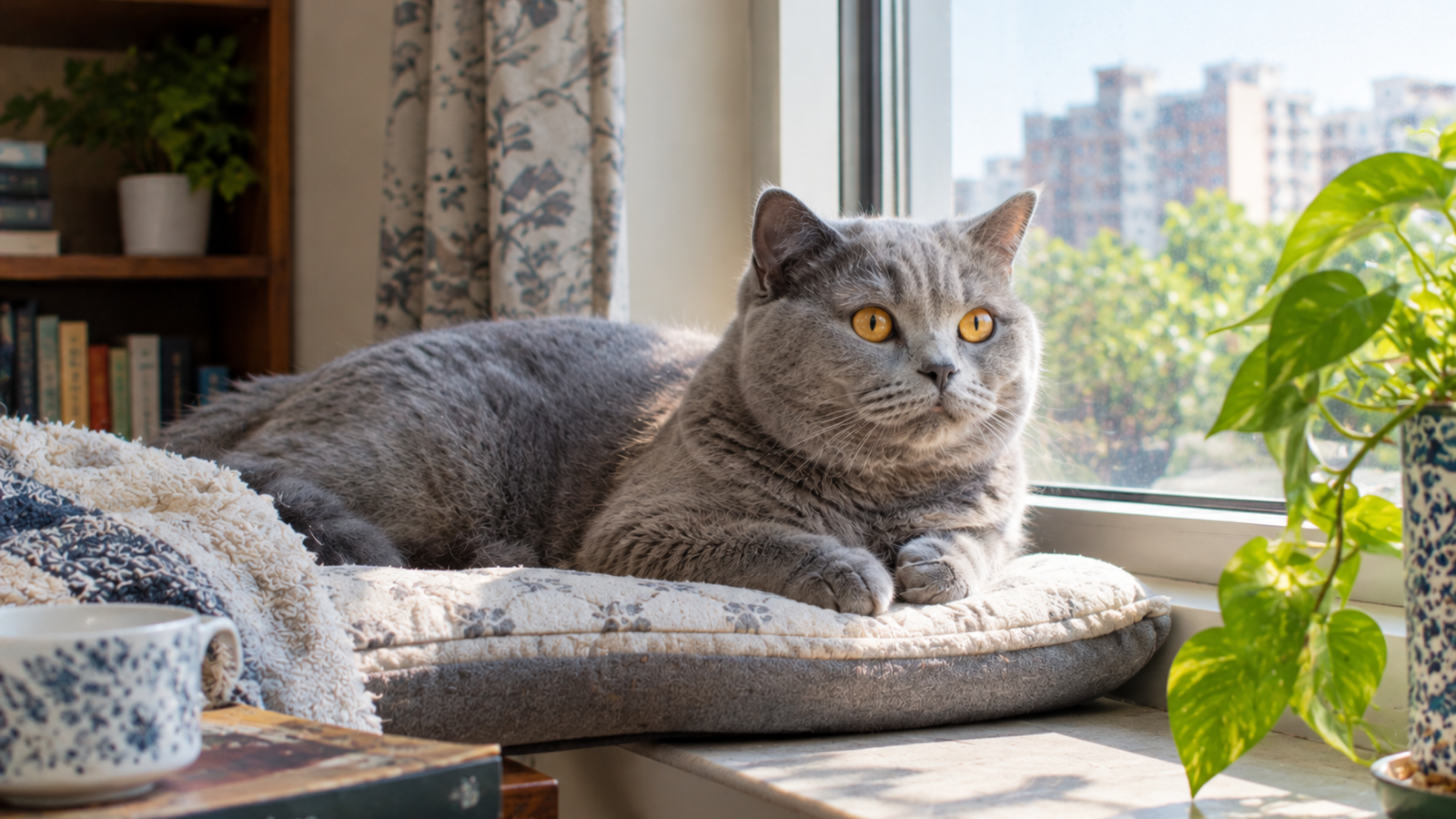
- The British Shorthair has a short, stout body which is compact and very muscular. They have a thick, plush coat that is of short length and their large, round eyes are usually of a copper or gold color.
- Perfect for the Indian apartment or home, this is a great breed for families with children or even a first time cat owner. The British Shorthair is a calm, affectionate but also very independent pet.
- British Male Shorthairs can be really overweight – with males reaching up to 4–7.7 kg, whereas the females are generally more anti-social than males and only really take to one person in their lives. They can weigh anything from 3.2–5.4 kg.
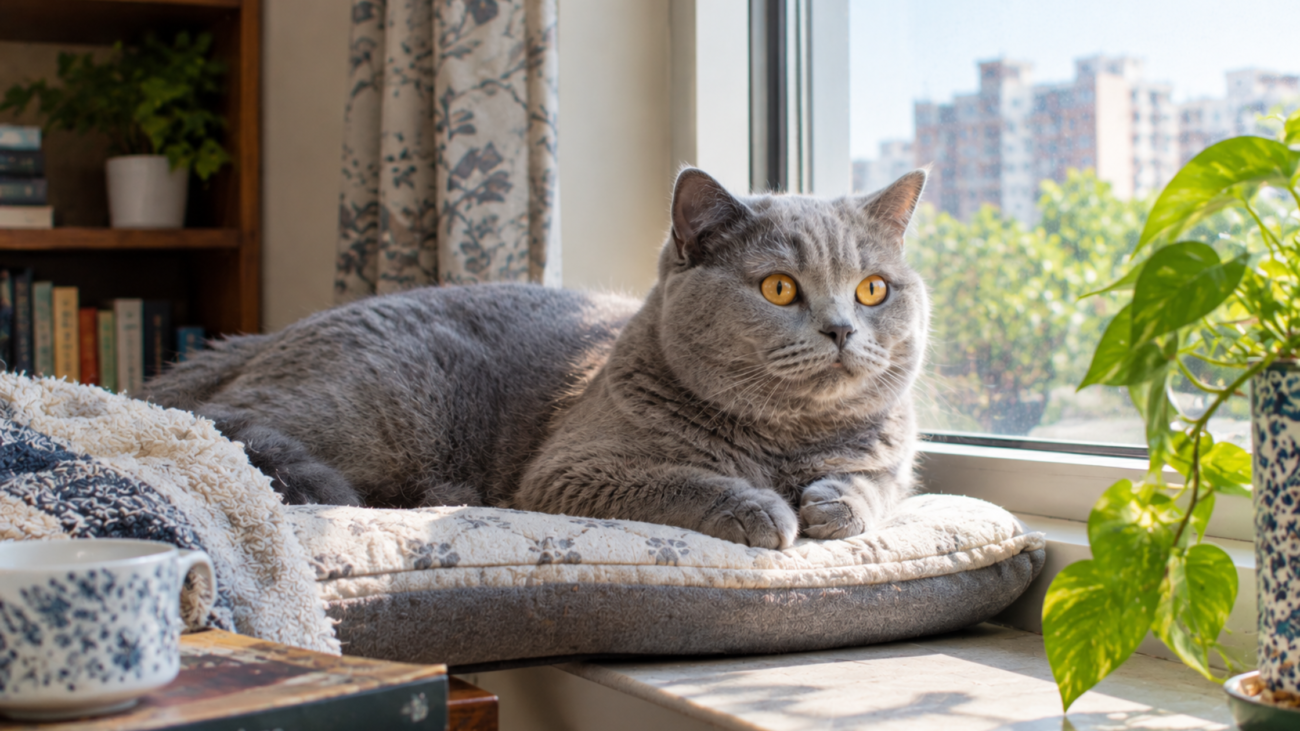
- The British Shorthair comes in over 30 different recognized colors but the most famous of them all is the British Blue. They have a grey-blue coat with copper eyes and are one of the most loved breeds of cats in the world.
- The price of British Shorthair kittens for sale in India can range anywhere from ₹40,000 to ₹1,20,000 depending upon the bloodline, the colour of the coat and the breeder.
Blog Takeaways
- The British Shorthair is a calm, quiet and non demanding pet. They make great pets for people living in Indian apartments or for working professionals.
- British Shorthairs are not fully grown until they reach maturity, which is between 3-5 years of age. In the meantime, it is vital that your cat is not over-eating and becoming obese.
- British Shorthairs are not fond of being picked up and carried around. However, they do not like to be clingy, and will show affection in their own special way. They will be by your side, or follow you from room to room.
- A high protein diet of all gluten free foods served in measured portions to ensure not to over feed will ensure to keep you British Shorthair at ideal weight throughout there life.
- Male and female British Shorthairs make great pets and it is generally agreed that both sexes can make wonderful companions. However some characteristics of the breed may be more pronounced in one sex than the other, and it is these points that will help you decide which pet is right for you.
- There is an increasing demand for the British Shorthair breed in India, over the last few years. The demand of this breed among Indian cat lovers has increased manifold.
- British Shorthairs make ideal pets for people living in apartments in metros across India like Mumbai, Bengaluru and Delhi. These are very calm and quiet animals and will keep to themselves most of the time. Since they are very independent, they do not need constant attention from their owners and are perfect for working people. They are low maintenance in terms of grooming as well, as they have a very dense short coat and need to be brushed only once a week. Thus, for busy owners, this is the perfect pet.
What Is a British Shorthair Cat?
The British Shorthair is a medium-to-large sized pedigree cat with a sturdy build, short dense plush coat and a rounded face. The eyes are large and copper in color. This old breed originated in Great Britain and is one of the oldest established cat breeds in the world. It is recognized by all of the major cat registries including TICA, the Cat Fanciers’ Association (CFA) and the Governing Council of the Cat Fancy (GCCF) – all fully recognized.
The British Shorthair is affectionately known as the ‘living teddy bears’. This dignified but gentle breed are very affectionate but in a quiet manner and do not demand constant attention. They make ideal companions for any home.
History and Origin
The British Shorthair has a long history which dates back to around 2,000 years to the time of the ancient Egyptians who kept wildcat-like species of domestic cats as pets. When the Roman Empire conquered Britain in 43 CE, the Roman soldiers brought their cats to their camps as well as to the stores where the food was kept to prevent it from being devoured by rodents. The cats that the Romans brought to Britain were imported from other parts of Europe and were mated with the local European wildcats. Over the centuries, the descendants of these mated cats developed into a large, sturdy domesticated cat with a short, dense coat. The cooler climate of the British Isles is ideal for this type of feline.
For centuries the cats brought to the British Isles by man interbred with the native European wildcats. The offspring of these feral animals were geographically isolated from their wild relatives and as a result became a sturdy, large cat with a short, thick coat suitable for a cool climate and became native to the British Isles.
How Did the British Shorthair Breed Develop?
Selective breeding of the British Shorthair began in the 19th century by a UK artist and feline aficionado Harrison Weir, who established the breed to a high standard. It was Weir that organized the very first cat show that took place at the Crystal Palace in London in 1871, where one of the British Shorthairs that were entered was crowned Best in Show.
The blue-grey variety was the first to be concentrated on by early 19th century breeders in their attempts to develop the British Blue and the variety is still very much part of the breed today. In the late 19th century, the British Shorthairs were extremely popular but the long-haired breeds such as the Persian, which were imported to the UK during this time, were to cause a decline in numbers of the British Shorthair.
Because of the great reduction of breeding stock of the British Shorthair during the two World Wars, the stock was increased by crossing with Persian, Russian Blue, Burmese and Chartreux. These crossings were only done to increase the number of British Shorthairs and the breeders always intended to return to the original type. These crossings, however, laid the foundation for a new breed: the British Longhair.
When Was the British Shorthair Recognised Worldwide?
In the post war years the breed was returned to its original form through a number of breeding programs, including that of Lady Barbara Johnson, who bred the first Grand Champion of any breed under the GCCF – a blue British Shorthair called Brynbuboo Little Monarch in the 1950s. In the 1970s the TICA granted Championship status to the breed, and two years later the CFA followed suit. Today all registries worldwide recognize the breed.
The British Shorthair is the UK’s No 1 most popular Pedigree Breed. This is because approximately 50% of all kittens registered with the GCCF every year are this wonderful breed.
Why Are British Shorthair Cats Popular in India?
British Shorthair cats have seen a significant rise in demand across India in recent years. Several factors drive this popularity among Indian cat owners.
British Shorthair cats are perfect for city living, especially in busy places like Mumbai, Bengaluru, and Delhi. They’re really calm and quiet, which is great for apartment life. Unlike some other breeds, like Siamese or Bengal cats, they don’t meow too much and are okay with being alone when you’re at work. Plus, their short coats are easy to take care of – just brush them once a week and you’re good to go, making them a great choice for households with busy schedules.
British Shorthairs are really great with other pets, so if you have a big family with lots of animals, they’ll fit right in. They’re good with kids, other cats, and even dogs that like cats. If you’re new to having a cat, especially in a place like India, the British Shorthair is a good choice because they’re easy to take care of and you know what to expect from them.
Quick FAQs
What makes the British Shorthair cat different from other cat breeds?
They have stocky compact bodies, which are very muscular. Their coats are very dense indeed with more hairs per square inch than any other breed of domestic cat. The British Shorthair is a very calm laid back breed, independent, and not at all demanding. They are very happy to sit with you and get attention, but don’t need to be on your lap all the time.
Is the British Shorthair cat a natural breed or man-made?
The British Shorthair is a natural landrace. The breed has developed in the wild in Britain over the centuries. In the 19th century they were selected for and formed into a refined breed but they are not a completely man-made breed as many others are.
When was the British Shorthair officially recognised as a breed?
The British Shorthair was shown by Harrison Weir at the very first cat show in London in 1871. The TICA granted this breed Championship status in 1979. It took the CFA until 1980 to grant Championship status to the TICA version of the British Shorthair. The GCCF have recognized this breed since early in the 20th century.
Why are British Shorthair cats so popular in India?
The British Shorthairs are very suitable as pets for someone living in an Indian apartment, as they are quiet, do not need too much grooming, and can be left on their own for hours while the owner is at work. British Shorthairs are generally very good with children, and also get on well with other pets.
Is the British Shorthair cat the same as the British Blue cat?
A lot of people believe that the term ‘British Blue’ refers to another separate breed of cat. The term in fact more commonly refers to the most common color of the British Shorthair – a Blue solid color with copper eyes, but there are over 30 recognized colors of the British Shorthair and more than just this blue color.
Are British Shorthair cats rare or easily available?
British Shorthairs are found through registered breeders all over India. Although they are not as numerous as Persian breeders, there are enough breeders to go around. Prices of kittens start from ₹40,000 for a basic bloodline to ₹1,20,000 for the highest coat color & bloodline.
Physical Appearance of British Shorthair Cats
The British Shorthair is a medium to large size cat. He has a very compact, strong, sturdy, muscular body. His features are all very rounded. His head, cheekbones, eyes and paws are all very rounded. The British Shorthair is a very strong and sturdy cat. He is looking like a big teddy bear. The British Shorthair is certainly a lot different from most of the Shorthair domestic cats.
What Does a British Shorthair Cat’s Body Structure Look Like?
The British Shorthair has a deep and broad chest, strong and muscular legs and a firm level back. Their body is cobby in nature, i.e. short and compact of near perfect proportions. They carry all of their weight in dense muscle and heavy bone as opposed to fat.
Their heads are very large and round, with very full and chubby cheeks, especially in males who are prone to develop jowls as they mature. The muzzle is short and round and the chin firm. They have a very short thick neck which lies right in to the side of their cheeks, forming a ‘no neck’ appearance. They have medium sized ears which are very broad at the base and are well apart on the head.
The British Shorthair legs are short, yet incredibly powerful and able to support a sturdy, muscular body. The paws are round in shape and very solid. The tail is thick at the base, of average length and tapers to a rounded tip.
What Are the Coat Types and Texture of British Shorthair Cats?
The British Shorthair has a very short, dense, plush coat. It is described by the breeders as ‘crisp’. What this means is that the coat of a British Shorthair will break over their body as they move. The coat of a British Shorthair has the most amount of hairs per square inch of any recognized cat breed. As a result it feels extremely rich and luxurious.
The undercoat of the British Shorthair is extremely dense, thus very efficient as an insulator. When a cat is shedding hair throughout the year the British Shorthair sheds a moderate amount of hair. Removal of this shed hair on a weekly basis using a steel comb is recommended to keep the coat of the British Shorthair in a healthy state. As the British Shorthair is a very clean animal and grooms itself very well it is rare that a British Shorthair needs a bath.
What Eye Colours Do British Shorthair Cats Have?
The eye color of a British Shorthair can be connected to the coat color of the cat. Many British Blue cats have deep copper or gold eyes, however this is not the only combination for this breed of cat. The eye colors and combinations found in a British Shorthair are: copper/gold (most common) found in blue, black, cream and solid-colored cats, green found in silver shaded and golden shaded cats, blue found in colorpoint and some white British Shorthairs, amber/orange found in chocolate, cinnamon and red cats, hazel found in certain tabby patterns and odd-eyed (one blue eye and one amber or green eye) extremely rare found in white British Shorthairs.
The British Shorthair breed standard considers eye shape — large, round, and level-set — more important than eye colour alone.
What Are the Most Popular Coat Colours?
The CFA and GCCF recognize more than thirty different colors and patterns for the British Shorthair breed. In terms of solid colors the most common are the blue (a grey-blue color, the favorite of most people) followed by the black (a jet-black color with gold or copper eyes) and the white (a pure white color with blue, copper or odd-coloured eyes). In addition to the above listed colors, in the British Shorthair there are also found animals of following colors: cream (pale color with orange or copper eyes) chocolate (dark brown color, less common than blue) lilac (pale, grey-pink color also called lavender) red (copper-orange color) cinnamon (reddish-brown color, rare) fawn (pale, warm-colored beige, extremely rare).
There are also many Tabby Colored British Shorthairs. These come in four varieties – Classic Tabby, Mackerel Tabby, Ticked Tabby and also Spotted Tabby. Other varieties include Tortoiseshell and Bicolour cats. In addition to these varieties of solid color British Shorthairs can also be found as Smoke, Shaded and Colorpoint varieties. They can also be found in a Golden Shaded and Silver Shaded variety.
How Is the British Blue Variation Different?
The most typical color of the British Shorthair is that of the so called British Blue cat. The British Blue has a blue-grey coat with an even color from the root of the hair to the tip. The blue color of the coat is contrasted by the deep copper, gold or amber color of the eyes as well as by the nose leather and the paw pads, which are all blue-grey.
The term ‘British Blue’ refers to the classic Grey-Blue color of the traditional British Shorthair breed. The color of the ‘British Blue’ is the most recognized throughout the world and it has become the benchmark for the breed as a whole. To this day the British Blue color is by far the most popular color with prospective cat buyers in both the UK and India.
British Shorthair Weight and Size Chart
British Shorthair cats are slow to mature. Most reach full size between 3 and 5 years of age. Males are significantly larger than females. The following chart provides general weight guidelines.
| Age | Male Weight | Female Weight |
| 3 months | 1.5–2.0 kg | 1.2–1.7 kg |
| 6 months | 2.5–3.5 kg | 2.0–2.8 kg |
| 9 months | 3.0–4.5 kg | 2.5–3.5 kg |
| 12 months | 4.0–5.5 kg | 3.0–4.0 kg |
| 2 years | 5.0–6.5 kg | 3.5–4.5 kg |
| 3–5 years (fully mature) | 5.5–7.7 kg | 3.2–5.4 kg |
The British Shorthair is a medium-sized cat. The adult height of the British Shorthair is approximately 30-35 cm (12-14 inches) at the shoulder. The total length of the cat is around 55-64 cm (22-25 inches). The maximum weight of an adult male British Shorthair is 7.7 kg and for a female 5.4 kg. Cats that are heavier than this are considered to be overweight and may benefit from a check up with a vet.
Quick FAQs – Physical Appearance
What does a British Shorthair cat look like?
The British Shorthair are a small to medium-sized breed of short cats. They have a broad, rounded face with rounded eyes, and are generally chubby, with a very muscular body. They have a short and dense coat and their short, sturdy legs also contribute to their overall cuddly appearance. They look like cute little teddy bears.
What is the most popular colour of British Shorthair cats?
Blue( grey-blue ) is the most common color found in British Shorthair cats all over the world and in India. The Blue British Shorthair has a blue coat and copper eyes and is easily recognizable because of their unique looks.
How big does a British Shorthair cat get?
Adult male British Shorthairs are typically between 5.5–7.7 kg (12–17 lbs) and will be full grown by the time they are 3-5 years of age. Female British Shorthairs are much smaller than their male counterparts and are also full grown by the time they are 3-5 years of age. On average females weigh between 3.2–5.4 kg (7–12 lbs).
Do British Shorthair cats have long or short fur?
The British Shorthair has a short length of fur on their body. Their coat is extremely dense and is very plush. It has a crisp feel to it and there are more hairs per square inch on this cat than any other breed of cat.
What colour eyes do British Shorthair cats have?
Most British Shorthairs have copper or gold eyes. The green eyes found in the Silver and golden shaded varieties of the breed are a direct result of their body color. The Colourpoint and some of the white varieties of the breed have blue eyes. In white cats there are very rare cases of odd-eyed combinations.
Is the British Blue the same as a regular British Shorthair?
Yes. The British Blue is a color variety of the British Shorthair breed. In addition to the blue color, there are over 30 colors within the breed.
Do British Shorthair cats shed a lot?
The amount of shedding of the British Shorthair is average, due to their short coats which are very dense and hard. It is sufficient to remove the loose hair with a soft brush once a week. They tend to shed more at the times of year when they are moulting and their coat is changing.
British Shorthair Cat Personality and Temperament
The British Shorthair is a very calm and gentle cat. Affectionate but doesn’t demand attention all the time. Can be left on his own for periods of time and always return for cuddles. Very laid back. Considered to be one of the most adaptable of the pedigree breeds to live in an Indian home.
How Do British Shorthair Cats Show Affection?
The British Shorthair is a very quiet, and reserved pet and do not jump on your lap for attention and affection. They are not big talkers and don’t meow for attention unless it is for food, and then it is constant meowing until they are fed. Affection is shown in very quiet ways by sitting next to you, following you from room to room, the occasional head bump or body rub.
The vast majority of the British Shorthairs we have come across do not like to be picked up and carried around the house from time to time. Many owners are surprised and even a little hurt when their cat does not seek out their affection as much as they feel it should be given. However, if an owner gives his cat the space it needs to trust it, the cat will become the most devoted and loyal companion around.
Are British Shorthair Cats Good for Indian Apartments?
The British Shorthair makes a great apartment cat as they are not too loud, not too destructive, and don’t need to go outside. They are better left alone for hours of work than very social cats such as the Siamese and Bengal and don’t meow too much.
The Adult British Shorthair is a moderately active animal. As a kitten, they are active for the first year of their lives and then they do calm down a lot in the second year onwards. This breed is basically a laid back animal, who is a lounger, observer, and a lazy cat who loves to be around his/her owner. As long as you give them the opportunity to play with interactive toys, to scratch on a scratching post and to have short play sessions with you of about 10-15 minutes daily, they will remain fit and healthy, not obese or couch potatoes.
How Do British Shorthair Cats Behave with Families?
The British Shorthair forms a relationship with the whole family. The breed does not have a tendency to over attach to one person in the family thus not becoming a solitary companion to that person. The British Shorthairs have the same amount of affection towards children, adults as well as elderly people and is very patient with them.
The British Shorthair is a very tolerant breed and therefore makes a great family pet especially for families with young children. They are not a scratch or bite breed and are very patient with children even when they can be ignorant and quite provoking at times. However, please be aware that they are not infinite and if surrounded by constant noise and lunacy of children then they may become withdrawn. The British Shorthair is not a breed that likes to be picked up and carried around the house like some other breeds, and they don’t like to be squeezed or have their tail pulled. Children must be taught how to treat a British Shorthair and boundaries set.
British Shorthairs are more than happy to take part in a household with other pets and they get on very well with both dogs and other cats. They make very calm and confident leaders of the household and can be very content in a multi pet home.
Are British Shorthair Cats Easy to Train?
The British Shorthair is a very intelligent cat. The quiet nature of the British Shorthair means that they can be very easily trained by the use of positive reinforcement, treats and lots of praise. The British Shorthair can learn to perform simple commands such as sit and down as well as to use a scratching post on command. They can even learn tricks such as high-five using a clicker.
As previously stated the British Shorthairs are not performance orientated cats and they learn at their own pace. They will learn to perform new commands some of the time. Therefore it is essential to keep all training extremely brief and to a maximum of 5-10 minutes per day.
How Vocal Are British Shorthair Cats?
The British Shorthair is a quiet cat. They do not meow a lot. When they do make a comment about something then it is with a very tiny sound, a tiny mew. But mostly British Shorthairs communicate with you by purring, by trilling and by their body language.
The British Shorthair’s low noise levels make this a perfect breed for life in an Indian apartment, with its close living walls and internal spaces.
Quick FAQs on Personality and Temperament
Are British Shorthair cats friendly and affectionate?
British Shorthair are very affectionate but in a very laid back, calm and dignified way. They are very fond of giving head bumps and of being stroked and will happily sit for hours next to you on the couch or in bed with you. British Shorthairs are not really a talking breed as they are not really meek and they are not really lap cats.
Do British Shorthair cats like to be held and cuddled? Most British Shorthairs are not interested to be picked up and held. They are very happy to sit with you on the sofa or in your bed for company. They are likes to gentle and soft petting and stroking but dislike to be held or restrained in any way.
Are British Shorthair cats good for introverts or quiet households?
The British Shorthair is a great choice for the introverted person or for someone who lives in a quiet home. This calm breed is not demanding, loves to be with you and to have you to share a quiet space with. They don’t need a lot of interaction with people.
Do British Shorthair cats get along well with strangers?
The British Shorthair is not an aggressive cat to strangers. They can take a little time to get used to new people but they are basically very calm and take no time at all to trust strangers. Majority of the time they will accept strangers politely after a short time.
Are British Shorthair cats playful or more laid back?
British Shorthair kittens are very playful and they have lots of energy. However, as they mature and they can change a great deal and become very calm and relaxed animals. They don’t really need a lot of play and in fact short regular play sessions with interactive toys will be sufficient to keep them physically and mentally stimulated and relaxed.
Do British Shorthair cats get attached to one person?
The British Shorthair forms a bond with the whole family. The female might once in a while form a bit closer bond with one of the family members than the others but generally that British Shorthair will be spreading affection to all the members of the family and that is generally going to be a male.
Are British Shorthair cats vocal or quiet?
The British Shorthairs are one of the quietest of the Pedigree breeds and are for the most part a silent animal. They will give the odd short note, a gentle trill or two and are generally a very quiet animal, much quieter than say a Siamese or other breed that meows all day long and into the night.
Male vs Female British Shorthair Cats
Choosing whether to have a male or female British Shorthair will more than likely depend on your lifestyle, the home you live in and any other pets you may have. Both male and female British Shorthairs can make fantastic pets, due to their calm nature, the loyal affection they bring to their families and their generally laid back personalities. Here are a few points which may help you decide which sex would be more suitable for you.
How Do Male and Female British Shorthairs Differ in Size?
A mature British Shorthair male will weigh on average 5.5 – 7.7 kg (12 – 17 lbs) and have a broad deep chest. They have a heavy bone structure and large jowls and are truly handsome boys. British Shorthair females on the other hand are much smaller. They have a sleek slender body and large eyes in proportion to their face. The average weight for a mature female is 3.2 – 5.4 kg (7 – 12 lbs).
Males can take longer to reach full maturity than females and typically reach full size between 3-5 years of age, whereas females reach full size between 2-3 years of age.
What Are the Personality Differences?
Male British Shorthairs are more sociable than females. They are affectionate towards all family members. They are more likely than a female to take to a new pet or stranger in the home and they retain a lot of the kitten like curiosity that they had as a young cat. A neutered male is a calm, laid back pet with no great territory instincts. He would make an ideal pet for a multi-pet home and would not be dominated by another pet.
Female British Shorthairs are very independent animals, they can be very reserved to strangers at first but once they know you and trust you, they become very loyal to you. They form a strong bond with one family member, and become very devoted to them. Some females accept every family member but form a deeper bond with a favorite person. They take time to get used to new pets and strangers but once they trust you they are a very loving animal.
Which Gender Is Easier to Manage?
Both genders are easy to handle. Male British Shorthair cats require slightly more encouragement compared to females for physical activity, as males tend toward laziness and weight gain in adulthood. Females are generally give attention to neat in their habits and may groom themselves more frequently. Spaying and neutering eliminate most hormone-related behaviour issues in both genders.
Health Considerations by Gender
British males and females are healthy, although males are slightly more prone to HCM in the breed than females. On average the females of the breed live longer than the males. As with all breeds both males and females are prone to obesity so must be fed a correct amount of high protein food.
Neutering male British Shorthairs can eliminate the risk of Testicular Cancer and eliminate undesirable behaviours such as spraying and reducing of Territorial Aggression. Female British Shorthairs can be spayed to eliminate the risk of Uterine Cancer and to eliminate Heat Cycle Behaviour. We recommend spaying/neutering both males and females by the time that they are 1 year old.
Quick FAQs on Male vs Female British Shorthair Cats
Are male or female British Shorthair cats more affectionate?
Males in general are very affectionate to all members of their family, and are likely to give kisses and cuddles. Females are also very affectionate but tend to channel all of their love to one particular family member.
Which is easier to manage a male or female British Shorthair?
Easy to manage. They may need to be persuaded to exercise to prevent obesity. Females are cleaner and more independent dogs compared to males. Neutering or spaying of both sexes makes them easier to handle.
Do male British Shorthair cats get bigger than females?
The average weights for males and females are shown above. Male Samoyeds weigh on average between 5.5–7.7 kg and have a broad face with corresponding jowls to carry their stocky frame. Female Samoyeds are of an average weight of 3.2–5.4 kg and are very slender and athletic in build.
Is there a personality difference between male and female British Shorthairs?
Male Bengal cats are generally more affectionate and therefore very sociable, playful and laid back than females. Bengal males are very affectionate to all family members and also very affectionate to other pets in the family. Female Bengal cats are generally more independent than males. They do not interest in mingling with strangers and are extremely loyal to one person in their life.
Should I get a male or female British Shorthair as a first cat?
Both would make a fantastic first cat for a first time cat owner. A male British Shorthair would make an absolutely ideal pet for very affectionate people. They are extremely friendly and loving and would be happy to be a pet with all the family. A female would be perfect for less demanding people, who don’t require constant attention. She would be perfectly happy to be left to her own devices, but very loving towards individual people on a one to one basis.
Do female British Shorthair cats have different health needs than males?
Spaying females can prevent a range of problems before they even occur including complications during heat as well as the risk of uterine cancer. Neutering of males can stop ‘accidents’ of spraying and reduce risk of developing HCM. Even neutered and spayed British Shorthairs benefit from regular health checks, eating a balanced diet in correct portion sizes, and weekly grooming.
British Shorthair Cat Lifespan
The average life span of the British Shorthair is 12 to 20 years making them one of the longest lived pedigree breeds. When provided with the correct food, kept indoors, regular health checks with a vet, and correct weight then many will live into their mid to late teens. There have been some reported cases of British Shorthairs living into their early twenties whilst being well cared for.
What Factors Affect a British Shorthair Cat’s Lifespan?
A British Shorthair can live for a long time, and there are several factors that affect how long that time will be. First of all, there is the genetics of the cat. Health screened bloodlines that do not carry the genes for HCM or PKD can live longer than other British Shorthairs, particularly those from unscreened bloodlines. The quality of the food the cat is fed is also important, as cats on high protein, low carbohydrate diets with measured portions of food will typically maintain an ideal weight for their whole life.
The biggest single preventable cause of death in mature British Shorthairs is obesity. Yes they can be sedentary at times and appear lazy however that is not to say that they are not extremely motivated by food. As your mature British Shorthair gets older it is common for them to start gaining weight. This can put them at risk of developing a range of serious diseases including diabetes, heart disease and arthritis. In some cases obesity can even affect a cat’s life expectancy. By keeping your mature British Shorthair at a healthy weight (less than 7.7kg for whole males and less than 5.4kg for whole females) you can help to add years to their life.
Do British Shorthair Cats Live Longer Indoors or Outdoors?
The indoor British Shorthair is a long lived breed of about 15-20 years and more as they are exposed to none of the risks that outdoor cats of any breed face ie. road accidents, other predators, parasites, weather and disease. They are a calm, gentle and affectionate breed and are best suited as indoor pets provided that they are given enough play, scratching posts etc to keep them stimulated and interactive. They thrive in safe and interactive homes in India.
This gentle breed is best suited to a quiet life indoors in India. Whilst not needing constant entertainment they love to play from time to time and also need things to do such as scratching posts, perches, climb frames, etc. and with plenty of attention and love, they will thrive as an indoors only cat.
When Is a British Shorthair Considered a Senior Cat?
The Senior life stage of the British Shorthair is around 11 – 12 years of age. The Senior cat needs to visit the vet 2 times a year, including having blood and urine samples taken to check for diseases that could affect Senior cats. It is recommended to feed a Senior specific diet. These types of diets have fewer calories with added joint nutrients to help support the Senior cat in their old age.
Figures from several Swedish insurance companies have established that 82% of all British Shorthairs live to be more than 10 years old. 54% of the cats live to be 12.5 years or older. It is not hard to see that the robust body, calm character and easy temperament of the British Shorthair have contributed to the long life span of this breed.
Quick FAQs on British Shorthair Cat Lifespan
How long do British Shorthair cats live on average?
BOn average a British Shorthair can live for 12 to 20 years and the majority of healthy indoor cats live on into their mid-teens with some even living into their early twenties providing they are given the best care.
What factors affect the lifespan of a British Shorthair cat?
Factors which determine a British Shorthair’s lifespan are genetics, diet, weight, lifestyle and health care. The biggest threat to a British Shorthair’s long life which can be prevented is obesity.
Do British Shorthair cats live longer indoors or outdoors?
The average life of an indoor British Shorthair is 15 to 20 years. While an outdoor British Shorthair can expect to live for 8 to 12 years. This is because the British Shorthair is never shown up to the dangers of traffic, wild animals and diseases while roaming outdoors.
At what age is a British Shorthair considered a senior cat?
A British Shorthair is considered a senior at around 11-12 years of age. Senior animals need to have regular checks with the vet and a change in diet. Also they need plenty of gentle exercise to keep them in good health.
How can I help my British Shorthair live a longer and healthier life?
Feed a high protein, portion controlled diet to very help reduce weight. Keep your cat indoors or safe places because protect from injury and illness. Play with your cat regularly to keep it stimulated. Take your cat to the vet every year for a check up. The breeder should check your cat for HCM and PKD at the yearly check up.
Do British Shorthair cats have a shorter lifespan than other breeds?
No, the average life span of a British Shorthair is one of the longest of all the breeds, whether a moggie or a pedigree. On average they live for 12 to 20 years and often live longer than many other purebred breeds. For example the Persian lives for 10–17 years and the Bengal for 12–16 years.
British Shorthair Cat Care Guide
The British Shorthair is a so-called low-maintenance-breed. They need care on a constant level and on a fixed plan but no daily grooming. A fixed routine for brushing the coat for bath time, for cutting claws, for dental care, for cleaning the ears and eyes, for the litter box and for the change of seasons is important for a British Shorthair to stay in best shape throughout the whole year.
Grooming Needs
The British Shorthair has a double coat, of very short length but of very dense hair all over the body. This double coat contains the most hair per square inch of any cat breed. The undercoat is loose and will frequently fall out even if not brushed.
Brush your British Shorthair 2-3 times a week with a soft-bristle brush or a stainless steel comb. The act of brushing your cat will remove loose hair, spread skin oils through their coat and also help prevent hairballs from forming. When your British Shorthair is shedding their coat at seasonal times, brushing every day can help to deal with the large amount of coat change.
For surface grooming, a rubber grooming mitt is ideal for removing loose hair from the surface of the coat. A metal comb, particularly one with wide spaced pins is ideal for working deeper into the undercoat. There are de-shedding tools available for cats but these are generally best avoided as they can be very harsh on a cat’s skin and can alter the texture of their coat.
Brushing your cat on a regular basis not only removes the vast amount of shed hair that can cover your home in a thick layer of fur it also acts as a health check, allowing you to feel for lumps and to spot red rashes, parasites and skin irritation before they become serious problems. When running your hands over your cat’s body in this way it is worth paying particular attention to the areas around the ears, under the arms, along the flanks and around the base of the tail. Loose hair from these areas can become trapped in matting on very obese cats and senior animals.
Bathing Tips
British Shorthair are very clean animals and make excellent self-groomers. Their short dense coats rarely require washing. Every 4-6 weeks a British Shorthair should be given a bath when they get very dirty, have a strong smell or get greasy.
Ideally a British Shorthair should be bathed with lukewarm water and a mild cat shampoo, as human shampoo has a different pH value and can strip the coat of the cat’s essential oils and thus leave it unhealthy and dirty. After applying the shampoo it is crucial to rinse it off completely, especially the dense undercoat. After the cat has been bathed it is recommended to towel dry the cat as quickly as possible and then dry the cat with a low-heat pet dryer if the cat is not afraid of the sound.
As a rule British Shorthairs are not bathed often, but if there is a monsoon then an occasional bath could help to stop fungal skin diseases in this very humid country. Kittens should be bathed before they are old enough to have their first groom to get them used to being in water.
Nail and Dental Care
The nails of a British Shorthair grow very fast, and as they are very thick and hard, they need to be trimmed every 2 to 3 weeks. If the nails are left long, they can get caught in carpets and curtains, or worse still cause injury to your pet. They can also grow into the paw pads. We recommend using a good pair of nail clippers, specifically designed for cats. When cutting the nails, it is very important to cut only the clear part of the nail (the tip of the nail), as the pink part (the quick) contains nerves and blood vessels.
It’s worth noting that a scratching post of greater use to your cat than a small pad of paper is a long scratcher. Ideally it should be of length greater than your cat’s length plus the length of their back from the back of their thighs down to the end of their tail. As your British Shorthair is likely to be a larger than average cat, you will need a bigger than average scratcher.
Brushing your British Shorthairs teeth is an important part of their oral health. Brush their teeth 2 to 3 times per week with a dental brush and suitable cat dental toothpaste. Some cats are not willing to have a toothbrush used in their mouth and so brushing their teeth with gauze wrapped around your finger is an alternative. Also providing dental treats for your cat to eat and the odd dry food can also help to remove plaque from your cat’s teeth.
Annual professional dental cleanings are recommended to prevent and treat dental disease. If left untreated, dental disease can spread to other parts of the body, including the heart, kidneys, and liver.
Ear and Eye Cleaning
Check the ears weekly for wax build up, hair etc and any signs of illness such as redness etc. A healthy ear is a pale pink color and has no smell. You can wipe the outer ear with a damp cotton ball or pad using a good quality ear cleaner approved by a vet. NEVER use cotton buds or any other object to go into your cat’s ear canal as this can cause serious damage.
Ear mites in the warm, humid climate of India can quickly cause serious damage to your cat’s hearing. So, immediate treatment from a vet is required. Some of the signs of mites in the ear of your feline are: excessive scratching at the ears and head shaking and dark brown discharge from the affected ear(s).
Occasional mild tear staining may occur on some British Shorthairs particularly those of the lighter varieties of the breed. The tear staining can be removed by simply wiping the corners of the eyes with a soft, damp cloth and some clean water. Make sure to use a different part of the cloth for each eye to prevent cross infection. If the discharge from the eye is persistent, the eye is red or swollen it is best to check with a vet.
Litter Box Maintenance
The British Shorthair is a rather large and sturdy cat, so his litter box has to be of corresponding size. In other words: his litter box has to be large enough for his cat to enter the litter box, to turn around in it, to leave the litter box and to dig in the litter. To find the correct dimensions for the litter box: the litter box has to be at least 1.5 times as long as the cat is. British Shorthairs prefer open-top litter boxes because of their stocky build. Covered litter boxes are usually too small for them.
Make sure to thoroughly clean the litter box every day – best twice a day – and change the full litter, including the box, with mild soap and water, every 7 to 10 days. British Shorthairs are very particular animals and can get absolutely horrified by the smell or look of a dirty litter box and leave soiled areas of the house instead.
When placing the litter box in your home, try to pick the quietest area with the least amount of footfall. It is also best to place the litter boxes well away from your cats’ food and water. In multi-cat households it is agreed by most that you need to have as many litter boxes as there are cats, plus one extra. Your best bet for detering your British Shorthair from not using the litter box due to smells would be to use an unscented litter. There are many different types of litter available, some of the best would be a clumping clay litter or a natural alternative to clay. These types of litter do not have any strong smells from artificial fragrances that could repel your cat.
Seasonal Care Tips for Indian Conditions
India’s climate presents unique care considerations for British Shorthair cats across different seasons.
Summer (March–June):The British Shorthair has a thick double coat of fur. Therefore in summer keep your indoor cat in air-conditioned rooms or cool well-ventilated rooms of the house. In addition make sure your cat has access to plenty of fresh water around the house. The water should be in ceramic or stainless steel bowls, not plastic, as these keep water cooler for longer. Brush the coat more frequently in summer, as the coat traps a lot of heat. The coat will ‘breathe’ when brushed, allowing heat to escape.
Monsoon (June–September):High humidity can cause fungal skin diseases, ear mites and flea infestations in your cats. Your cats’ sleeping areas must be very dry and well-ventilated. Inspect your cat’s coat and ears regularly for signs of moisture, redness or of parasites. Your veterinarian can provide you with a good quality flea and tick prevention which you must apply at intervals before monsoon season starts. It is also a good idea to bath your cat with an antifungal shampoo from time to time during monsoon to keep their skin healthy.
Winter (October–February):The cool climate British Shorthair is equipped with a thick coat of fur but in winter it is best to provide them with a warm bed and a draft free area to sleep. In northern Indian cities the winter temperature can drop below 10°C but their coat will thicken in winter. Be prepared to brush them more so that you can get to their undercoat. Stick to their regular feeding times as they may be eating more in winter, but it is very easy to overfeed and make them fat.
Quick FAQs on British Shorthair Cat Care
How often should I groom a British Shorthair cat?
A British Shorthair cat needs 2 to 3 times per week. They want brushing to daily sessions during spring and autumn shedding seasons.
Do British Shorthair cats need regular baths?
British Shorthair cats do not need baths frequently. Bathe only when they are necessary — once every 4 to 6 weeks or when visibly dirty. Use lukewarm water and cats shampoo.
How do I clean my British Shorthair cat’s ears safely at home?
Check ears weekly. Wipe the outer ear gently with a cotton ball dampened with vet-approved ear cleaner. Never insert anything into the ear canal.
How often should I trim my British Shorthair cat’s nails?
Trim nails every 2 to 3 weeks using cat-specific nail clippers. Cut only the clear tip and avoid the pink quick.
What type of litter box is best for a British Shorthair cat?
A large open top litter pan (litter box) of a minimum size of 1.5 times the length of your cat is best. The British Shorthair is a large breed of cat and need large open litter boxes.
Do British Shorthair cats need special care during summer in India?
During heat of summer keep your British Shorthair in air-conditioned rooms or cross ventilated rooms of home. In addition to normal supply of water for your cat to drink provide extra water sources. Regular brushing to prevent hair matting.
How do I keep my British Shorthair cat comfortable during monsoon season?
Keep sleeping areas dry. Check ears and coat for fungal issues and parasites weekly. Schedule preventive flea and tick treatment before monsoon begins.
Best Food for British Shorthair Cats
Feed the British Shorthair a high-protein, low-carb diet in correct quantities in order to ensure that he is of healthy weight and has obtained all of the nutrients required to sustain himself as a result of his dense coat, muscular body and otherwise. The British Shorthair is an obligate carnivore, therefore all of his meals must consist mainly of real meat.
What Should a British Shorthair Cat’s Diet Include?
So looking at the back of the cat food packets, the main ingredient should be an animal based protein source, ideally in the form of a whole meat such as chicken, turkey, fish or lamb. This will ensure that your cat has a sufficient amount of protein within their diet to enable them to have strong muscles, a healthy coat and plenty of energy for daily activity as well as good health of organs. Ideally the food should not contain a lot of fillers i.e. cereals, grains and plant based protein sources.
British Shorthairs require a diet that contains moderate amounts of animal fat (up to 20%) to support their coat and to ensure that nutrients are being properly utilized by the body. Taurine, an essential amino acid found in animal-based ingredients, is needed for the health of the heart, eyes, and for reproduction. British Shorthairs are unable to synthesize taurine and therefore must receive a sufficient amount from their diet.
Watch for many unhealthy additives in cat foods including artificial preservatives, added sugars, fillers and “meat by-products.” The term “meat by-products” can include many different kinds of animal parts even and in some cases entire animals. These products are generally of very poor nutritional value to your cat. While they may provide calories to keep your cat from losing weight, they offer no nutritional value to support the health of your cat. In the short term your cat could become obese, in the long term they could be prone to a number of health problems.
Should British Shorthair Cats Eat Wet Food or Dry Food?
As British Shorthairs are not very drinky cats, they require extra moisture in their food to keep them hydrated and to keep their kidneys and urinary tract healthy. To achieve the best and most complete nutrition for your cat, we recommend mixing wet and dry food. For the wet food, 75-85% consists of moisture. The dry food supports the dental health of your cat by for example reducing the amount of plaque on the teeth by the cat gets by eating the kibble. However, dry food alone does not provide enough moisture for your cat. We recommend to give your cat wet food as his main meal and use the dry food as a supplement or as a contrast to his main meal to make sure his teeth are clean as well.
While dry food cannot compensate for a cat’s lack of hydration in the same way that wet food can, dry food is an effective method of removing plaque from a British Shorthair’s teeth through the mastication process of eating kibble. Serve the wet food as the main meal, and then use the kibble as an occasional treat to add to your cat’s diet and to provide dental enrichment.
As for the feline friends in India, they should be on natural and human-grade food by Taffuzo, one of the best cat food brands in the market. Their 100% human-grade ingredients, zero preservatives, gluten-free recipes with high-quality protein and no artificial additives make for a great British Shorthair cat food.
How Much Should a British Shorthair Cat Eat Per Day?
British Shorthair cats need 200 to 300 calories per day for adult maintenance, depending on age, weight, activity level, and neutered status. Follow these general portion guidelines:
| Life Stage | Daily Calories | Feeding Frequency |
| Kitten (up to 12 months) | 250–350 kcal | 3–4 meals per day |
| Adult (1–7 years) | 200–300 kcal | 2 meals per day |
| Senior (8+ years) | 180–250 kcal | 2 meals per day |
Never free-feed a British Shorthair cat. The breed overeats readily when food is constantly available. Measure each meal precisely using a kitchen scale or measuring cup. Treats should make up no more than 10% of daily calories.
Can British Shorthair Cats Eat Homemade Food?
Can I feed my british shorthair on a homemade diet? Yes, they can be fed on home made diet if it is correctly formulated to ensure all the nutrients are provided. Failure to do so could result in potentially seriously damaging deficiencies of taurine, essential fatty acids, and of calcium to phosphorus ratio over time.
Home cooked foods must be nutritionally complete to offer to your cat. Foods lacking in taurine, or containing wrong proportions of essential fatty acids or calcium to phosphorus could cause serious health problems after long periods. Foods to add to your cat’s meals would be similar to those found in a ready made food – i.e. boiled chicken, beef, lamb, pork, turkey or fish – then add in small amounts of cooked pumpkin, carrot, or even raw or cooked spinach to give extra fiber with loads of vitamins and minerals. Onions and garlic are toxic to dogs but are okay for cats to eat – however they don’t give any benefits to your feline friends. Other foods to beware of are grapes and raisins, chocolate, and raw eggs. If you are thinking of going 100% home made it is strongly advised that you contact a Veterinary Nutritionist to make sure the complete and balanced diet is suitable for your cat.
What Foods Should British Shorthair Cats Never Eat?
Here are some human foods that are bad for your British Shorthair! Onions and garlic: they can cause damage to the red blood cells in your cat. Chocolate: contains theobromine which is toxic to cats. Grapes and raisins: can cause your cat to suffer from kidney failure. Raw eggs: can cause your cat to contract salmonella poisoning and can also cause a deficiency in biotin. Alcohol: even in small amounts it is toxic to your cat. Caffeinated drinks: toxic to your cat’s nervous system. Milk and dairy products: most adult cats are lactose intolerant and can suffer from a sore stomach after consuming milk and cooked bones: they can cause serious internal injury by splintering.
Quick FAQs on Food for British Shorthair Cats
What is the best food for a British Shorthair cat in India?
It is very important to choose a suitable food for your British Shorthair. The main ingredient should be a real meat, and must not contain any artificial preservatives. The food should also have a suitable ratio of protein to moisture, Taffuzo supply a range of natural human-grade foods to feed your feline friend.
Should I feed my British Shorthair wet food or dry food?
It is best to offer a mix of both wet and dry food. The wet food can form the main body of your cats’ diet as this will provide them with the right amount of moisture that they require. The dry can then be added in to help with their dental health. Do not feed dry food alone.
How much should a British Shorthair cat eat per day?
An adult British Shorthair requires around 200-300 calories per day and can be fed in two meals per day as long as they have been measured out correctly. Kittens require around 250-350 calories per day and can be fed in 3-4 meals per day.
Can British Shorthair cats eat homemade food?
Yes, but only if 100% complete for all necessary nutrients, including taurine, as well as all required vitamins and minerals. However, it is always best to speak with a veterinary nutritionist and get complete recommendations for a 100% homemade diet.
What foods should I never feed a British Shorthair cat?
Onions, garlic, chocolate, grapes, raisins, raw eggs, alcohol, caffeine, dairy, and cooked bones are all considered toxic or unhealthy for your cat.
Do British Shorthair cats need supplements in their diet?
If your cat is on a complete, balanced commercial cat food then there is no need for any additional supplements. However, if your cat is on a homemade diet then taurine, omega-3 fatty acid, and/or calcium, plus other nutrients, may be needed. This must be monitored closely and added as required by your cat’s veterinarian.
Is Taffuzo cat food suitable for British Shorthair cats?
Yes. Taffuzo cat food is 100% human-grade quality. No preservatives in recipes. We have a Gluten-Free recipe for the British Shorthair, a great diet for this breed made with high-quality protein (no fillers, no common allergens).
British Shorthair Cat Health Problems
The British Shorthair is one of the healthiest of the pedigree breeds however, like all breeds, they can be prone to certain health problems both inherited and caused by their way of life. It is always best to be aware of potential problems so that should they occur in your cat, you are able to spot them early and do as much as possible to prevent serious damage from occurring.
What Is Hypertrophic Cardiomyopathy (HCM) in British Shorthair Cats?
Hypertrophic cardiomyopathy (HCM) is the most common heart disease in cats and in the most important genetic disorder in the British Shorthair. The disease is characterized by an thickening of the heart muscle walls (interventrikuläre septum und myocard walls) that is not normal. This causes the heart to become less efficient at pumping blood. Long-term effects of the disease can be congestive heart failure, blood clots and sudden death of the cat.
A large study from Denmark screened 329 British Shorthairs for HCM. The prevalence of HCM in British Shorthairs was found to be 20.4% in males and 2.1% in females. Thus, the male British Shorthair is at significantly higher risk for HCM than his female counterpart.
Hypertrophic cardiomyopathy (HCM) is described in veterinary medicine as a ‘silent disease’ and in the early stages of the disease no signs of illness will be apparent in the affected cat. In the later stages of the disease, a variety of symptoms can occur, including rapid breathing, lethargy, loss of appetite, open mouth breathing, sudden collapse and even sudden paralysis of one hind leg due to a blood clot. A cardiac echocardiogram is the only test which can give a reliable diagnosis of the disease. All responsible breeders check their breeding stock for HCM every 12 to 24 months.
Even though there is currently no cure for the disease, it can be managed using the right type of medication needed to treat the individual cat. This can include control of heart rate, treatment of lung congestion and anticoagulation to prevent the formation of blood clots. The biggest advantage of early detection of HCM in a cat is that they can live the best quality of life for the time that they have left. Therefore, screening every 12-24 months for all of the breeding cats is the only responsible action that a breeder can take.
What Is Polycystic Kidney Disease (PKD)?
Polycystic kidney disease (PKD)Polycystic Kidney Disease (PKD) is a genetic disease of the kidneys where numerous fluid filled cysts develop. Gradually these can destroy the bulk of the kidney tissue. PKD is a disease of the Persian breed but has been introduced into the British Shorthair breed by outbreeding to the Persian.
Kittens are born with the tiniest of cysts on their kidneys. As the kitten grows into adulthood, these cysts will get bigger. About the time that the cat is 7 years old the symptoms of PKD will begin as the kidneys start to fail. As the kidneys continue to fail the cat will display signs of illness. The main signs are a increased thirst and urination, a loss of weight in spite of increased appetite, a decrease in appetite and become a lethargic cat.
A DNA test ( PKD carriers can be identified using a simple cheek swab test. ) Most Responsible British Shorthair breeders will test their breeding cats for PKD and only breed from the PKD-negative parents. There is currently no cure for PKD but with an early diagnosis of the disease through regular bloodwork and ultrasound your veterinarian can work with you to slow the progression of the disease through diet changes and other supportive care.
Why Are British Shorthair Cats Prone to Obesity?
ObesityThe most common preventable health problem in the British Shorthair is obesity. As the breed has low activity, great love of food and large bones, as they mature (around 3 to 5 years of age) they will very quickly gain weight on an unregulated diet.
Obesity in the British Shorthair can lead to serious illness such as diabetes, heart disease, arthritis and breathing difficulties and can even reduce their life expectancy. At what weight does this become a problem for your cat? For the male over 7.7kg and female over 5.4kg they would be considered overweight and would benefit from a change in diet.
Prevent obesity in your British Shorthair by measuring his food, give him in the morning and in the evening at the same time and don’t let him graze at other times of the day. Also watch your treats not to exceed 10% of the daily caloric intake. The British Shorthair really needs to do interactive play with you and that should be for 15-20 minutes a day.
What Other Health Issues Affect British Shorthair Cats?
Beyond HCM, PKD, and obesity, British Shorthair cats may experience the following health conditions.
Feline Aortic Thromboembolism (FATE): FATE (Fatal Acute Thrombo-embolic event) in cats is a serious but potentially treatable complication of heart disease. The term FATE describes the sudden acute development of signs of leg weakness or paralysis caused by a blood clot (thrombus) having formed within an artery of the hind leg(s) and is a medical emergency requiring immediate attention.
Dental Disease: Dental problems are a common health issue that can affect British Shorthairs. Tartar, gingivitis and periodontal disease can all affect your cat’s health and need to be prevented by regular cleaning of their teeth and annual dental clean under anesthesia. Diet is a major cause of dental problems in cats, especially in those that are mainly indoors and eat soft food. Brushing your cat’s teeth regularly can help prevent problems and keep them healthy.
Hemophilia B: There are some breeds of domestic cat, such as the British Shorthair, who are more prone to this blood disorder than others. Even carrier animals can suffer from FATE as they can from time to time from excessive bleeding due to even the smallest of cuts and scratches as well as from any surgical procedure. There is a test available to detect carriers of this serious disease.
Diabetes Mellitus: The prevalence of diabetes in British Shorthairs is below average for cats but some individuals within the breed are obese and therefore at greater risk of diabetes than their lean counterparts. A high-protein, low-carbohydrate diet, along with careful control of the weight of overweight cats, can help to minimize this risk.
Lower Urinary Tract Disease (FLUTD): Male cats that have been neutered are more susceptible to suffer from Inflammation of the Urinary Tract and Blockages. In order to prevent these health problems, ensure that your cat is drinking enough water by feeding wet food, providing plenty of fresh water and also make sure the litter boxes are very clean.
What Vaccinations Does a British Shorthair Cat Need in India?
British Shorthair cats in India should receive the following core vaccinations:
| Vaccine | Schedule |
| FVRCP (Feline Viral Rhinotracheitis, Calicivirus, Panleukopenia) | 8, 12, and 16 weeks; annual or triannual boosters |
| Rabies | 12–16 weeks; annual booster (mandatory in India) |
| FeLV (Feline Leukemia Virus) | Optional, recommended if the cat has outdoor exposure or contact with other cats |
The best time for the various vaccinations required for your cat’s age, lifestyle and geographical location would be advised by a veterinarian in India. All adult British Shorthair cats should have annual wellness checks which include a blood test. For cats over 7 years old the checks should be every 6 months.
Deworming as per vet’s prescription is must, adult cats are dewormed every 3 months whereas kittens are dewormed more frequently. Since it’s hot and humid here parasites are active throughout the year so timely worming of your cat is must.
Quick FAQs on British Shorthair Cat Health Problems
What are the most common health problems in British Shorthair cats?
Some common health issues seen in the British Shorthair are Hypertrophic Cardiomyopathy (HCM), Polycystic Kidney Disease (PKD), obesity, dental disease and urinary tract disease.
Are British Shorthair cats prone to heart disease?
The British Shorthair is a high risk breed for HCM, especially male cats. Early detection of HCM before symptoms of the disease occur can allow successful treatment of the condition.
How often should I take my British Shorthair to the vet?
Schedule an annual wellness exam for your adult cat. Seniors (8+ yrs) need to come in for a wellness exam every 6 months. If your cat appears lethargic, is having trouble breathing or is showing a decrease in appetite and starts to lose weight with no change in food then come in immediately.
What vaccinations does a British Shorthair cat need in India?
Core vaccines include FVRCP (given at 8, 12, and 16 weeks with annual boosters) and Rabies (mandatory in India). FeLV vaccination is optional but recommended for cats with outdoor exposure.
Do British Shorthair cats get obese easily?
Obesity is the most common preventable health issue in the Sphynx breed. Their low level of activity and strong food motivation make them prone to over eating and gaining excessive weight. Measured meals, portion control and daily play can help to prevent obesity in your Sphynx.
How do I know if my British Shorthair cat is sick?
Changes in your cat’s normal behavior and physical signs can indicate serious health issues. These signs could be an increase or decrease in your cat’s appetite, activity level, litter box use, breathing rate, grooming, etc. A sudden loss of use of the hind legs in combination with open-mouth breathing and / or persistent vomiting is an emergency and should be seen by your veterinarian immediately.
What is the deworming schedule for British Shorthair cats in India?
Adult cats should be dewormed every 3 months. Kittens require more frequent deworming typically at 2, 4, 6, 8, and 12 weeks, then monthly until 6 months old. Follow a veterinarian’s specific recommendations.
British Shorthair Kitten Guide
British Shorthair kittens are little slow growing bundles of energy, they won’t reach full maturity until they are between 3 and 5 years of age. Until they are about one year old they will need to be fed the correct food, be well socialised and receive the best health care until they reach maturity.
What Age Can I Bring a British Shorthair Kitten Home?
Kittens should not leave their breeder’s home before 12 weeks of age (3 months). Responsible breeders keep their kittens for 14 to 16 weeks with their mom and their littermates. This allows the kittens the socialisation they require, their immune system to complete its development and them to learn all their behavioral traits.
Why removal of kitten from mother & littermates so early in life can cause anxiety/ aggression & also cause inappropriate Elimination Behavior in litter. Always ask breeder for: Vaccination Records, Deworming History, Health Clearing for particular hereditary diseases that parents may carry i.e. PKD, HCM.
What Should I Feed a British Shorthair Kitten in India?
British Shorthairs are fast growing kittens within the first 12 months of life and require a high protein, high calorie diet. Kittens should be fed a kitten specific food whether it is a commercial kitten food or a homemade diet. It is crucial that the kitten food is made under the guidance of a veterinarian. The first ingredient in the kitten food should be a real meat such as chicken, beef or fish.
Breeders recommend that kittens are fed 3-4 meals a day until they are around 6 months old, then the amount of meals should be gradually reduced to 2-3 meals a day by the time they are 6 months old. They are growing quickly so expect them to gain around 500-750g per month. Boys are likely to grow more, and develop earlier than girls of the same age.
Fresh clean water should always be available to your kittens. Offering them water from a fountain can increase the amount that they actually drink. Cow’s milk is not suitable for most kittens as they are lactose intolerant and can suffer from digestive problems if they are given dairy.
How Do I Kitten-Proof My Home for a British Shorthair?
Child proof your home before bringing your kitten home to prevent any damage or injury. Store away electrical cords, toxic houseplants such as lilies, pothos, aloe vera, small objects that your kitten could swallow and make sure all windows and balconies are closed and have no netting. Also make sure all cleaning supplies, medications and human food are stored in closed cabinets.
Prepare a ‘home base’ with food, litter and plenty of soft bedding. The kitten will appreciate having a good quality scratching post too. Once brought home allow your kitten to explore your home room by room allowing your kitten time to become familiar with all areas of the home. The British Shorthair is an adaptable kitten as long as they are given time to explore in a calm manner.
When Should a British Shorthair Kitten Get Its First Vaccination?
The first FVRCP vaccination for kittens is generally given at 8 weeks of age and are then repeated at 12 weeks and 16 weeks of age. The first Rabies vaccination is usually given between 12 to 16 weeks of age as it is mandatory in India. The FeLV vaccine is optional but may be advised by a vet depending on the amount of contact that your kitten has with other cats.
The first health check for your new kitten should be held within 48 to 72 hours of bringing your kitten home. This health check will allow your vet to assess your kitten’s health, check that they have been correctly vaccinated and check for any hidden parasites such as worms etc. Your vet will also advise on a suitable deworming schedule for your kitten.
How Do I Socialise a British Shorthair Kitten Properly?
The socialization of kittens is best carried out very slowly and gently. The kitten must get used to people, sounds and situations. The kittens socialization period takes place between 3 and 14 weeks of age and then they learn fastest of all. They are most sensitive during this time to experiences which can help them to become a confident and trusting cat.
Gentle daily handling of the kitten plus socialization to different family members (including children) in a calm environment, socialization to household sounds (like vacuum, doorbell, TV) at low level to avoid fear, and gradual socialization to other household pets (if any) by scent-swapping and then under controlled circumstances.
A British Shorthair kitten that has had the best of socialisation will grow up to be a very calm and confident adult. It will not be easily threatened by new visitors to your home. It will be more than happy to travel with you for all visits to the vet’s and generally be easy going and very tolerant of all changes in your daily routine.
How Fast Do British Shorthair Kittens Grow?
British Shorthairs grow very quickly within the first year and then continue to develop for several years after that. By the time your British Shorthair kitten is 12 months old it will have developed to reach much of its adult height and length but will still have some way to go to reach its full adult weight and muscle. The male kittens in particular can go through a gangly adolescent phase between 6-9 months of age during which time their legs will seem to stretch on their own and they will appear to be a long thin kitten with a very thin covering of fur. However this will soon give way to a well muscled kitten as he fills out.
Full physical maturity is usually reached by the British Shorthair at 3 – 5 years old. The slow maturation of the British Shorthair needs to be taken into consideration during the kitten’s teenage years and it is essential to avoid over-feeding as the kitten grows at a slow and steady rate and could put on too much weight too quickly for its bones to handle.
Quick FAQs on British Shorthair Kittens
What age can I bring a British Shorthair kitten home?
It is recommended that kittens do not leave the breeders home before 12 weeks of age, some breeders decide to extend the socialisation of their kittens and keep them for 14 to 16 weeks.
What should I feed a British Shorthair kitten in India?
They should be eating a high-protein kitten food made with real meat as the 1st ingredient. Typically kittens are fed 3-4 times a day until they are approximately 6 months old, then you can drop down to feeding 2-3 times a day.
How do I kitten-proof my home for a British Shorthair?
All cables and leads must be safely secured out of your kitten’s reach. All toxic plants must be removed from the home. Windows should be covered with a solid insect mesh. All chemicals (toxic substances etc) must be stored safely out of reach of your kitten. A quiet area will need to be set up for your kitten’s arrival, including litter tray, food, bed and scratching post.
When should a British Shorthair kitten get its first vaccination?
8 weeks – 1st FVRCP vaccine, 12 weeks – 2nd FVRCP booster, 16 weeks – 3rd FVRCP booster, 12-16 weeks – 1st rabies vaccine (as an Indian kitten).
How do I socialise a British Shorthair kitten properly?
Handle the little kitten very gently and for short periods of time each day. Gradually introduce the kitten to people, sounds and other pets over the 3-14 weeks that the kitten is growing. The kitten needs to be exposed to these things in a consistent and calm manner. This will help the little kitten to grow into a confident adult.
How fast do British Shorthair kittens grow into adults?
By 12 months of age most of our kittens have reached their full adult height, but they will continue to fill out with muscle and gain weight over the next 3 to 5 years. On average males will mature slower than females of the same age.
What are the signs of a healthy British Shorthair kitten?
His eyes are bright and see clearly with no sign of discharge or problem. His ears are clean with no sign of an odor or irritation. He has a thick, short and soft coat all over his body with no bald patches. He is bright and alert and appears to be very curious. He is increasing in weight and is eating well and using the litter trays as he should.
British Shorthair Cat Behavior Explained
The British Shorthair is a quiet and predictable pet, with their own personality of being an independent yet very loyal cat. Knowing how your British Shorthair behaves i.e. their sleeping habits, their scratching instincts etc. you can provide the right environment for your pet and fulfill their natural needs in the best way.
Sleeping Habits
The typical amount of sleep that a British Shorthair needs is 12-16 hours in any 24 hour period. The odd exception to this would be to see a very young kitten or an old cat sleeping up to 20 hours in a 24 hour period.
In contrast to their wild ancestors who are naturally crepuscular i.e. most active at dawn and dusk the adult British Shorthair is a relaxed, laid back cat not particularly active at any time of day or night. They are Idle cats and love to sleep a lot. They are often found to be in deep slumber even when they are on their favorite cushion or in their favorite bed.
As a creature of habit, your British Shorthair will quickly learn to sleep at times to suit you. Providing your cat with morning and evening interactive play sessions will see them settle down to sleep soundly for the rest of the day and night. If your cat suddenly starts to sleep so much more than usual and is also lethargic with loss of appetite it is always best to check with a vet to rule out any underlying health issues.
Meowing Patterns
British Shorthair cats are one of the quietest pedigreed breeds. The breed rarely meows loudly or engages in prolonged vocal exchanges. British Shorthair cats communicate primarily through soft purrs, gentle trills, and body language — slow blinks, head bumps, and tail positioning.
Occasional meowing is normal. British Shorthair cats may vocalise briefly to greet their owner, request a meal, or protest a closed door. However, persistent, loud meowing is unusual for the breed and may indicate a problem. Common causes of excessive meowing in British Shorthair cats include hunger or incorrect feeding schedule, medical discomfort or illness, boredom and insufficient mental stimulation, heat cycles in unspayed females, anxiety from changes in routine or environment, and cognitive decline in senior cats.
If a British Shorthair cat develops a new or persistent meowing habit — especially at night — consult a veterinarian to rule out medical causes before addressing the behaviour.
Scratching Behavior
Why Do Cats Scratch? All cats scratch from time to time and the British Shorthair is no exception. They scratch for several reasons: to remove old claw tips from the outer hard layer of their nail to reveal a new sharper claw growing from beneath; to stretch out their back and extend their paws to full length; to scratch surfaces and leave their scent behind using their front paws and the glands in the pads of their feet; to release tension or be excited and in these instances they will scratch in short, sharp scratting motions using their front paws.
The British Shorthair is not a destructive cat and will generally avoid marking surfaces of furniture, even if the best scratching post is available. If however your cat does scratch the furniture then tall scratching posts should be placed in the areas where your cat tends to scratch. These can be vertical or horizontal and there are many excellent models available. Make sure the post is long enough for your cat to extend along it fully. Ideally the post should be at least twice the height of your cat. Rub some catnip onto the surface of the scratching post to lure your cat to scratch on it.
If your British Shorthair does not use the scratching post instead of scratching the furniture then never fear! There is always hope for change, and that is to place the scratching post as close as possible to where the previous damage has occurred and hopefully your cat will learn to scratch correctly before long. In the meantime put the sticky double-sided tape or the aluminium foil on surfaces that you do not want your cat to scratch and your cat will discover that they do not like the feel of these surfaces under their feet. When your cat does use the correct scratching post give them plenty of treats and accolades of verbal praise to reinforce the desired behavior.
Keep your cats’ claws trimmed to prevent damage. Declawing a cat is very painful and involves the amputation of the last bone in each of a cat’s toes. The physical and long term psychological effects can be severe.
Play Behavior
The kittens are playing like little madcats at the moment – pouncing, chasing, wrestling and hitting at toys in a typical kitten manner. All kittens go through a phase of hyperactivity as they grow up in the first 12 months but this tends to decrease as they mature. They will still be playful as adult cats but it will be in short bursts of time.
Interactive play: The adult British Shorthair can be played with in short sessions of 15 to 20 minutes in the morning and in the evening in order to burn up calories and to keep the animal fit and to keep its mind active in order to prevent obesity. They can be played with with feather wands, with laser pointers, with the puzzle feeders and the battery-operated toys. The British Shorthair is a crepuscular animal. This means that the animal is most active at dawn and at dusk.
The British Shorthair is a very intelligent breed and can be taught to play fetch with small toys. In addition to play with toys they also enjoy to play with puzzle feeders. This kind of play stimulates the mind of the cat very well when the cat is not active.
Quick FAQs on British Shorthair Cat Behavior
Why does my British Shorthair cat sleep so much?
Most British Shorthairs spend 12-16 hours a day sleeping, as they are nocturnally inactive animals. They are actually crepuscular which means that they are most active at dawn and dusk.
Why does my British Shorthair cat meow at night?
It’s also worth noting that if your cat is meowing at night, it could mean she’s hungry or bored or even in heat (if she’s not spayed). She could also be ill. If you want to stop her meowing, try to play with her favorite toy in the evening before you go to bed. Also, try giving her a small feed at night. If this doesn’t work, it’s best to take her to the vet for a check up
Why does my British Shorthair scratch furniture?
Cats scratch for reasons including to maintain their claws, to stretch and to mark their territory. To manage scratching of your house using sturdy scratching posts and using very positive reinforcement (such as treats) when you see your cat scratch properly and never negative when you see your cat scratch inappropriately.
How do I stop my British Shorthair cat from scratching the sofa?
Put the tallest scratching post in the room near where the cat is scratching on the sofa and place double-sided sticky tape or foil on the couch to deter scratching. Give your cat treats and laud him/her each and every time he/she uses the scratching post. Trim your cat’s nails every 2 to 3 weeks.
Do British Shorthair cats play fetch like dogs?
Yes. The British Shorthair shows affection for its family by being present most of the time in a calm manner. The breed is very laid back, yet they will follow you from room to room. They are very interested in their family members and what they are doing. They are okay to leave to their own devices for several hours of the day but are nice to have with you as well. .
Why does my British Shorthair cat stare at me without blinking?
From time to time a British Shorthair will fix you with a long steady stare. If they then start to blink slowly they are generally showing affection and trust.
Is it normal for British Shorthair cats to follow their owner everywhere?
Yes. The British Shorthair shows affection for its family by being present most of the time in a calm manner. The breed is very laid back, yet they will follow you from room to room. They are very interested in their family members and what they are doing. They are okay to leave to their own devices for several hours of the day but are nice to have with you as well.
Are British Shorthair Cats Good for Families?
The British Shorthair is one of the best family cat breeds found in India. With calm, patient British Shorthair personalities being devoted & quiet, the breed makes a great family pet for families with children, the elderly, other pets and for people living in apartments in many of India’s major metro cities.
Are British Shorthair Cats Good with Kids?
British Shorthair cats are great with children. The British Shorthair is a very patient and even-tempered cat and will very rarely scratch or bite a child. The British Shorthair is not easily startled by noise and is very active tolerant so are perfect for families with lots of noise and activity.
While the British Shorthairs are not typically cats that like to be picked up from time to time and carried around the house and even squeezed now and then, as long as the children approach them calmly and gently pet them in their presence and allow them the space that they need, they will make deeply bonded family pets that will continue to play with and entertain the children for years to come.
Are British Shorthair Cats Suitable for Seniors?
The British Shorthair makes a perfect companion for senior citizens. This breed is of low maintenance when it comes to grooming, they are quiet, and they don’t need a lot of exercise. As for attention from their owner, the British Shorthair doesn’t need constant attention. They are perfectly happy to sit with their owner and give them attention when required.
The British Shorthair is a very independent character and does not suffer from being left to himself for a short time here and there. This makes him a perfect companion for a senior person living on their own with appointments etc. from time to time.
Can British Shorthair Cats Live in Indian Apartments?
The British Shorthair is a perfect apartment cat breed. They are not at all attention seeking, don’t talk too much and are very happy with a small space to live in. Even in a monotony of an apartment with limited space, with noisy neighbors and living an indoor only life, they will not develop any behavioral problems.
In Indian metro cities such as Mumbai, Bengaluru, Delhi and Hyderabad that consist mainly of air-conditioned apartments, the British Shorthair is the perfect pet. They would require items to scratch such as scratching posts, in addition to a few cat trees around the house to climb up. Also, to keep your cat stimulated and happy, provide it with plenty of interactive toys to play with. Make sure to provide a spacious litter box as well.
Do British Shorthair Cats Get Along in Multi-Pet Homes?
The British Shorthair is happy to coexist with other cats, and also with other cat friendly dogs. This non territorial and non aggressive breed is suited to many pets in the household. They thrive in households with lots of pets as long as the introductions are slow. British Shorthair males are more likely to accept a new pet to the household than females.
All British Shorthairs can be introduced to any new pets (same or opposite species) by scent-swapping before slow introductions over a period of 7 to 14 days, they will make a calm and confident ‘anchor’ pet in very multi-pet households.
Quick FAQs on British Shorthair Cats for Families
Are British Shorthair cats good with young children?
The British Shorthair is a very patient, very tolerant breed. Rarely aggressive, they get on very well with children as long as they are gently played with and not picked up and carried about like a baby as this is something that they detest.
Are British Shorthair cats suitable for senior citizens living alone?
The British Shorthair is a great pet for senior people living alone in quiet households. They are very calm, quiet and independent pets who do not demand attention all of the time. They are happy to be left alone from time to time and are a low maintenance pet for some people.
Can a British Shorthair cat live happily in a small apartment in India?
These little furballs can thrive in an apartment! They are quiet, they won’t destroy things in the house and they don’t need to go outside. They need a litter box, scratching post and some play time every day.
Do British Shorthair cats get along with dogs?
Yes, it is possible to bring up a British Shorthair with cat-friendly dogs. Introducing them to each other slowly over a period of 1-2 weeks is recommended. First swap their scents on their bedding, then allow them to see each other under close supervision.
Can two British Shorthair cats live together peacefully?
Our two adult British Shorthairs are getting on rather well. They were both brought up as kittens as part of a litter of kittens, so they know each other already. Ideally each cat should have her own litter, her own food dish and her own resting places.
Are British Shorthair cats good for first-time cat owners?
Yes. British Shorthair are one of the best breeds for first-time cat owners. They are a very calm breed, don’t need to be groomed often and their behavior is very predictable and calm too.
Training a British Shorthair Cat
The British Shorthair is a highly intelligent pet and is very aware of everything that is going on around it. With the use of very patient and positive reinforcement training the British Shorthair can pick up the vast majority of commands and information within a very short space of time. Please remember that all breeds of cat learn at different rates, and that short, regular sessions of training are far better than long drawn out sessions. The calm nature of the British Shorthair makes them a perfect pet for first time animal owners, and as long as they are motivated by food, they will learn very quickly.
Litter Training
Many of the kittens that we breed here are litter trained before they leave for their new homes. This is because they have been with their mother until they were 12 weeks old and have learned to use the litter tray whilst with her. It is a good idea to take your new kitten to the place where it has been using for its wee’s and poo’s, also try to take your kitten to the litter tray after it has eaten a meal, had a nap and also every time it starts to sniff the floor and starts to circle ready for a wee’s and poo’s.
Use a large shallow tray filled with a smell-free clumping litter. British Shorthairs are big cats and need room to turn around in their litter. Remove soiled waste and clumps daily. Also try to locate the litter tray in the same place each time and use a special cleaner to break down the smell if your cat has had an accident and you are cleaning the area.
Basic Commands
The British Shorthair is very capable of learning simple commands, like sit, come, high-five and stay. Short training sessions of 5-10 minutes per day, with one or two sessions, are perfect for teaching your cat to learn these simple commands. Teaching your cat to sit: Hold a treat above the cat’s head and say sit. The cat will naturally sit down to look at the treat. Give the treat and praise straight away.
British Shorthairs are extremely food motivated. The use of small, very high value, treats that will not make the cat obese in large quantities are best for training this breed. They do best with short sessions of about 5-10 minutes, held once or twice a day. Because they learn so quickly, the cat will learn what to expect from each session and will follow a daily routine if you stick to it and carry out the sessions on a regular basis.
Positive Reinforcement
The British Shorthair is a ‘positive motivation’ cat only. They must never be subjected to any form of punishment. Never shout, never use water. Even a light tap can cause them stress and ruin your relationship with them as they are a very dignified animal and harsh correction will only make bad behavior worse.
Positive reinforcement is the only way to train a British Shorthair, so every time your British Shorthair does the behavior you want them to, be sure to give them a treat, some praise and adoration. Speak to your British Shorthair in a calm, sweet and gentle manner and do not ignore behavior that is not desirable (unacceptable behavior). Instead, ignore the unacceptable behavior and redirect your cat to the alternative behavior every time and be sure to reward them every time they do the correct behavior. As an example, if your British Shorthair is scratching the furniture instead of the scratching post, then every time you must catch your British Shorthair in the act of scratching furniture and redirect them to the scratching post and every time they use the scratching post give them a treat and plenty of praise. The British Shorthair learns by positive association NOT FEAR!
Toys and Enrichment
Stimulating mentally will stop your cat getting bored or having bad behavior. Interact with your change of toys daily for a few days to get used to them before putting them away.
Use the cleverness of your British Shorthair against them and fill up a few challenge feeders to really get their attention and brains working. They’ll love figuring out how to get the food out of the containers and in the process stop over-eating and help combat any chance of obesity. You can fill treats within the containers and also use a snuffle mat where you scatter some of their kibble for them to find.
Play with the above mentioned toys for 15 to 20 minutes twice a day (e.g. morning and evening) to satisfy the natural crepuscular activity of the British Shorthair.
British Shorthair Cat Price and Adoption Guide
The British Shorthair is a high quality Pedigree Cat breed found in India. The prices of the British Shorthair kittens vary based on the bloodlines, coat colors, breeder’s reputation and city where you stay in India. It is crucial for prospective owners to work out the costs of owning the British Shorthair. This would include the cost of purchasing the kitten and the costs of caring for it on a monthly basis to work out the budget for it.
What Is the Average British Shorthair Kitten Price in India?
British Shorthair kitten prices in India typically range from ₹40,000 to ₹1,20,000. The price depends on several factors.
| Factor | Price Impact |
| Common colours (British Blue, black, white) | ₹40,000 – ₹70,000 |
| Popular colours (cream, golden, silver) | ₹60,000 – ₹90,000 |
| Rare colours (lilac, cinnamon, fawn, colourpoint) | ₹80,000 – ₹1,20,000+ |
| Show-quality kittens with champion bloodline | ₹1,00,000 – ₹1,50,000+ |
| Imported kittens (European or UK bloodline) | ₹1,50,000 – ₹3,00,000+ |
Price for British Shorthair kittens can vary depending on the City in India where buyer resides. For example large metropolitan cities in India like Mumbai, Delhi, Bengaluru and Kolkata have huge demand for the breed thus are charged more by reputable breeders. Smaller cities in India have price for British Shorthair kittens offered by breeders however Authenticity of those cannot be verified.
Should I Adopt or Buy a British Shorthair Cat?
Adopting from a Shelter or Rescue Centre is always the most ethical & cost effective way to bring home a British Shorthair Cat. Their adoption fees in India range from ₹2,000 to ₹10,000 and normally include all vaccinations, de-worming, and spay/neuter surgery. However, as this is a pure breed, it is rare for them to feature in the majority of Indian Shelters & Rescues.
Buying from a registered breeder is by far the most common way to bring a British Shorthair kitten to India. However, since the Indian cat breeding scene is largely unregulated and there is no equivalent of the Kennel Club of India for cats, it is crucial to select the right breeder.
The best way to acquire a British Shorthair kitten in India is by buying from a registered breeder. Cat breeding in India is largely unregulated – there is no equivalent of the Kennel Club of India for cats. So it is crucial that you choose a breeder carefully and check for the following: Full Pedigree of both parents (4 generations minimum), Health test results for HCM echocardiogram as well as PKD DNA test results for the parents, Up to date records of your kitten’s full vaccinations and de-worming schedule, A written health guarantee for your kitten, Home visits to meet your new kitten with his Mum and the rest of his litter.
What Is the Monthly Cost of Owning a British Shorthair Cat in India?
Monthly maintenance for a British Shorthair cat in India ranges from ₹3,500 to ₹7,000. Here is a breakdown.
| Expense | Monthly Cost |
| Premium cat food (wet + dry) | ₹2,000 – ₹4,000 |
| Litter and litter box supplies | ₹500 – ₹1,000 |
| Routine veterinary care (averaged) | ₹500 – ₹1,500 |
| Grooming supplies | ₹200 – ₹500 |
| Toys and enrichment | ₹200 – ₹500 |
| Total | ₹3,500 – ₹7,000 |
Additional one-time costs include a cat tree (₹2,000–₹5,000), initial vaccination course (₹3,000–₹5,000), spay/neuter surgery (₹3,000–₹8,000), and an emergency veterinary fund (₹10,000–₹20,000 recommended).
How Do I Choose a Healthy British Shorthair Kitten?
When selecting a British Shorthair kitten there are a number of health indicators to look out for. First of all check the eyes are clear and bright with no sign of discharge, the ears are clean with no sign of a smell or dark residue, and the coat is thick and soft with no bald spots or signs of irritation. Look for a kitten that is active and healthy looking, and seems alert and curious. If the kitten appears to be lethargic or is hiding then this may be a sign of illness. Also check the weight of the kitten using the weight chart for kittens of that age (see Set 1). Finally check that the kitten is using the litter tray correctly and is eating well.
Red flags: Breeder doesn’t allow home visit, Breeder wants to send kitten(s) home within 12 weeks of age, Breeder doesn’t have vaccination records for kitten(s) or parentage of parents, Breeder doesn’t offer health guarantee, Breeder keeps cats in tiny, dirty unsanitary conditions, Breeder is pushy and wants you to commit to buying a kitten right now!
Quick FAQs on Price and Adoption
What is the price of a British Shorthair cat in India?
Cost of British Shorthair kittens in India: The cost of pet quality British Shorthair kittens in India would be approximately Rs 40,000 to Rs 1,20,000. Price for show quality and rare colors will exceed Rs 1,50,000.
Is it better to adopt or buy a British Shorthair cat in India?
Adopting would be the best option but Purebred British Shorthairs aren’t common in Indian Shelters yet. There are some Registered Breeders in India who would sell to verified owners along with complete health records of the kittens.
What is the monthly cost of owning a British Shorthair cat in India?
The average monthly cost of keeping a British Shorthair can range between Rs. 3,500 and Rs. 7,000 and more. This would depend upon several factors including the quality of food that you are providing your cat, the frequency of cleaning the litter, health check-ups, grooming etc. Even the premium quality cat food can
How do I find a genuine British Shorthair breeder in India?
Research breeders within specific cat fancier communities and/or Social Media groups. Also, request referrals from local vets. Verify documentation for a kitten’s parentage, health test results, etc. Visit their home where the kitten resides.
What should I check when buying a British Shorthair kitten?
They should have clear eyes and ears, a thick coat and appear alert. The kitten should have had all its vaccinations, be up to date with its deworming and the parents of the kitten should have been tested for HCM and PKD.
What are the red flags to avoid when buying a British Shorthair cat?
Sellers you should avoid are those who export their kittens at the age of 12 weeks and more (or at all), who won’t come to your home, who won’t provide you with vaccination records of your kitten, who keep their cats in horrible conditions and are trying to sell to you in other pushy ways.
Is the British Shorthair an expensive cat breed to maintain in India?
The British Shorthairs can be moderately expensive to take care of, they cost around ₹3,500 to ₹7,000 a month to keep them because they require less grooming than a Persian but are more expensive than the average price of a Domestic Shorthair.
British Shorthair vs Other Cat Breeds
Choosing the perfect cat breed for you can depend on so many factors. Your lifestyle, the size of your home, the amount of time and effort you put into grooming your cat to name a few. In this blog post we shall discuss British Shorthair with 3 other extremely popular cat breeds that are loved by many Indian cat lovers, namely Persian, Scottish Fold and Maine Coon.
Persian vs British Shorthair
Out of the many Pedigree Cat Breeds that Indian Cat Owners prefer, Persian and the British Shorthair are two of the most favorite. Both the breeds are known to be gentle and calm, however there are huge variations between the two in terms of grooming required, health and general cat care of the two breeds.
| Feature | British Shorthair | Persian |
| Coat type | Short, dense, plush | Long, silky, flowing |
| Grooming | Weekly brushing | Daily brushing (mandatory) |
| Lifespan | 12–20 years | 10–17 years |
| Health concerns | HCM, PKD, obesity | Respiratory issues, PKD, eye problems |
| Temperament | Calm, independent, follows owner | Very calm, lap-oriented, needs stability |
| Activity level | Moderate | Low |
| Face structure | Round, natural proportions | Flat (brachycephalic), can cause breathing issues |
| Climate suitability (India) | Good with AC; short coat handles heat better | Struggles in heat and humidity; requires AC |
Verdict for Indian owners: The British Shorthair is the easier, healthier, and more practical choice for Indian homes. The Persian suits owners with daily grooming time and air-conditioned environments.
Scottish Fold vs British Shorthair
The Scottish Fold shares a similar calm temperament with the British Shorthair but differs in physical structure and health considerations.
| Feature | British Shorthair | Scottish Fold |
| Signature feature | Round face, chubby cheeks | Folded ears (owl-like appearance) |
| Health concerns | HCM, PKD | Osteochondrodysplasia (cartilage/bone disorder), joint stiffness |
| Temperament | Independent, dignified | More affectionate, people-oriented, lap cat |
| Grooming | Weekly brushing | Weekly brushing (plus joint monitoring) |
| Lifespan | 12–20 years | 11–15 years |
| Activity level | Moderate | Slightly higher |
| Availability in India | Moderate (growing breeder network) | Limited (fewer ethical breeders) |
For the Indian cat lovers out there, our Verdict for the British Shorthair is that they are the healthier of the two breeds. The Scottish Fold has a genetic cartilage defect in their joints that can cause them severe pain for the rest of their lives. They need to be put on life long joint pain relief. The British Shorthair does not suffer from any structural health problems. If you are looking to purchase a Scottish Fold from an ethical breeder then they will have been outcrossed to a British Shorthair on more than one occasion to try to minimize the chance of joint disease in the kitten.
Maine Coon vs British Shorthair
The Maine Coon is one of the largest domestic cat breeds and offers a dramatically different ownership experience compared to the compact British Shorthair.
| Feature | British Shorthair | Maine Coon |
| Size | Medium-to-large (3.2–7.7 kg) | Very large (5.4–11 kg+) |
| Coat | Short, dense, low-maintenance | Long, shaggy, requires regular grooming |
| Temperament | Calm, independent, quiet | Sociable, dog-like, playful, vocal |
| Activity level | Moderate (prefers lounging) | High (needs active play and climbing space) |
| Lifespan | 12–20 years | 12–15 years |
| Space needs | Apartment-friendly | Needs larger space with climbing structures |
| Climate suitability (India) | Manageable with AC | Struggles significantly in Indian heat |
| Vocalisation | Very quiet | Chirps, trills, and vocalises frequently |
Verdict for Indian owners: British Shorthairs make better pets for Indian apartment owners than Maine Coons as they need more space, more grooming, more exercise and cannot tolerate India’s hot weather because of their thick and long coat. However the British Shorthairs are small, compact, quiet, independent pets and that makes them ideal pets for most of the Indians living in apartments in urban areas.
Fun Facts About British Shorthair Cats
The British Shorthair is one of the oldest natural breeds of cat. Known to have set a few Guinness World Records, this incredible feline is famous not only for her impressive literature background but also for her unique characteristics.
The British Shorthair was the breed of choice for the Cheshire Cat in the book, Alice in Wonderland. The famous Cheshire Cat was drawn by the famous artist John Tenniel and it is well documented that he used the British Shorthair in his illustrations due to their round faces, chubby cheeks and mysterious look. Their faces do bring to mind the enigmatic Cat, and it is no surprise that the British Shorthair has a “Cheshire cat smile,” as stated by the CFA breed profile.
In 2011 Smokey, a 3 year old British Shorthair from England broke the Guinness World Record for the loudest purr. Smokey’s purr was recorded at 67.7 decibels which is as loud as a vacuum cleaner. He was crowned the record holder until 2015 when a cat was found with a purr of 67.8 decibels.
The British Shorthair has featured in many things famous. Arlene from the film Garfield: The Movie is a British Blue, and also in this book Garfield and Friends by Jim Davis. The British Shorthair is suspected to have inspired the character of Puss in Boots from the Shrek films. A picture of a British Shorthair was also the start of the famous internet meme “I Can Has Cheezburger?”. The meme is considered to be one of the first famous cat memes on the internet.
The British Shorthair is one of the oldest domesticated breeds of cat in the world. Evidence of the presence of this breed in the British Isles dates back over 2,000 years to the time of the Romans. In 1871 at the first organised cat show a breed of cat was exhibited and awarded Best in Show.
A key characteristic of the British Shorthair is the thick coat that the breed has in great abundance. They have the most hair per square inch of any of the recognized breeds of domestic cat, and their coats are described as being crisp and do not have a fluffy texture. Their coat breaks or folds over their body as they move.
The Tsim Tung Brother Cream, a British Shorthair from Hong Kong, has recently gained celebrity status after going missing from his job as a ‘feline employee’ in a convenience store in 2012. The media were quickly alerted to his disappearance and the subsequent search for him gained huge media coverage all over Asia before being found safe and sound later.
Quick FAQs on Fun Facts About British Shorthair Cats
Is the Cheshire Cat from Alice in Wonderland based on a British Shorthair?
Literary historians believe that the Cheshire Cat from Lewis Carroll’s famous children’s book was illustrated by John Tenniel. Tenniel’s Cheshire Cat was modeled on the British Shorthair breed, particularly noted for their rounded faces, chubby cheeks and enigmatic smile.
Are British Shorthair cats one of the oldest cat breeds in the world?
The British Shorthair is a natural breed that has developed over centuries on the British Isles. The breed was finally formalised in the 19th century but are descended from cats that the Romans brought to Britain over 2,000 years ago.
Why do British Shorthair cats have such round faces?
This breed of domestic cat is a result of the natural development of cats found in the British Isles over the two thousand odd years of their habitation here and then in the 19th century the characteristics were selectively developed and reinforced through breeding. The round face of the British Shorthair is part of their natural development as is the particularly loose skin of the males. The jowls on the males add to their rounded face.
Have British Shorthair cats appeared in famous movies or TV shows?
Yes. Arlene in Garfield: The Movie was a British Blue. The breed is believed to have inspired Puss in Boots and the Cheshire Cat. The “I Can Has Cheezburger” meme featured a British Shorthair.
Do British Shorthair cats have any unusual physical traits compared to other breeds?
British Shorthair cats have more hairs per square inch than any other breed. Their coat has a unique “crisp” texture that breaks over the body contours visibly as the cat moves.
What is the world record held by a British Shorthair cat?
A British Shorthair named Smokey held the Guinness World Record for the loudest purr at 67.7 decibels (2011–2015) as loud as a vacuum cleaner.
FAQs About British Shorthair Cats
Are British Shorthair cats suitable for hot weather conditions in India?
It’s not recommended to take your British Shorthair out in the scorching Indian sun; however, they can tolerate hot weather if they are kept indoors in an air-conditioned room or even a well ventilated room as their dense coats cause them to heat up very quickly.
Do British Shorthair cats enjoy staying alone at home?
The British Shorthair is a very independent animal and can be left alone for 8-10 hours a day during working hours as they are very amused by themselves. They will return to you in the evening for some quality time with you.
How intelligent are British Shorthair cats compared to other breeds?
The British Shorthair is a medium intelligent cat. It can learn commands, go playing with puzzle feeders and follow a routine. However it is not as performance driven as breeds like Siamese and the Bengal.
Are British Shorthair cats hypoallergenic?
No, the British Shorthair is not a hypoallergenic cat breed. They produce the normal amount of Fel d 1 and the other proteins found in a cat’s saliva and on their mouth and paws that can cause allergic reactions in some people. While their dense coat may hold more dander, that does not mean they would cause fewer allergies than other breeds of cats.
Why do British Shorthair cats have chubby cheeks?
First off, those rosy cheeks on your British Shorthair are part of the natural make up of this breed’s broad skull. Even more pronounced by breeding for a rounded head form, as the mature British Shorthair male develops very chubby cheeks in the form of jowls.
How often should I take my British Shorthair cat for grooming appointments?
Regular grooming sessions every 2 to 3 months are a great additional service to the regular brushing that you do at home. However, the greatest value that a grooming session will offer your cat is during the spring and autumn moulting periods.
Do British Shorthair cats need climbing trees or cat towers?
The British Shortairs love to play with and climb on Cat Trees. They offer your pet cat Vertical Territory, as well as providing plenty of space for both physical as well as mental stimulation. If you are going to purchase a Cat Tree for your pet British Shorthair it is crucial that the structure is extremely sturdy and that it is securely anchored to the floor as these large cats are extremely heavy and will require sturdy platforms to support their massive bodies.
Can British Shorthair cats travel comfortably in cars?
British Shorthairs are able to travel with them in the car, provided they are in a secure, well ventilated carrier. It’s best to start off with short trips around the house and then gradually increase the distance traveled as the cat becomes more relaxed. They are a calm breed and generally are fine for car travel.
Are British Shorthair cats suitable for working professionals?
Yes. British Shorthairs are a good choice for working people as they are happy to be left alone for 8 to 10 hours a day. They are not over vocal and do not suffer from separation anxiety.
Do British Shorthair cats enjoy interactive toys?
British Shorthairs can be entertained by many toys, including: feather wands, puzzle feeders, crinkle balls and even battery operated mice. We recommend to change them from time to time to keep them interesting for your pet.
Can British Shorthair cats become aggressive?
The British Shorthair is one of the least aggressive cat breeds in existence. Extreme aggression in the odd individual could be due to some underlying pain, illness or stress and should be investigated and resolved as quickly as possible.
Why does my British Shorthair cat avoid being picked up?
The British Shorthair is a very stable animal with all four feet on the ground at all times. They detest being picked up and thrown around from time to time and are also very much against being restrained in any form. With a little respect for their natural ways, you can have a great relationship with your pet.
Are British Shorthair cats easy to litter train?
Many British Shorthair kittens from breeders will be litter trained by the time they go to their new homes. British Shorthairs are generally very clean animals and soon learn to use a litter box. The bigger the litter box the better as they like to dig in their litter.
How much exercise does a British Shorthair cat need daily?
The British Shorthair needs about 15-20 minutes of playtime in a day. Two lots of 15-20 minutes are recommended, one in the morning and one in the evening to coincide with their natural crepuscular activity.
Do British Shorthair cats enjoy human attention all the time?
British Shorthairs are very happy to have their human close by. They love their company but don’t require constant attention and are quite happy to just sit quietly and have the occasional pat or playtime.
Can British Shorthair cats stay indoors full-time?
Yes. The British Shorthair is best as an indoor-only cat. They live for long and it is in the best interest of their health to protect them from traffic, outside predators and diseases found outside. Provide your long lived cat with enough stimulation to keep it interested and to prevent boredom.
Are British Shorthair cats sensitive to loud noises?
Moderate noise is unlikely to bother a British Shorthair, though a sudden extremely loud noise may shock a British Shorthair for a moment or two but will very quickly return to normal. The British Shorthair is calmer in loud noise than most breeds of domestic cats.
How can I keep a British Shorthair mentally stimulated?
Using puzzle feeders, rotating your selection of toys, providing your cat with a window perch to stare out of, daily play using an interactive toy and introducing new safe objects from time to time for your cat to explore. All of these things will help to stop your British Shorthair from gaining weight due to boredom.
What type of bed is best for a British Shorthair cat?
The largest, plushest bed with low sides is best for this large heavy breed. They prefer a firm cushioned surface to light, soft sinking beds. They are best placed in the quietest, draft-free area of the home.
Why is my British Shorthair cat always hungry?
British Shorthairs are very food-motivated cats. They could be always hungry because you are feeding them too much, not enough protein in their diet, bored so eating all the time or they have a medical problem such as hyperthyroidism. If your cat’s constant hunger persists then you should take them to the vet for a check up.
Do British Shorthair cats drool a lot?
No. British Shorthair cats do not typically drool. Occasional drooling during purring or sleep is normal. Persistent drooling may indicate dental disease, nausea, or oral pain — consult a veterinarian.
How can I reduce shedding in British Shorthair cats?
No, there isn’t! Although the odd dribble of slobber can occur when your cat is purring or sleeping they are not generally a ‘slobbering’ breed of cat. However excessive drooling can be a sign of dental disease or nausea or even more serious oral pain. It would be wise to take your cat to the vet if they are persistently drooling.
Can British Shorthair cats recognise their owners?
The British Shorthair recognizes its owner(s) by voice, smell and sight. They are a very attached breed and will notice the difference between family and strangers.
Why does my British Shorthair cat sit quietly and stare around the house?
The British Shorthair is a quiet and reserved pet, who loves to watch what is going on and be part of daily life. Sometimes he will stare at people but this does not mean that he is being harassed or annoyed by the cat – it’s just their way of being.
Are British Shorthair cats suitable for homes with multiple cats?
Yes. British Shorthairs make great housecats when kept in multi-cat homes. They are generally non-aggressive as long as each cat has a separate litter box and food dishes as well as places to rest.
What toys do British Shorthair cats enjoy the most?
British Shorthair’s are lots of fun to play with as they are natural predators and will love to chase a feather wand, play with a crinkle ball or even hunt a battery operated mouse. Play will be of short sharp bursts followed by periods of rest and inactivity. The British Shorthair can also be entertained by a puzzle feeder, which will bring out the foraging instinct of this natural hunter.
Do British Shorthair cats enjoy window watching?
The British Shorthair is a very laid back breed who loves to indulge in window watching, being able to sit and watch the birds, traffic etc. passing by. British Shorthairs can be given a view by sitting them on a perch in front of a window with safe mesh over it.
Can British Shorthair cats learn tricks?
Yes. For example Sit, Come, High-five and Fetch. Treat based positive learning, held in very short daily sessions of 5-10 minutes.
Why does my British Shorthair cat suddenly zoom around the house?
Why is my British Shorthair suddenly running around the house like a mad thing? His sudden explosions of running about are referred to as ‘zoomies’ and these are releasing his pent up energy. As with all cats his zoomies are more obvious in his youth, but he is still a young British Shorthair. Playing with him in the evening is currently releasing all his excess energy productively.
How do British Shorthair cats behave during winter?
There is secretly a lot of athlete hidden inside your British Shorthair – cool weather bringing them out to play in the fresh air, their double coat keeping them toasty for long excursions. So yes, they will curl up for long sleeps, but they do need a warm and comfortable bed – ideally in a draft free room. And it’s also worth remembering that in winter, your cat will need to eat a little more to keep going.
Are British Shorthair cats sensitive to dietary changes?
Moderately. British Shorthair cats adapt to dietary changes when transitions happen gradually over 7 to 10 days. Mix increasing proportions of new food with the old food to avoid digestive upset.
Can British Shorthair cats become overweight without proper exercise?
Yes. British Shorthair cats are highly prone to obesity due to their low activity level and strong food motivation. Measured meals, limited treats, and daily play prevent weight gain.
How do I make my British Shorthair cat more active?
Interactive games of play can be left out for your British Shorthair to play with as and when he wants, but daily interactive play is important, try to set aside 15-20 minutes each day to play with feather wands, laser pointers, play with food puzzle feeders or play with cat trees that allow him to exercise his natural behavior of hunting, foraging, climbing and playing.
Do British Shorthair cats prefer quiet or active environments?
The British Shorthair is a calm, laid back character who prefers a quiet, predictable home. However, they are not suited to a totally inactive home and are happy to thrive in a house with moderate activity, provided they are not subjected to stress.
Can British Shorthair cats handle being left alone during office hours?
Yes. The British Shorthair can be left alone for 8 to 10 hours a day. As long as there is a supply of fresh water, a clean litter tray and some toys with which to play then this is fine. The British Shorthair does not suffer from separation anxiety in normal circumstances.
Why does my British Shorthair cat knead blankets or pillows?
Kneading is a behavior that kittens display when they are nursing from their mother. This behavior is then shown by adult cats in times of relaxation, safety and contentment. So when your British Shorthair is kneading on a blanket next to you, it means they have trust in you and they are giving you affection.
Are British Shorthair cats territorial?
The British Shorthair is a mildly territorial cat, but does not exhibit any aggression when claiming a spot as his as his own. He has scent glands on his face and likes to rub this over objects and surfaces in order to mark them. A neutered and spayed British Shorthair will exhibit very little territorial behavior.
How often should I replace toys for my British Shorthair cat?
To keep your feline amused by using novel toys it is better to rotate them on a regular basis ie every 3 to 5 days rather than leave them all out all the time and have them get bored with them. Remove any toys that get damaged or worn.
Do British Shorthair cats enjoy watching television or mobile screens?
Screen time with British Shorthairs can be mildly entertaining from time to time as they watch birds or fish. However, for the most part, they are not interested in watching television and would far rather be having some interactive fun with their owners.
Can British Shorthair cats recognise their names?
Yes. The British Shorthair learns its name as long as it is used consistently. The British Shorthair recognizes its name, if it is used in the context of treats, food or something positive.
What room temperature is comfortable for a British Shorthair cat?
The ideal temperature for a British Shorthair is between 22°C and 26°C. Because of their thick coat, they feel hot above 30°C degrees so it is advisable to cool the room with an air conditioner or a fan during the Indian summer.
How do British Shorthair cats react to new visitors?
A new visitor to a home where there is a British Shorthair will be observed from a safe distance initially by the cat. It is not aggressive or fearful but simply taking time to check out the new visitor. After a short time the cat will normally accept familiar visitors politely.
Why does my British Shorthair cat sleep beside me every night?
When your British Shorthair is sleeping next to you it means that your cat has gained deep trust, safety and bond with you. British Shorthairs sleep very close to their favorite people in the house. They are very loyal and very companion cats.
Are British Shorthair cats easy to introduce to new pets?
When bringing home a new pet to be with a British Shorthair it is best to introduce them slowly over 7 to 14 days. Allowing them to get used to each other’s scents and initially keeping them in separate rooms before gradually increasing face to face contact under close supervision. Due to their calm nature the British Shorthair makes an ideal pet for multi-pet households.
Can British Shorthair cats become bored easily?
British Shorthairs are pretty independent but get bored. Give them things to play with, challenge their brains with puzzle feeders, lots of toys to choose from, cat shelves or even just a window perch for them to gaze out of the window.
Do British Shorthair cats enjoy routine and fixed schedules?
Yes, British Shorthairs are ‘routine’ type cats and like to be told when it is time to eat, play etc and if you stick to a routine then they will reinforce your calm nature and stop you getting stressed when needed.
Why does my British Shorthair cat flick its tail while resting?
When a cat is at rest the tail can flick from time to time. This can indicate that the cat is processing the stimuli in the environment but is not stressed by them. The speed and amplitude of the flicks can tell you if your cat is relaxed (slow and gentle flicks) or stressed/irritated (rapid, sharp flicks).
Are British Shorthair cats suitable for small homes?
No! The British Shorthair is a small home & apartment cat. He is not a large space dog or outdoor cat and does need vertical space (a cat tower) as well as a decent sized litter box.
What are the signs that a British Shorthair cat trusts its owner?
In addition to slow blinking and rolling over to expose your cat’s belly, other signs of trust include your cat falling asleep in your presence, head butting, following you from room to room, kneading on your blankets and even just greeting you with affectionate purrs or trills.