Blog
Shih Tzu Dog Breed: Complete Guide to Care, Grooming, Health & Buying in India (2026)

- Shih Tzu is a small friendly dog ideal for being a companion. Even small apartments in India can be ideal for a pet like this.
- A mature Shih Tzu reaches full growth within 10 to 12 months. The average life span of this breed is 10 to 16 years. On average, an adult Shih Tzu weighs between 4 — 7.5 kg.
- The grooming of a Shih Tzu requires a lot of effort as the long coat needs to be brushed up to 3 – 4 times a week.
- Brachycephalic syndrome, eye and hip dysplasia problems are common health issues found in the breed.
- Puppies can range from ₹20,000 to ₹80,000 or more depending upon the breeders and their quality of breeding and the puppy’s lineage.
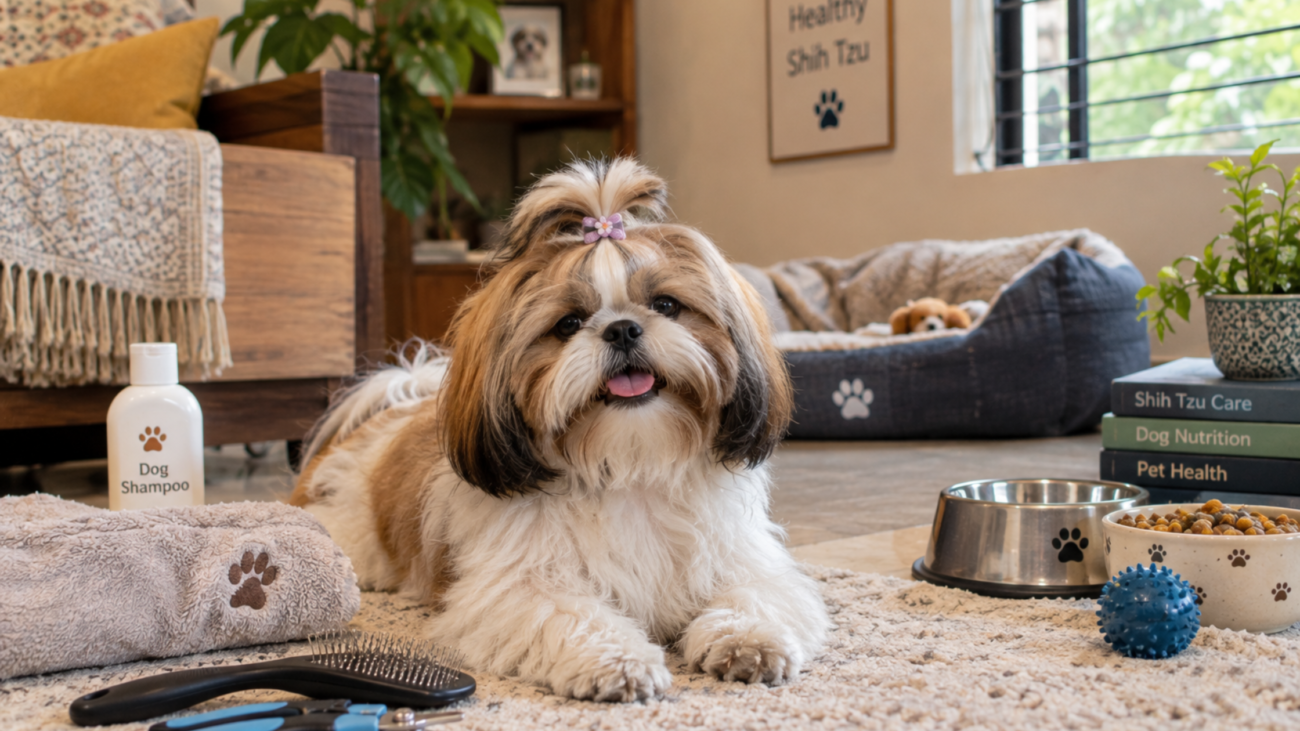
The Shih Tzu is a small royal companion dog native to China and Tibet and is now considered to be one of the world’s most popular toy dog breeds. He has a long silky double coat and is a very affectionate dog with a very flat face, he makes a perfect companion for living in apartments in India and will love to be with you at all times. .
Shih Tzu Dog Breed Overview
Shih Tzus are small dogs, often described as toy dogs. The breed is recognized by almost every kennel club around the world, including the American Kennel Club and the Kennel Club of India. Recognizable by their beautiful flowing coats, and their huge, dark eyes, the faces of the Shih Tzu are one of their unique features. They have a very pushed in nose and they have a very flat face. The Shih Tzu is a brachycephalic breed, which means that they have a very short skull.
Shih Tzus are small dogs and as such the Adult Shih Tzus weigh between 4 kg and 7.5 kg and reach a height of 20-28 cm at the shoulder. !ih Tzus are not working dogs they are bred to be companions. There are many variations of the coat of the !ih Tzu and there are many colors to choose from such as gold, black, white, liver as well as many color combinations.
This pet will thrive in a cool climate indoors but can also adapt to an Indian climate if living in an air-conditioned home. The Shih Tzu is best suited to a home with an apartment in a city like Chennai, Mumbai or Delhi and will be as happy as long as he can go for short walks and play inside the home. Unfortunately due to the Shih Tzu’s flat face, long distance running and hot weather outside are not suitable for this dog.
History and Origin of Shih Tzu Dog
The Shih Tzu is a very old dog breed that originated over 1,000 years ago in the region of Tibet and China. The name “Shih Tzu” is written in Mandarin Chinese and means “lion dog” because the little animal looks like the lion in fables that tell the story of Buddhism. The little dogs were the companions of the Chinese emperors for a very long time. They were monks from Tibet who brought these small dogs to the Chinese emperors as friends. They were a very respected and even sacred animal.
Historical records indicate that during the Tang Dynasty (618-907 AD) the Shih Tzu dog was exclusively found in the Imperial Palace of the Chinese Emperor. However, following the Chinese Communist Revolution in the 1940’s the breed was thought to have become extinct until 14 of these special little dogs managed to survive and it is from the offspring of these 14 dogs that all of today’s Shih Tzus have come.
When the British troops came back to their families in far flung parts of Asia at the end of the World War II, it was not uncommon to hear of their being smitten by a small cute dog they encountered while they were traveling. This was the Shih Tzu – a small toy like dog from the Tibetan Plateau. It was in 1969 that the breed was recognized by the American Kennel Club and soon was introduced to India with the import of breeding pairs of this small but cute dog. This small compact dog with a friendly temperament has today earned immense popularity with dog lovers and thus is now one of the recognized toy breeds of the Kennel Club of India. .
Shih Tzu Dog Physical Appearance
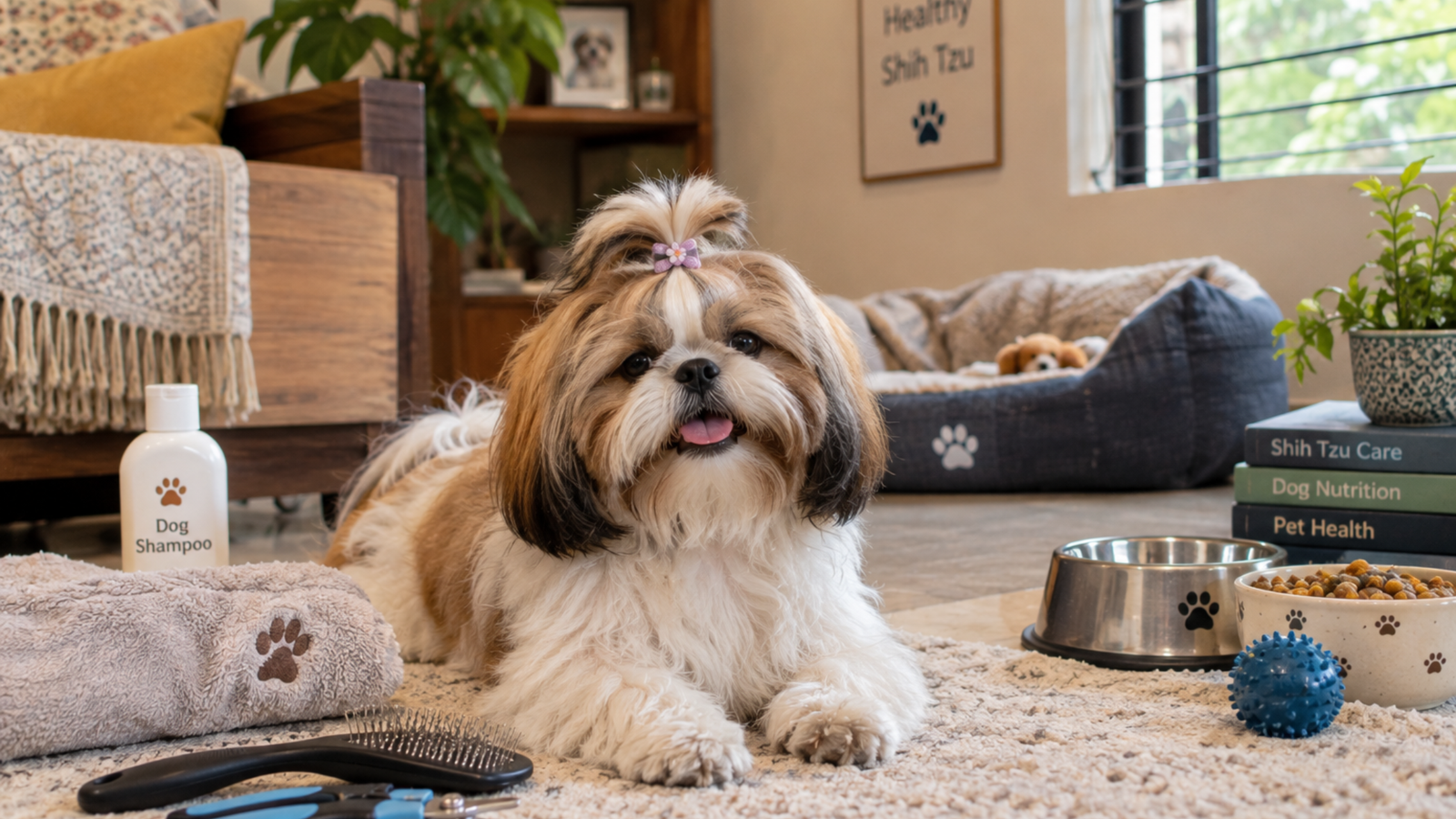
The Shih Tzu is a small powerful dog, regal in every sense of the word. Notice the beautiful hair – it is cut to have layers but generally all fall straight down from the head in a beautiful cascade of silk to their feet. The dog is very rounded, quite large for their height and have far apart, dark eyes. They have a very small nose, long hanging ears, all covered in beautiful hair.
Key physical traits of the Shih Tzu include:
- Height: 20–28 cm at the shoulder
- Weight: 4–7.5 kg (adults)
- Long Hair (Double Layered). Silky and Soft.
- Color: Gold, black, white, liver, brindle or any other color, solid or multi-colored.
- Tail: Heavily plumed, carried curved over the back
- Nose: Broad, short and slightly upturned.
The hair on a Shih Tzu’s head can be quite large and therefore is usually tied up with a bow or other suitable hairclip. The body of a Shih Tzu is strong for a dog of this size. The back is straight and the neck is short. The face of a Shih Tzu is very cute. There is lots of hair on their head. The happy confident little dog looks as though it is ready for play. Even though the Shih Tzu is a toy dog it has very hind-muscled body for its size. The Shih Tzu is a well balanced dog.
Shih Tzu Temperament & Personality
The Shih Tzus are perfect pet for families. They are great with children, extremely affectionate and very loving to the elderly as well as to other pets. The Shih Tzus are ideal for people residing in apartments in big Indian cities. They don’t require much exercise. So for people who are new to having a dog, this is a perfect breed for them. The Shih Tzus are a healthy breed. They don’t need to be taken for long runs or for long walks in between and they will stay healthy and happy. Shih Tzus are a wonderful breed for families who are looking for a pet that is loving and doesn’t require a lot of maintenance
Shih Tzus are a perfect breed for families residing in small apartments for the reason that they do not require much space for playing. All they need is people around them. If a family has lots of time spent with family members at home then Shih Tzus will be a perfect pet for them. Even families with very young children can have a little Shih Tzu in the house provided they supervise interaction between children and the pet.
Shih Tzu Dog Care Tips
1. Shih Tzu Dog Care
Shih Tzu care – Looking after a Shih Tzu requires dedication. Daily care of the coat, eyes, ears and temperature of you Shih Tzu is crucial. Shih Tzus are brachycephalic dogs which means that they can be more susceptible to respiratory problems. You must be vigilant for signs of illness in your dog. In very hot weather with high humidity it is essential to have air conditioning in the home to keep your Shih Tzu healthy. This is especially relevant in hot countries like India where the temperature regularly reaches above
As with all breeds, Daily Eye Cleaning is key to the health of the Shih Tzu’s eyes and preventing any discharge or staining, regular cleaning of the eyes with a damp cotton pad is a must and also try to trim or even tie back any facial hair as it can irritate the eyes and cause discomfort. Regular checks with your vet, ideally twice a year will also help to pick up to date records of your Shih Tzu’s health.
2. Shih Tzu Exercise Needs
How Much Exercise Does a Shih Tzu Need? Shih Tzus need a moderate amount of exercise per day. Two fifteen minute walks per day would be ideal for a Shih Tzu. Shih Tzus are not high energy dogs and do not have a natural urge to run or be very active. So jogging or running with a Shih Tzu, long dog walks, and other forms of strenuous exercise outside on hot summer days are not ideal for a Shih Tzu. However, hot weather can be terrible for Shih Tzus on days when it is too hot to take your dog for a walk outside, try to provide your dog with enough indoor play time using such items as a throw and retrieve toy, tug toys, interactive toys and games. Shih Tzus are very intelligent dogs and love to be mentally challenged with items and games that require their mind to be active such as puzzle feeders and training games.
On extremely hot days where going out for a walk would be far too hot for your dog, play with throw toys and retrieve them, tug toys and also set up an interactive games session such as using a puzzle feeder, that challenges their very intelligent nature and can keep them occupied for hours. Over exercising your Shih Tzu in very wet weather could also potentially cause problems for your dog. even more of a problem.
3. Shih Tzu Feeding
Adult Shih Tzus should be fed 40-55 ml of food per kg of body weight per day. We at FeedFrenzy India recommend feeding your Shih Tzus 2 meals a day. The primary component of their diet should be a high quality commercial dry kibble formulated for small breed dogs. While choosing a dog food it is best to go with the first ingredient being chicken, lamb or fish and avoid dog foods that have artificial preservatives in them.
There are so many normal dog foods, human foods, and treats that are toxic to our canine friends! Onion and garlic, grapes and raisins, chocolate, as well as very hot foods are just a few to name. Dental plaque is a huge problem for this breed, so we highly recommend feeding a high quality dental kibble, and occasionally adding in some wet meals to be eaten as treats, which can be paired with dental chews to really knock off the plaque and keep those pearly whites clean. And of course, as with all dogs, they must have fresh water available to them at all times.
4. Shih Tzu Sleep Needs
How many hours a day does the Shih Tzu sleep? The adult Shih Tzu is classified as a Low Energy Companion Dog. The hours that the adult Shih Tzu sleeps in a 24 hour period is 12-16 hours. The majority of the hours that the adult Shih Tzu sleeps is at night and he or she will take many naps throughout the day. Shih Tzu puppies under the age of 6 months are also considered to be dogs that sleep a lot. Their bodies and their nervous systems are not yet matured and as a result they can sleep up to 18-20 hours in a 24 hour period.
Make sure your little bundle of energy has a place to sleep – preferably in a cool, calm room of the house with an appropriate surface to sleep on. Most Shih Tzus sleep at their owner’s feet, however can also suffer from anxiety, so make sure to give them a good quality dog bed to aid their behavioral development.
Shih Tzu Grooming
Grooming a Shih Tzu can be challenging due to the very long, dense double coat on a Shih Tzu. Brushing the hair, cutting the hair and even giving your Shih Tzu a full professional grooming are all methods to keep the hair healthy and to prevent matting.
How to Groom a Shih Tzu?
Brush your dog’s hair and the coat 3-4 times per week with a pinBrush. Use a metal comb to gently remove tangles and loose hair from your dog’s coat. Give your dog a bath every 3–4 weeks to keep them clean and fresh. Trim the hair around the face every 4–6 weeks and keep the paw pads neat by trimming excess hair once a month. For overall coat care and maintenance, schedule professional grooming every 6–8 weeks
Smooth Coat Shih Tzu Groom
For those that prefer the Smooth coat version of the Shih Tzu, they are well suited to a very basic cut such as the ‘puppy cut’. This allows for an easy to clean coat that can be groomed in between baths and requires very little maintenance, although it is recommended to brush the coat 2-3 times per week paying particular attention to the roots to prevent matting. The coat should be bathed every 3-4 week
Smooth coat Shih Tzus are extremely popular in India for Smooth coat grooming. The smooth coat helps to keep the coat cool thus preventing heat stroke in the extremely hot climate found in India. To maintain the coat in a short length all the time it needs to be professionally trimmed every 4-6 weeks. Typical grooming tools used for smooth coat grooming are Slicker Brush & Metal Comb. Armpits typical matting zones are armpits, behind their ears & groin even though it is a short coat.
Long Coat Shih Tzu Grooming
The Long coat Shih Tzu is a very old dog breed. Traditionally the Long coat Shih Tzus have been coated with a Long coat and so they require regular brushing to prevent matting and tangling. This breed of dog should be brushed daily using a Pin Brush and then a wide-tooth metal comb that can brush the individual hairs from root to tip. As with all breeds the Long coat Shih Tzus should be washed every 2-3 weeks with a mild dog shampoo and a detangling conditioner.
After Bathing it is important to blow dry the coat on low hair dryer setting while brushing the hair to avoid frizz & tangles. It is also important to tie or clip the hair of the Topknot daily so that it does not fall into the dogs eyes. Long coat Shih Tzus are definitely not for 1st time groomers in Indias humid climate. They need professional grooming every 4–6 weeks to keep their coats healthy
Shih Tzu Dental Care
Shih Tzus are prone to dental disease. In fact, over 80% of dogs develop periodontal disease by the time they are 3 years of age. Being a small dog breed the Shih Tzu is particularly prone to dental problems. The teeth in a Shih Tzu’s mouth are all very close together in a small jaw. This creates many nooks and crannies for plaque and tartar to form.
Brushing your dog’s teeth 3-4 times per week with a toothbrush and a dog-safe enzymatic toothpaste is recommended. Note that when purchasing a toothpaste for your dog make sure it does not contain any human ingredients such as xylitol which is TOXIC to dogs. Giving your dog dental chews and treats to eat throughout the month will also help keep his teeth clean, but as with any oral hygiene for your dog, annual dental cleaning by your veterinarian is needed to remove any calculus that has built up on the teeth of your unconscious dog.
Shih Tzu Nail and Ear Care
Shih Tzu’s have very fast growing nails. These need to be cut every 3 to 4 weeks. There are two main types of nail clippers. These are guillotine style nail clippers and scissor style nail clippers. When cutting the nails of your Shih Tzu only cut the clear part of the nail. This is the hard outer layer of the nail. The pink part in the center of the nail is called the quick or blood vessel. This can be cut very easily and will bleed profusely. If you are unsure on how to cut your Shih Tzu’s nails it is best to have your vet or a groomer show you.
These moist warm areas are highly prone to infection by bacteria and yeast. Check the ears of your flopsy hair covered Shih Tzu for any signs of redness or smell on a weekly basis. Use a solution to clean the ears of your Shih Tzu on a monthly basis as directed by the solution’s manufacturer. When cleaning the ears of your Shih Tzu remove any excess hair from the ear canal. If you notice any dark discharge take your dog to the vet and take some cotton balls with you. NEVER use cotton buds as they can cause serious damage to your dog’s ears. Clean the ears of your Shih Tzu as part of the regular grooming 6-8 weeks after purchase from a groomer.
NEVER use a cotton bud in your Shih Tzu’s ear canal and their ears should be cleaned every 6-8 weeks or as part of the dogs regular grooming by a groomer.
Shih Tzu Grooming Schedule
| Grooming Task | Frequency |
| Brushing (long coat) | Daily |
| Brushing (smooth/puppy cut) | 3–4 times per week |
| Bathing | Every 2–4 weeks |
| Eye cleaning | Daily |
| Ear inspection | Weekly |
| Ear cleaning | Monthly |
| Teeth brushing | 3–4 times per week |
| Nail trimming | Every 3–4 weeks |
| Facial hair trim / topknot | Weekly (DIY) / Monthly (professional) |
| Full professional groom | Every 4–8 weeks |
| Paw pad trimming | Monthly |
| Anal gland expression | Every 4–6 weeks (vet or groomer) |
Shih Tzu Health & Lifespan
What are the Common Health Problems in Shih Tzus?
Some of the health issues of the Shih Tzu include: Brachycephalic obstructive airway syndrome or BOAS, eye problems, hip dysplasia, hypothyroidism and dental disease. While the breed is prone to many health issues most can be controlled with regular check-ups with the veterinarian and monitoring of the problems as they can become serious health issues. Many of the health issues of the breed are a result of the flat face of the Shih Tzus and their genetic makeup.
Shih Tzu Lifespan
On average the Shih Tzu lives for 10 to 16 years which is the average life expectancy for the small toy dog breeds. The life of a Shih Tzu can be a long and happy one as long as they are fed a healthy diet and have regular health checks with a veterinarian, plus daily exercise. Also if a Shih Tzu is spayed or neutered they are likely to live longer as there are many types of cancer of the reproductive system which are preventable in such animals.
The most common health conditions affecting Shih Tzus include:
- Brachycephalic Obstructive Airway Syndrome (BOAS): There are instances where Shih Tzus can suffer from breathing problems due to the flat face, which can result in very noisy snoring, occasional periods of struggling to breathe, and often being extremely exhausted when exercising.
- Progressive Retinal Atrophy (PRA): Congenital eye defects which can cause blindness often or completely. Regular checks of the eyes of a young puppy are strongly recommended.
- Hip Dysplasia: a defect of the hip joint. Very painful for dogs and can cause them to be limped by. Hip Dysplasia is extremely common in the vast majority of dogs. However it can be worse in certain breeds and in particular very bad cases in very bad breeding lines of Shih Tzus.
- Hypothyroidism: This dog was treated some time in the past for hypothyroidism (an underactive thyroid gland) and is currently on a daily oral medication.
- Dental Disease: The Shih Tzu has very crowded teeth. Periodontal disease can be a severe problem in the breed and in extreme cases all of their teeth can fall out. A preventable disease with good dental hygiene.
- Kidney Disease (Renal Dysplasia: A genetic defect of some lines of Shih Tzus which is monitored annually with blood tests for Kidney Disease (Renal Dysplasia).
Shih Tzu Vaccination Schedule in India
The following is the standard Shih Tzu vaccination schedule recommended for India, aligned with KCI and veterinary guidelines:
| Age | Vaccine | Notes |
| 6–8 weeks | DHPPi (Distemper, Hepatitis, Parvovirus, Parainfluenza) – 1st dose | First core vaccine |
| 10–12 weeks | DHPPi – 2nd dose + Leptospirosis – 1st dose | Booster + Leptospira start |
| 14–16 weeks | DHPPi – 3rd dose + Leptospirosis – 2nd dose + Rabies – 1st dose | Rabies legally required in India |
| 6 months | Rabies booster (if not given at 16 weeks) | Confirm with vet |
| 12–15 months | DHPPi annual booster + Leptospirosis booster + Rabies booster | First annual revaccination |
| Every 1–3 years (adult) | DHPPi booster (as per vet titre testing) + Leptospirosis annual | Titre tests can reduce frequency |
| Annually (all ages) | Kennel Cough (Bordetella) if boarding or dog parks | Recommended in urban India |
| Every 6 months | Deworming (Pyrantel + Fenbendazole) | Year-round in India due to climate |
| Monthly | Flea and tick prevention (topical or oral) | Essential in India’s tropical climate |
Shih Tzu Training
How to Train a Shih Tzu?
It’s not easy training a dog, especially a small dog like a Shih Tzu. As I have mentioned previously patience, consistency and positive reinforcement is key when training your Shih Tzu. Yes most dogs can be taught to perform any task or command. This is usually done by rewarding them for good behavior such as sitting. Giving them treats, praise and play are the best way to do this. As a rule of thumb, punishment is never the answer. These dogs are very sensitive and will most likely shut down quickly with harsh correction.
Basic Commands to Teach a Shih Tzu
Teach your Shih Tzu the 5 basic commands: Sit, Stay, Come, Down and Leave It. It is best to train one command at a time and add more to your dog’s training as they learn each command. Small, high value treats such as chicken, cheese or your dog’s regular training treats work best to use when teaching a new command to your dog. When your dog does the command correctly, you need to mark the behavior the instant it happens. This can be done with a clicker or by saying “Yes!Te” out loud. Most dogs take 2-4 weeks to learn the 5 basic commands if practiced daily.
Potty Training a Shih Tzu
Consistency is the Key to Potty Training a Shih Tzu. By following a potty elimination schedule for your little puppy and sticking to certain times of the day to take your puppy outside to urinate and/or defecate in the proper location, you can potty train your little bundle of love in a very short period of time. Take your little puppy outside after naps, after eating meals, and after play time. Always use the same words every time you take your little love outside to use the bathroom. Most people use the words “Go potty” or “To Potty.” Immediately and Consistently Reward your little love after they have urinated and/or defecated in the proper location. Never scold your little love for accidents. Immediately Redirect your little love if you catch them going to the bathroom in the wrong location. Thoroughly and Completely Clean up Accidents in the house with Enzyme Cleaners. These types of cleaners pick up the scent that your little love has left behind when they had an accident in the house and will prevent your little loves from having accidents in the same location and area again. With Consistent Routine, a Shih Tzu puppy can learn to be potty trained in about 4-6 months.
Socialisation Training
Socialisation Training for a Shih Tzu is very important to be carried out between 3 weeks and 14 weeks of age. This time frame is referred to as the critical socialisation window. All people, all sounds, all surfaces as well as all animals should be introduced to the puppies in a positive manner and in controlled circumstances. The Socialisation of puppies in an Indian environment would involve exposing them to crowds, car horns, firecrackers (around Diwali) and all other situations that a puppy would encounter in an average domestic environment. This socialisation can be effectively carried out in a controlled environment through Puppy Classes which are held by KCI affiliated clubs or certified dog trainers. .
Dealing with Excessive Barking
Why do Shih Tzus bark? Shih Tzus are not heavy barkers; however, they can become nuisance barkers. The barking of your Shih Tzu can be due to a lack of stimulation, boredom or anxiety. It is up to the owner to work out why his/her Shih Tzu is barking in order to sort the problem. Many Shih Tzus are left alone for long periods of the day and can become anxious. Teaching your Shih Tzu to “Quiet” is a must as it can apply to a number of situations that may cause your dog to bark. For example, the barking of a Shih Tzu can be due to strangers approaching the home, attention from owners, boredom, etc. Using the command “Quiet” as soon as the barking starts and offering the dog plenty of treats for silence is a good way to deal with the situation. Avoid making a bad situation worse by shouting at your dog. Barking caused by boredom can be sorted by taking your dog for a walk and play time and then filling his time with puzzle toys to keep his mind occupied.
Common Training Mistakes with Shih Tzus
Shih Tzu training mistakes – Most common mistakes made when training a Shih Tzu are: Inconsistent commands for commands like come, come here etc, Not Socialising your dog, Punishing your dog for mistakes rather than redirecting their behavior, Your training sessions are too long after 10 minutes your Shih Tzu will have forgotten what you are trying to teach them, Accidentally rewarding negative behavior for example taking a barking dog for a walk.
Shih Tzu Puppies Buying
How to Buy a Shih Tzu Puppy in India?
Buying a Shih Tzu puppy in India requires research, verification, and patience. Follow these steps:
1. Where to Buy Shih Tzu Puppies in India
Reputable options for buying a Shih Tzu in India:
- KCI-registered breeders: A list of KCI Registered Breeders who adhere to health testing & breeding standards can be searched for on kennelindia.org.
- State-level dog breed clubs:There are breed clubs for various breeds, which maintain a list of referral breeders in cities like Mumbai, Bengaluru, Delhi, and Chennai.
- Reputable pet stores with vet certificates:
- Some Pet Shops in Metro cities are working with Healthy Breeding stock – so Some is always advisable to verify the same before purchasing. It
DOGS / BREEDERS / local breed groups. Local Pet Shops who don’t have health documents of NOT BUY FROM POSTS ON SOCIAL MEDIA GROUPS related to SALE of PUPPIES / DO the parents of the puppy sold by them. They are just earning and do not care for the health
2. What to Check Before Buying a Shih Tzu Puppy
Before completing a Shih Tzu purchase, verify the following:
- KCI Registration Papers for both parents and litter
- Health certificate from a registered veterinarian
- A copy of the vaccination record which shows that the 1st DHPPi dose has been administered.
- Deworming records for the puppies (2nd, 4th & 6th week).
- A visit to the Breeder’s Premise – to see the clean environment where the little puppies have grown up, to see them running about in full energy and curiosity.
- Give the Mother Dog a Belly Rub- Her Temperament will be the Puppies!!!
- 8 weeks & above – Never take a Shih Tzu puppy home before 8 weeks of age.
- 3. Red Flags When Buying a Shih Tzu
- Red Flags When Buying a Shih Tzu
- Seller does not allow a home visit but wants to meet at some neutral location.
- Puppy is younger than 8 weeks
- No health or vaccination records available
- A puppy mill operator would typically have a variety of breeds available.
- A sick puppy – lethargic, eye/nose discharge, fearful/aggressive mien.
- The cost of a puppy is too low (less than ₹10,000 for a Shih Tzu) – High quality breeding costs!
- The breeder wants to sell the puppy as soon as possible – he/she won’t give you time to think about it.
3. First Week Checklist After Bringing Shih Tzu Home
| Task | Timing |
| Vet health check | Within 48–72 hours of arrival |
| Set up sleeping area with soft bedding | Day 1 |
| Introduce pee pad or designated toilet spot | Day 1 |
| Begin feeding the same food as the breeder | Day 1 (transition gradually over 7–10 days) |
| Register with a local vet | Week 1 |
| Buy collar, ID tag with contact details | Week 1 |
| Purchase grooming supplies (brush, comb, shampoo) | Week 1 |
| Begin gentle socialisation (indoors only until fully vaccinated) | Week 1 onwards |
| Confirm next vaccination date | At vet appointment |
Is Shih Tzu The Right Dog For You?
Should You Get a Shih Tzu in India?
Shih Tzu makes for a very suitable pet for the Urban Indian. Not everyone might find it suitable though. The pet is best suited for Apartment dwellers, Retired, Working from home & Families with Older kids. An extremely affectionate pet that doesn’t demand much exercise, ideal for people who want a pet but don’t have time for it. It needs regular grooming though cannot be left to just about anyone. It is not ideal for people who leave home for long hours in the day nor for people who keep homes extremely hot without air conditioning.
The flat faces of Shih Tzus can cause them to have problems in cooling their faces during hot weather. So they can only be taken out for short periods of time in a day for a walk. A ‘puppy cut’ is a good alternative for groom for the groom of a Shih Tzu. So Shih Tzus can make great pets for the right owner and home in India. However owners in hot states of India such as Rajasthan, Gujarat etc would need air conditioning in their homes to cut down on the costs of the normal groom of a Shih Tzu.
Frequently Asked Questions About Shih Tzus
What is the lifespan of a Shih Tzu?
Average life span of a Shih Tzu is 10 to 16 years. Keeping a healthy happy Shih Tzu is important to the life of your pet. Giving the right food, regular visits to the doctors, and regular cleaning of the teeth are some of the ways to keep your pet healthy. A safe living environment is also important. Indoor living is best for Shih Tzus. Also, by having your pet spayed or neutered, they will live longer than their intact friends.
How big do Shih Tzus get?
Shih Tzus are Toy breeds and it takes them about a year to reach adult full size between 10 and 12 months of age. A healthy full size adult Shih Tzu will weigh between 4kg and 7.5kg and be approximately 20cm in height plus a bit plus until they are 18 months old when they stop growing. They will reach their full height between 20cm and 28cm in height.
Are Shih Tzus good for apartments in India?
The Shih Tzu require a minimal amount of exercise outside and are happy in small spaces and do not bark a lot: Yes the Shih Tzus are one of the best breeds for Indian apartment living with air conditioning in apartment and short walks in the day a Shih Tzu will live a happy life in an apartment in India.
Do Shih Tzus bark a lot?
Shih Tzus are moderate barking dogs. They are alert dogs and therefore will bark at strangers and at new unusual sounds but this barking is not excessive. However with proper socialization and training the barking can be controlled. As long as your Shih Tzu is well mentally stimulated and not left for long periods of time then they are unlikely to bark.
Care FAQs
How much exercise does a Shih Tzu need daily?
Shih Tzus are moderately active dogs. They need 20-30 minutes of exercise a day. Two short walks would suffice. For the rest of the day, they would get enough exercise playing in the house. Early morning and late evening are the best times to take your Shih Tzu out for a walk to avoid heat of the day.
Can a Shih Tzu live in India?
They can live in India if kept in air con rooms all summer because they are brachycephalic (flat faced) and cannot cool themselves down. They get heat stroke very quickly if left in non air con rooms all day during the Indian summer. They will need fresh water, a cool floor and to be out for short periods only in very hot weather. This is the bare minimum one can do to protect them.
What to feed a Shih Tzu in India?
For a healthy, active and with good appetite Shih Tzu, a healthy and well-balanced diet is recommended to be composed of high quality, small breed dog food ( dry kibble ) to be fed twice a day. You can also include on their meals occasionally, pure form of boiled chicken, cooked and plain white rice and plain, boiled eggs. Human food is strictly prohibited as most of the human foods are spiced, fried or with some other form of seasonings and will cause harm to your pet. In India, suitable dog foods for Shih Tzus are Royal Canin Shih Tzu Breed Specific, Pedigree Small Breed and Drools Focus Adult Small and Mini.
Buying FAQs
What is the price of a Shih Tzu puppy in India?
The prices for Shih Tzu puppies in India can vary from 20,000 to 80,000 depending on the breeder. Most reputable breeders carry out health test of the parents for KCI registration and charge anywhere from 35,000 to 80,000 for the KCI-registered puppies. The very cheap puppies from unknown breeders without documents can suffer from health problems and poor temperaments.
Which is better: Apple Head or Deer Head Shih Tzu?
Both are both the same breed “Apple Head” and “Deer Head” are terms that are used to describe the Shih Tzu breed in general. An Apple Head Shih Tzu has an rounder, broader skull than the Deer Head. Both the Apple Head and the Deer Head Shih Tzus are recognized by both KCI and AKC as a standard Shih Tzu. They are not recognized as a separate breed by KCI or AKC. The Deer Head possibly could breathe a little better because of the longer muzzle but that is all.
Are Shih Tzus good for first-time dog owners?
Yes. As long as the new owner is able to look after the coat, they are the perfect dog for new dog owners. The affection that a Shih Tzu gives is enormous and their management is easy to manage. Shih Tzus are not generally aggressive, however, as with all breeds, there is a degree of stubbornness but this can be worked with from an early age by teaching basic obedience to a young puppy. They are very easy to train and are very forgiving to new dog owners, as long as they have done their research before bringing the puppy home.
Health FAQs
What are the most common health problems in Shih Tzus?
There are many health issues that can afflict Shih Tzus including brachycephalic obstructive airway syndrome (BOAS: What are the most common health problems in Shih Tzus? The most common health problems), progressive retinal atrophy, hip dysplasia, hypothyroidism, dental disease and many more. But all of these health issues can be managed if the owner provides the correct care for their dog.
How often should I take my Shih Tzu to the vet?
Shih Tzus need to have 2 wellness exams per year. Puppies that are still very active and growing need to come in for visits during the vaccination period. This typically is every 3-4 weeks until the puppy is 16 weeks of age. Senior Shih Tzus 8 years and older are considered senior and need to come in for visits every 3-4 months. In addition, we like to do annual bloodwork on our older patients to check on the status of their kidneys and thyroid functions.
Conclusion
Shih Tzu is a very loyal, very adaptable, very affectionate dog and perfect companion for apartment dwelling people in India. A perfect pet for the right owner, Shih Tzu requires lots of grooming and health care. Shih Tzus can live for 10–16 years and are very affectionate dogs who love to be with their humans all the time. In summer months he will need to be kept in an air conditioned space as he is a brachycephalic breed.
To have a healthy Shih Tzu in India- 3 things to keep in mind- Grooming (Brushing 3-4 times a week and a full groom every 4-8 weeks), Preventive health (Vaccinations and other health measures and your dogs dental care- his dental care etc) and Training (Positive reinforcement from the time your little pup arrives). Also very important- Buying a puppy from a KCI registered breeder, verifying the health documents of the parents & puppy and last but not the least- puppy proofing your home!
A Shih Tzu is a perfect pet for people who want a small, beautiful and loving pet for life.
Key Takeaways
- The Shih Tzu is a small toy dog from Tibet but also from Imperial China and today found all over the world, he is even one of the most popular dog breeds in India.
- Shih Tzus are very small dogs. They can weigh between 4-7.5kg. This breed of dogs is known to live a long life. On average a Shih Tzus can live for 10-16 years.
- A very affectionate dog that is perfect for apartment dwellers in India and make fantastic companions for families with children and other pets alike. However due to the breed being brachycephalic they do not tolerate heat in any shape or form, so lots of rest is needed.
- Grooming required: Because of the long coat of the Shih Tzu it is necessary to brush it every day. The dog needs to go to the salon for professional grooming every 4–8 weeks.
- In addition to serious health issues like lack of oxygen storing (BOAS) and eye problems, Shih Tzus are prone to problems like hip dysplasia and dental problems. But all of the health issues that affect this small dog can be treated with the right and on time treatment by a good Veterinarian.
- The price of these little dogs can start from ₹20,000 and can go up to ₹80,000 as well. Therefore, before buying a puppy for home always check for a KCI-registered puppy from the breeder and get all the health documentation from the breeder.
- Shih Tzus are extremely patient with children and other pets. The can learn very quickly and with lots of love and treats, using positive reinforcement they can be trained. From the age of 8 weeks it is very important to train and continue from there.
Glossary
Brachycephalic A brachycephalic dog is any dog with a very short skull. The nasal passages and airways are therefore compacted in some shape or form. Many breeds of dog are brachycephalic including Pugs and Bulldog’s. The Shih Tzu is also a brachycephalic breed.
BOAS (Brachycephalic Obstructive Airway Syndrome) The term BOAS is used to describe the problems the flat faced breeds experience with their airways. The symptoms of BOAS are loud snoring, labored breathing. Some animals become very ill due to exercise or heat.
KCI (Kennel Club of India) The KCI or Kennel Club of India is the major dog showing organization in India. It is a body which issues registration to pure breed dogs, issues breeders license and sanctions dog shows all over India. For us Shih Tzu fanciers in India, KCI registration is the benchmark for a 100% pure Shih Tzu.
Double Coat – A dog with a double coat has two layers of fur- an undercoat that is very dense and soft in texture, and an outercoat that is longer in length. The Shih Tzu has a double coat. To prevent matting, regular brushing is a must.
A top Shih Tzus carry their head up from their face with a band or knot of hair on top of their head. This collection of hair is called a topknot and is generally held up from a Shih Tzu’s face with a hair clip to prevent the hair falling down into their eyes.
Progressive Retinal Atrophy (PRA): – PRA is a hereditary disease that slowly degenerates the retina of the dog starting with night blindness and ending with complete blindness of both eyes of the dog. It is hereditary and found in many breeds of dogs.
Titre Testing: The Titre Test is a simple blood test done on a dog’s blood to find out the amount of antibodies a dog has to a disease it may have already come into contact with. It is the best way to find out if a dog needs a vaccine booster for any disease rather than giving annual vaccinations.
DHPPi: DHPPi vaccine is a combined vaccine that protects against four serious diseases that affect dogs. Distemper, Hepatitis, Parvovirus and Parainfluenza are the four major diseases in canine and this is the primary vaccine used in the Shih Tzu puppy vaccination schedule in India.
Disclaimer: Last Updated: May 2026 All information on this website is for general information purposes only and should NOT be used as a substitute for individual professional advice from a registered health care provider, for the health, diet and treatment of your individual pet.