Blog
Pomeranian Dog Breed: Complete Guide to Care, Grooming & Training in India (2026)

- The Pomeranian is a tiny, spitz-type, companion dog with a bold, curious and even temperament. They are ideal for city or apartment living, across India.
- Pomeranians have a lifespan of up to 12 to 16 years. They are suffer from dental disease and other health issues like luxating patella and tracheal collapse.
- The breed of coats needs a lot of attention. They need to be brushed at minimum 3-4 times a week. Regular grooming is required every 6-8 weeks with a professional groomer.
- Pomeranian puppies start price in India from ₹3,000 and can go up to ₹75,000 depending upon the breeder in India and the bloodline.
- The Pomeranian is perfect for first time dog owners because they are new as they can handle their loud barking and high maintenance grooming.
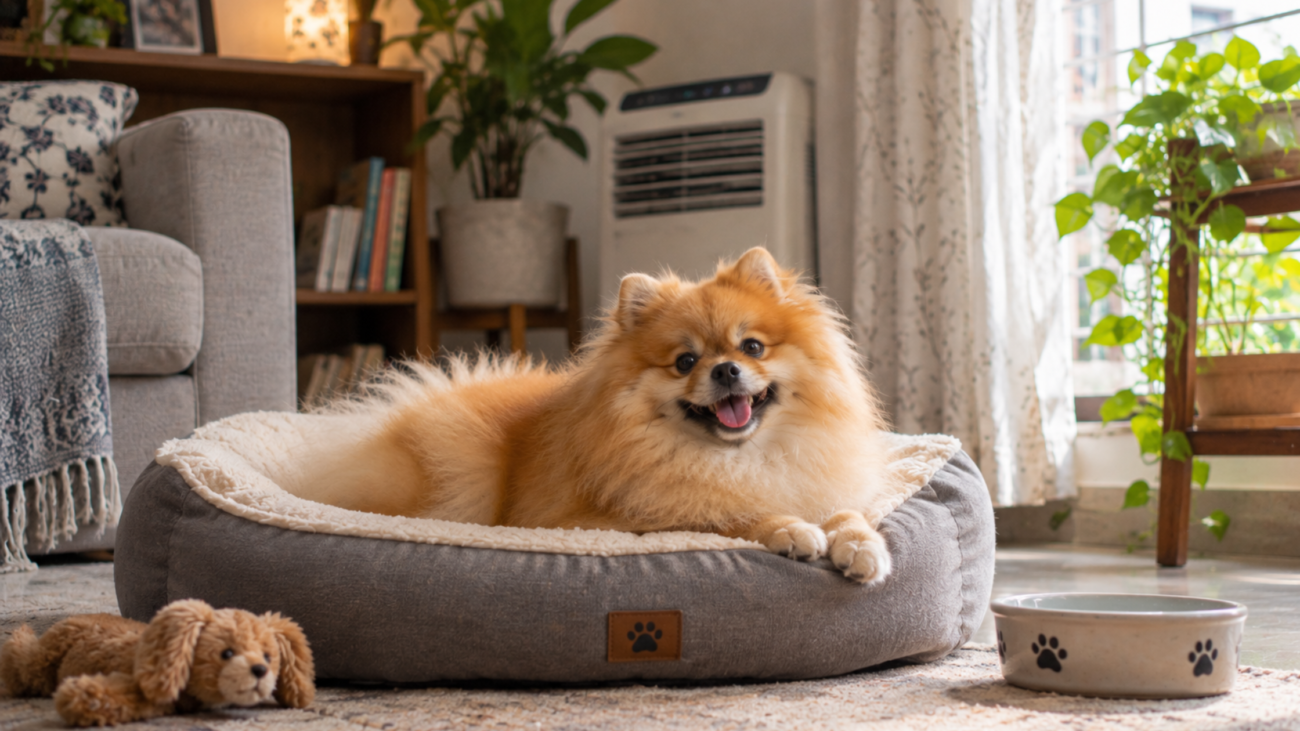
The Pomeranian is the smallest dog of the Spitz family, small in size with a Fox -like face. Pomeranian has a thick double coat of fur, very active, very playful, full of curious and very small in size. Pomeranians weigh between 1.8 to 3.5 kgs and height on the shoulder is between 18cms to 30cms. The breed is very famous as apartment dogs in India.
Pomeranian Dog Breed Overview
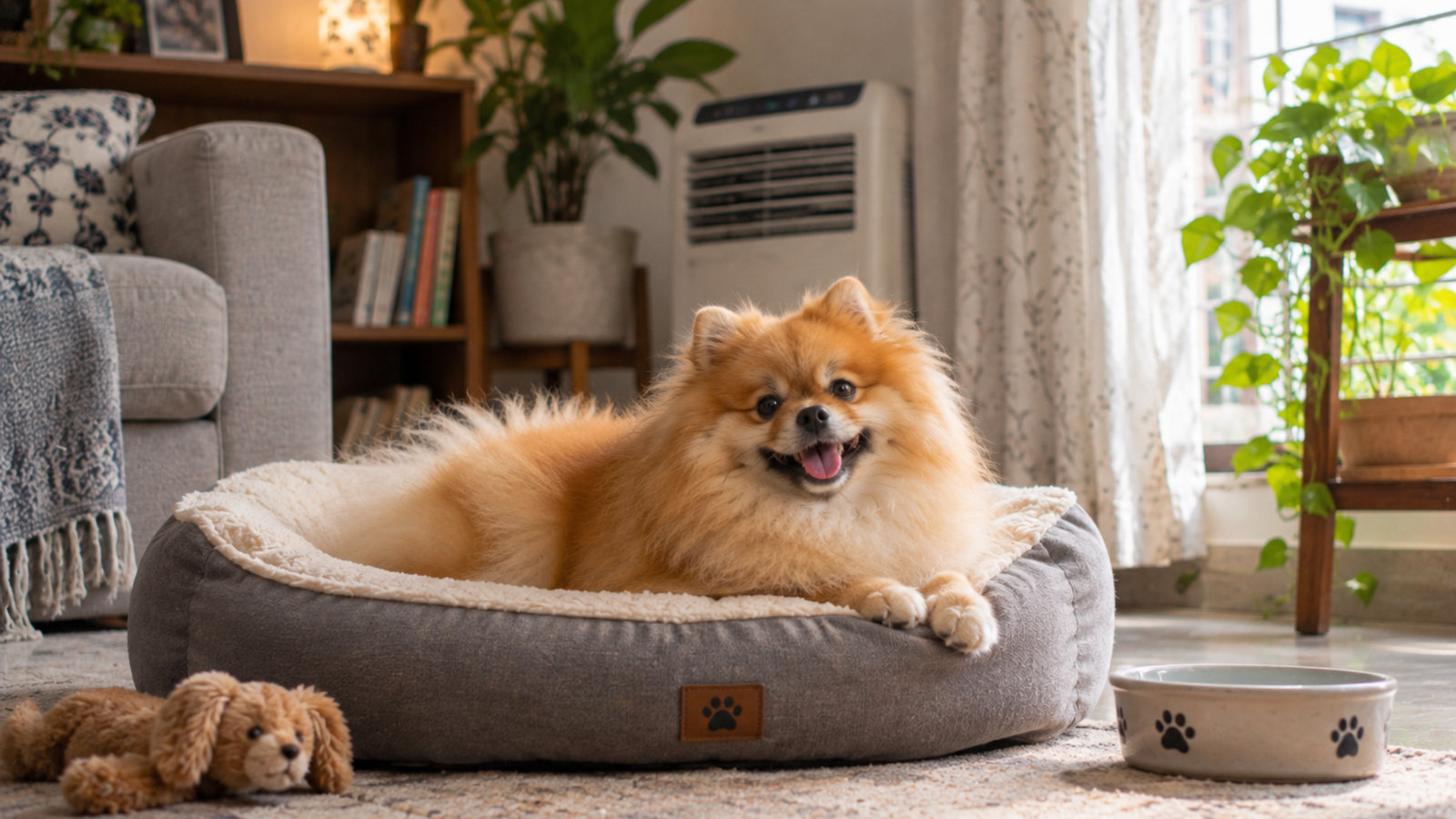
The Pomeranian is the smallest of all the dog breeds within the toy category . The Pomeranian is a Spitz type of dog. The breed has a thick double coat. The Pomeranian’s dog tail is long and plumed and is carried constantly over the back of the dog. The Pomeranian has small alert triangular ears. The Pomeranian makes a great pet for people that live in an apartment and small homes . The Pomeranian needs a moderate amount of exercise each day. They are very attached to one person in the family.
The Pomeranian breed status is amongst top 10 Toy dog breeds in India. The primary reason for the same is the tiny morsel of quantity food required to sustain this smallest of dog breeds in the world. And why many pet lovers in the world over love to keep this breed as pet. As per Indian kennel clubs and all pet registries around the world, the Pomeranian is classified under Toy dog breeds, other breeds of same category include Shih Tzus, Chihuahuas and many more!
History and Origin of Pomeranian Dog
Pomeranian is the name given to a dog of a particular breed that originated from the Pomerania region. Pomerania historically was a region in the northern part of Poland and the northeastern part of Germany. Originally these dogs were of large size and were used as working dogs to be pulled by hand or by sled. They were of Arctic origin and of the Spitz breed of dogs.
The breed was drastically reduced in size by 18th century England through the breeding of Queen Charlotte and then Queen Victoria. The smallest of the Pomeranian breeds was shown by Queen Victoria at a kennel dog show in 1891. After that the smallest of the Pomeranian breeds became a craze throughout Europe and soon the miniatures had taken over from the original large sized dogs in numbers. By the early 20th century the size of the Pomeranian had been decreased by nearly 50% from the original size.
The Kennel Club of India (KCI) recognizes the Pomerarian under the FCI Standard No. 97. The breed first entered into the Indian homes of the British Colonists and today they are a part and parcel of the ever boisterous urban pet market of the country.
Pomeranian Dog Physical Appearance
The Pomeranian is a tiny, compact, toy dog that carries himself with satisfaction. He is a very equalized dog with a short, double coat and a wedge shaped head.
- Height: 18–30 cm at the shoulder
- Weight: 1.8–3.5 kg
- Coat: Dense double coat soft thick undercoat with a harsh straight outer coat
- Tail: Heavily plumed, set high, and lying flat over the back
- Ears: Small, erect, triangular, and set high on the head
- Eyes: Dark, almond-shaped, and set well apart
- Colors: Orange, cream, white, black, sable, parti-color, merle, and chocolate
The Pomeranian has a ‘ruff’ or frill of longer hairs on the neck and around the chest area. This, along with their fox-like face and very short muzzle, makes the Pomeranian stand out from other spitz-type breeds.
Pomeranian Temperament & Personality
The Pomeranian is alert, intelligent, very curioused and extroverted. They are very spoken dogs and will often bark at strangers. This type of behavior is moreover in the Spitz family of dogs.
The Pomeranian is a confident dog of small size. Many Pomeranians are unaware of their small size and can suffer from ‘Small Dog Syndrome’ if not trained correctly. They can be overly dominant to their human family but are extremely affectionate to their family. Until properly socialized the Pomeranian can be reserved to strangers.
Is a Pomeranian a Good Family Dog?
Yes, Pomeranians can be great family and comfortable pets for families with older children or adult only families. Pomeranians are very fragile and can be hurt by very small children playing roughly.
A Pomeranian is a very affectionate and humble dog and is very comfortable in family environments provided they get the love, care, gentle handling and interaction on a daily basis. They also generally get along with other pets in the home as long as they are introduced to each other properly. With Pomeranian being a sensitive dog they can suffer from Separation Anxiety if left alone for long periods of time. An ideal Indian Family would be one where most family members are based in India for a major part of the day.
Pomeranian Dog Care Tips
Pomeranian Dog Care
Pomeranian careThe Care of Pomeranians. Pomeranian care requires interaction and exercise for a Pomeranian’s physical and mental health on a daily basis. Pomeranian’s are a sensitive breed and they need care and attention all the time and it is best to keep them indoors in a safe environment. So to sum up
Pomeranian care in extreme weather like this heat (over 35°C) look after your Pomeranian, when letting your Pomeranian out in the back yard for a play fetch keep an eye out for birds of prey, as these will attack your Pomeranian because of his size and lastly give your Pomeranian the right toys for his age to keep him stimulated mentally.
Please don’t leave your Pomeranian unattended in cars or on balcony/terrace that opens out to the outside when it’s hot outside. Keep your Pomeranian’s indoor temperature at a lower level around 28 degree Celsius and cool him down with lots of fans and air conditioners during the hottest part of the day in the Indian summer.
Pomeranian Exercise Needs
Pomeranian requires a minimum 20-30 minutes of activity every day. This can be made up of 2 quick daily walks of about 10-15 minutes each, during the coolest part of the day.Finish up combined with play time indoors to mentally without overheating the dog.
For the months of Indian summer i.e. April to June, the best time for taking your little bundle of joy for a walk on hot roads would be early morning i.e. before 7:00 am or evening after 7:00 am to avoid heat stroke. Puppies below 4 months are not recommended to be taken out on public streets for walks due to incomplete vaccinations. Due to the small joints of Pomeranian, they should not be over worked or over exercised to prevent damage to their joints or to cause tracheal collapse.
Pomeranian Feeding
Adult Pomeranians need 40–80 grams of rich-quality dry kibble per day,Feed the same quantity of food but divided into 2 meals. Puppies below 6 months of age need to be fed 3-4 small meals throughout the day to proctect hypoglycemia (low blood sugar) which is very common in small toy breeds.
Recommended foods for Pomeranians in India- Small-breed dry kibble- Royal Canin Mini, Orijen Small Breed and other small-breed dry kibble varieties. Raw diet of- Boiled chicken with cooked rice and boiled vegetables such as carrots and beans. Pomeranians should avoid- Onions, grapes, chocolate and bones as they are toxic or hazardous to the Pomeranian breed.
Change your puppy’s water frequently to prevent it from getting stale. Also, to reduce strain on the puppy’s neck while eating, it is advisable to use elevated bowls.
Pomeranian Sleep Needs
Pomeranians sleep 12–14 hours per dayYour puppy needs to sleep a lot! Most Puppies are sleeping 18-20 hours a day. Dogs love to sleep a lot. Therefore, your Pomeranian needs a good and consistent sleeping place. If possible a place where he can retire in quiet and away from noise of traffic. A small place is sufficient, e.g. a high quality Orthopedic dogbed or a padded crate.
Be careful not to place your Pomeranian’s bed near any air conditioning vents, as cold air could cause serious harm to your Pomeranian’s respiratory system. With a little time for them to adapt to the new household, your Pomeranian will be sleeping at the same time each night within no time if put to bed at the same time each day.
Pomeranian Grooming
How to Groom a Pomeranian?
Grooming is very important to Pomeranians. It is always best to brush your Pomeranian’s coat on a regular basis and for combing you will require a slicker brush and a metal comb. Bathe your Pomeranian every 3 – 4 weeks with a mild dog shampoo and always blow dry the coat completely after the bath to prevent any fungal infections of the skin, very common in our humid climate in India.
Pomeranian Coat Types & Grooming
Smooth Coat Pomeranian Grooming
The Pomeranian can come in a Smooth Coat Variety. They have a short single layer smooth coat similar to a puppy coat. They can suffer from a condition known as Alopecia X or they may have failed to develop a full coat. As smooth coat Pomeranians do not mat they require minimal brushing, 2-3 times per week with a soft bristle brush. They have no coat protection from the sun and must be guarded from it.
Long Coat / Double Coat Pomeranian Grooming
Long coat or double coat Pomeranians Pomeranians come in two varieties of coat, long coat or double coat (the breed standard coat). The double coat needs a lot of brushing. 4-5 times a week with a good quality slicker brush. Areas that tend to mat are behind the ears, armpits and collar area. Line-brushing is preferred for this coat as it takes each layer down to the skin.
Every 6–8 weeks for this lovely dog the following professional groom will take place: Hygiene trim of the body, Trim of the hair on the paw pads, Sanitary trim, A very light tidy to the outline only – never shave a Pomeranian as this will disturb the undercoat regrowth cycle and can cause Post-Clipping Alopecia.
Pomeranian Dental Care
In Pomeranians dog breed has common issues with Dental Dogs typically develop periodontal disease by the time they are three years of age with over 80% of dogs developing periodontal disease by the time they are three years of age (American Veterinary Dental Society). The Pomeranian has a very small size mouth which means that all of his teeth are very crowded and as a result there is increased space for the buildup of tartar and plaque on the teeth.
Brushing your Pomeranian’s teeth is an important part of keeping your pet healthy. Dogs need to have their teeth brushed 3-5 times per week with a dog-safe enzymatic toothpaste. For Pomeranians, a finger brush or small soft toothbrush with a small head is best. Dental chews are also a great supplement to brushing your dog’s teeth. Make sure that the chews carry the Veterinary Oral Health Council (VOHC) seal of approval and use as directed. Your Pomeranian should receive a professional dental cleaning annually at his or her veterinarian’s office.
Pomeranian Nail and Ear Care
Pomeranian nails require trimming every 3–4 weeks Cutting the tips of the toes to prevent overgrowth which can cause abnormal gait & excessive wear on the joints. Use a small guillotine-style clipper or grinder and only cut the very tip of the nails to avoid cutting the quick (blood vessel inside the nail).
Pomeranian ears should be checked weekly. That wretched smell or redness or dark discharge coming out of your Pomeranian’s ear could be the start of an ear infection. The ear should be cleaned with a solution specifically approved by your vet. A cotton ball is okay to clean around the outer ear but never, ever put a cotton swab into the dog’s ear canal. It can cause more harm than good. In fact, this is a very common problem in Pomeranians and with the weather we have in India, especially in the monsoons, their ears are prone to getting infections.
Pomeranian Grooming Schedule
| Grooming Task | Frequency |
| Brushing (double coat) | 4–5 times per week |
| Brushing (smooth coat) | 2–3 times per week |
| Bathing | Every 3–4 weeks |
| Blow-drying after bath | After every bath |
| Professional grooming | Every 6–8 weeks |
| Nail trimming | Every 3–4 weeks |
| Ear cleaning | Weekly |
| Teeth brushing | 3–5 times per week |
| Eye cleaning | Daily (wipe discharge with damp cloth) |
| Professional dental scaling | Once per year |
Pomeranian Health & Lifespan
What are the Common Health Problems in Pomeranians?
Pomeranians are a healthy breed but, as with all breeds, there are specific health conditions that can affect them. Regular check-ups with your vet every 6 months will enable any problems to be picked up before they become serious.
Pomeranian Lifespan
The pomeranian breed basically has a life span of the Pomeranian breed is 12-16 years and with proper care most Pomeranians can live well into their 14’s. Pomeranians of all ages are prone to dental disease and it is the leading cause of premature health decline in the Pomeranian breed. Providing your Pomeranian with a balanced diet, ensuring they are of healthy weight and receiving regular veterinary check-ups can ensure your Pomeranian lives well into their 14’s and beyond
Common Health Problems in Pomeranians
| Condition | Description | Signs |
| Luxating Patella | Kneecap slipping out of groove | Intermittent limping, leg held up |
| Tracheal Collapse | Weakening of tracheal rings | Honking cough, exercise intolerance |
| Alopecia X | Hormonal coat loss (Black Skin Disease) | Bilateral hair loss, darkened skin |
| Dental Disease | Plaque and tartar buildup | Bad breath, tooth loss, gum redness |
| Hypoglycemia | Low blood sugar in puppies | Lethargy, trembling, seizures |
| Patent Ductus Arteriosus | Congenital heart defect | Fatigue, poor growth, heart murmur |
Pomeranian Vaccination Schedule in India
Vaccinations protect Pomeranians from life-threatening diseases including Canine Distemper, Parvovirus, Hepatitis, and Leptospirosis.
| Age | Vaccine |
| 6–8 weeks | DHPPiL (Distemper, Hepatitis, Parvovirus, Parainfluenza, Leptospirosis) |
| 10–12 weeks | DHPPiL Booster + Kennel Cough (Bordetella) |
| 14–16 weeks | DHPPiL Booster + Rabies (mandatory in India) |
| 12–16 months | Annual DHPPiL Booster + Rabies Booster |
| Every year thereafter | Annual Booster |
| Every 6 months | Deworming |
| Monthly | Tick and flea prevention (especially April–October in India) |
Anti-rabies vaccination is legally mandatory in India under the Prevention and Control of Infectious and Contagious Diseases in Animals Act. Consult a KCI-registered veterinarian for the current approved vaccine brands available in your city.
Pomeranian Training
How to Train a Pomeranian?
Pomeranians are intelligent dogs that respond best to positive reinforcement training using small high-value treats and consistent short sessions of 5–10 minutes. Pomeranians have a short attention span and lose interest in repetitive drills quickly.
Basic Commands to Teach a Pomeranian
1) Teach the Pomeranian 5 basic commands, i.e. sit, stay, come, down, leave it. Use a loud enough, consistent voice (always calm and firm). The Pomeranian has to get a treat or pet immediately within 2 seconds after he performed the action correctly. Do not repeat a command too often because the Pomeranian will get used to waiting until you are giving him a command to do something for you.
Potty Training a Pomeranian
Pomeranians can be potty trained in 4–8 weeks. Take your Pomeranian to his designated potty spot (pee tray or outdoor potty area) at set times (e.g. every 2-3 hours, when first thing in the morning, after each meal). Reward him with treats and lots of Pomeranian praise within a couple of seconds of him doing a wee in the correct spot. Don’t scold your Pomeranian for accidents – this can create anxiety in your Pomeranian which in turn can make the house training process slower.
Socialisation Training
Early socialisation is critical for Pomeranians Socialization of Pomeranian puppies should take place between the ages of 3–12 weeks. Socialization of puppies to sounds, surfaces, people and other calm dogs is very important for young Pomeranian puppies. If a Pomeranian is not socialised as a puppy it can develop fear based aggression, excessive barking and anxiety as an adult. There are puppy socialisation classes run by certified trainers in major cities in India like Bengaluru, Mumbai, Delhi and Hyderabad.
Dealing with Excessive Barking
Pomeranians are naturally vocal, barking at strangers, sounds and movement outside of windows will cease as well. Most excessive barking will stop in 4-6 weeks by recognizing triggers and eliminating them as much as possible, and then consistently using the “quiet” command in your daily training with the reward-then-silence method. In addition, never give attention to your dog when he is barking.
Common Training Mistakes with Pomeranians
- Skipping socialisation during the 3–12 week critical window
- Allowing small-dog behaviours (jumping, snapping) that would not be tolerated in a larger dog
- Using punishment-based methods Pomeranians shut down under harsh corrections and lose trust
- Inconsistent rules across family members one person allowing the sofa while another doesn’t creates confusion
- Overusing treats without fading leads to treat dependency instead of reliable command response
- Training sessions longer than 10 minutes Pomeranians learn better in short, frequent sessions than long infrequent ones
Pomeranian Puppies Buying How to Buy a Pomeranian Puppy in India?
Where to Buy Pomeranian Puppies in India
Pomeranian puppies in India are available from KCI-registered breeders, reputable pet shops with documented sourcing, and breed-specific rescue groups Pomeranian Puppies available in India with KCI registered breeders, good pet shops with documents and breed specific rescues. List of KCI registered breeders are available on Kennel Club of India website – kennelclubindia.org. Also there are breed specific Facebook groups and verified websites like DogSpot, Mr n Mrs Pet but it is always better to cross check with the breeder directly.
What to Check Before Buying a Pomeranian Puppy
- Health certificate from a registered veterinarian dated within 2 weeks of purchase
- Vaccination records first DHPPiL dose should be documented
- Deworming records puppies should be dewormed at 2, 4, and 6 weeks of age
- KCI registration papers for pedigree puppies
- Puppy age must be at least 8 weeks old before separation from the mother
- Both parents visible or documented with photos and health clearances
Red Flags When Buying a Pomeranian
- Puppy is under 7 weeks old
- Seller refuses to show parents or the breeding environment
- No vaccination or health records provided
- Price significantly below ₹8,000 for a healthy Pomeranian (often indicates poor breeding conditions)
- Seller insists on home delivery without an in-person visit
- Puppy appears lethargic, has discharge from eyes or nose, or has a bloated belly
First Week Checklist After Bringing Pomeranian Home
- [ ] Schedule vet check within 48 hours of arrival
- [ ] Set up feeding station, sleeping crate, and toilet spot
- [ ] Begin acclimatisation to home sounds and people
- [ ] Start basic name recognition training
- [ ] Confirm vaccination schedule with vet
- [ ] Puppy-proof home (remove low-lying wires, block balcony gaps, store chemicals)
- [ ] Purchase slicker brush, puppy shampoo, and appropriate puppy kibble
Is Pomeranian the Right Dog for You?
Should You Get a Pomeranian in India?
A Pomeranian suits Indian families and urban professionals who can provide daily grooming, consistent training, and climate control during summer months. Pomeranians are suited for an apartment/living home. They require moderate amounts of exercise and generally do well within an entirely indoor-based lifestyle that exists in most homes in India.
Pomeranians don’t suit families with very young children (less than 3 years old), for homes where the owners are out of town for more than 8 hours a day, or for owners who do not intend to brush and clean their dog’s teeth regularly. But for a first time dog owner who has done his research, joined a training class and can afford the annual bill for his pet (including the necessary dental scaling) the Pomeranian can make a wonderful pet.
Pomeranians are suited for an apartment/living home. They require moderate amount of exercise and generally do well within an entirely indoor-based lifestyle that exists in most homes in India.
Pomeranians don’t suit families with very young children (less than 3 years old), for homes where the owners are out of town for more than 8 hours a day, or for owners who do not intend to brush and clean their dog’s teeth regularly. But for a first time dog owner who has done his research, joined a training class and can afford the annual bill for his pet (including the necessary dental scaling) the Pomeranian can make a wonderful pet.
Conclusion
Pomeranian is the smallest of all the dog breeds that fall under the category of toy dog breeds. This tiny dog is compact, intelligent, very loving to its family and gentle too. So, Pomeranian can make an ideal pet for the people living in apartments in India. However, one will have to put in some effort to train this dog and to groom it regularly. Pomeranians are known to live for a long period of 12-16 years and are the best companion for the people who are willing to put in efforts to train and to take care of them. Before bringing home a Pomeranian one must start looking for a good breeder and socialize the puppy as soon as it comes home. Also, the puppy must be made to get used to all the grooming and to the various activities one does at the veterinary clinics from the first week itself. With patience and with due efforts Pomeranian can be one of the best toy dog breeds in India.
Frequently Asked Questions
General FAQs
What is the lifespan of a Pomeranian?
A: The Pomeranian lifespan is 12–16 years. The Pomeranian is known to live for 14–16 years. This can be due to regular dental care, a healthy balanced diet and annual check-ups at the vets. Two main things that can decrease a Pomeranian’s lifespan is dental disease and obesity.
How big do Pomeranians get?
A: Adult Pomeranians weigh 1.8–3.5 kgThe typical height for a Pomeranian is 18–30 cm (7–12 inches) and as a Toy dog they are a small breed. Many irresponsible breeders are now advertising their Pomeranian puppies as ‘teacup’ Pomeranians or ‘miniature’ Pomeranians – which are just small Pomeranians. They are prone to many health problems and it is advisable to stick with purchasing a puppy of average size.
Are Pomeranians good for apartments in India?
A: Yes, Pomeranians are well-suited to apartment living in India. Although the small size, moderate amount of exercise required by Pomeranians (20-30 minutes per day), their suitability to living in apartments/indoors in cities like Bengaluru, Mumbai and Delhi make it a very popular breed amongst city dog owners; the biggest challenge any Pomeranian owner faces is their barking.
Do Pomeranians bark a lot?
A: Yes, Pomeranians are vocal dogs Pomeranians are known to bark at strangers, noises and movement. Pomeranians do bark a lot but this can be managed with early socialization and training of the command ‘quiet’ for them. A Pomeranian trained from puppyhood is better at barking under control as compared to an untrained adult Pomeranian.
Care FAQs
How much exercise does a Pomeranian need daily?
A: Pomeranians need 20–30 minutes of exercise per day.
Break your walk into two shorter ones. Even playing indoors can be part of your daily activity. When it’s really hot outside, above 30°C, try not to do any intense exercise to avoid getting heatstroke.
Can Pomeranians survive in Indian summer heat?
A: Pomeranians can survive Indian summers with proper management.
To keep your Pomeranian cool and comfortable, it’s essential to maintain a comfortable indoor temperature, below 28°C, using fans or air conditioning. This is particularly important because Pomeranians are more sensitive to heat due to their thick double coat. When it comes to taking them for walks, try to schedule these before 7 AM and after 7 PM, avoiding the peak summer heat. Additionally, always make sure they have access to fresh water, as staying hydrated is crucial for their health and wellbeing. By taking these simple steps, you can help your Pomeranian stay safe and happy during the hot summer months.
What should I feed my Pomeranian in India?
A: Feed an adult Pomeranian 40–80 grams of high-quality small-breed dry kibble per day,
Divide your normal meals into two portions and eat them as two extra meals. Homemade cooked meals are good, such as boiled chicken, cooked white rice and carrots. NO onions, garlic, grapes or chocolate. Pomeranian puppies under 6 months of age require 3-4 small meals per day to prevent hypoglycemia.
Buying FAQs
What is the price of a Pomeranian puppy in India?
A: Pomeranian puppy prices in India range from ₹3,000 to ₹75,000.
Local breeders charge around Rs. 3,000 to Rs. 15,000 for their Basic non-KCI puppies, but a KCI-registered pedigree Pomeranian from a good breeder would cost anywhere from Rs. 20,000 to Rs. 75,000 or more depending on the coat quality, color and bloodline.
Which Pomeranian colour is most popular in India?
A: Orange and orange sable are the most popular Pomeranian colours in India,
Pomeranians with white and cream coat colors are next in frequency after black and red Pomeranians. However there are Parti-colored Pomeranians and Merle Pomeranians too. They are priced higher than other Pomeranians, but that does not guarantee them to have better temperament and health.
Are Pomeranians good for first-time dog owners?
A: Yes, Pomeranians are suitable for first-time dog owners
Researching the needs of a Pomeranian’s grooming and training is very important for potential new owners. Pomeranians are relatively easy to train by positive methods and make ideal pets for people living in apartments. They are also great for 1st time dog owners as long as they are given the chance to learn good behaviors from a young age and that is where the puppy training sessions come in. We would recommend 4-6 sessions.
Health FAQs
What are the most common health problems in Pomeranians?
There are several health issues that Pomeranians can suffer from such as dental disease, patella (kneecap) luxation, tracheal collapse, Alopecia X (bald spots) and low blood sugar in puppies. However, with regular checks from your veterinarian and a healthy, fit Pomeranian that is of good weight and has clean teeth, the risk and seriousness of these problems can be lessened.
How often should I take my Pomeranian to the vet?
Adult Pomeranians: annually for a wellness check, weighed and have their teeth checked every 6 months. Puppies: every month for the first 4 months of their lives for vaccinations and for deworming. Senior Pomeranians: 8+ years old. They need to go to the vet every 3 months for wellness checks.
Key Takeaways
- Pomeranian Weight: Pomeranian dogs can weigh between 1.8 kg to 3.5 kg while Pomeranian Life Span of this dog is about 12 to 16 years.
- Pomeranian have a double coat, so they need regular grooming. Brushing their coat needs to be done 4-5 times a week. They also require professional grooming every 6-8 weeks.
- Never shave your Pomeranian’s coat because it can do irreparable damage to the hair and result in Post-Clipping Alopecia.
- A Pomeranian requires about 20-30 minutes of physical activity on a daily basis. For an apartment dweller in India, this amount of exercise is perfectly sufficient.
- Dental disease is one of the most common problems found in over 80% of small and medium breeds of dogs by the time they are 3 years old. To avoid such major dental problems of your Pomeranian it is very important to brush his teeth 3-5 times in a week.
- Cost of Pomeranian puppies in India – ₹3,000–₹75,000 (Always insist on buying from KCI-registered or verified breeders)
- Socialization of your Pomeranian is critical before 12 weeks. If he does not learn to cope with things in fear he may develop excessive barking at things as an adult. Also he may become an aggressive adult dog.
Glossary
Spitz I first learned about the Spitz family of dogs through research of my Pomeranian. Many breeds within the Spitz family of dogs have a thick double coat and distinct physical characteristics such as a pointed muzzle, upright ears and a curled over tail. There are many different breeds within the Spitz family of dogs including the Pomeranian, the Samoyed and the Akita to name a few.
Double Coat The hair on a dog can be made up of two layers, a soft dense undercoat and a coarser outer coat or guard hair. The Pomeranian has a double coat typical for most of the Spitz breed of dogs.
Alopecia X There are a number of diseases that cause hair loss in animals. In the Nordic breeds and some Spitz breeds there is a condition that causes symmetrical hair loss and in some cases skin darkening which can be severe and be known as Black Skin Disease or as the condition is currently being referred to – Coat Funk. The cause is believed to be hormonal.
Luxating Patella This is a condition whereby the kneecap slips in and out of place from the femur (thigh bone). Grades of patella luxation range from 1 to 4 with 1 being intermittent luxation and 4 being constant luxation with possible discomfort for dog.
Hypoglycemia The Toy and Teacup Pomeranian, as well as some of the adults, are prone to this disease. This is where the puppies and adults can suffer from low blood sugar levels. The low levels of sugar can cause lethargy, weak/trembling legs, seizures and more. Seizures can occur within minutes if the Toy or Teacup Pomeranian does not receive proper treatment for low blood sugar levels
Tracheal Collapse Diseases of Respiratory Tract Tracheal collapse is a chronic, progressive disease of the trachea that occurs in small breeds of dogs. Tracheal collapse is a condition in which the tracheal cartilage weakens and collapses. This collapse results in the trachea becoming flattened rather than circular in form. The collapse of the trachea results in a harsh, honking cough.
KCI (Kennel Club of India) – the official national body for dog registration, holding dog shows and laying down breed standards for Indian dog breeders. It is affiliated with FCI (Fédération Cynologique Internationale)
Post-Clipping Alopecia This is the alternative name used for Coat Stalling or Coat Loss after clipping or shaving of a dog’s coat. This condition may affect some of the breeds with double coat and it is usually permanent and irreversible. Complete loss of coat can occur in places and in some cases, the entire coat of the dog can fall off completely after the first shave or clipping.
LSI Terms used: toy breed India, Pomeranian care India, double coat grooming, small dog training, Pomeranian health problems, buy Pomeranian puppy India, Pomeranian temperament, Pomeranian vaccination India